Midwest Material Handling, LLC

Pallet Racking and Warehouse Storage Specialists

Old-Fashioned Service. Honesty. Integrity... Since 1995

Pallet Racking and Warehouse Storage Specialists

Old-Fashioned Service. Honesty. Integrity... Since 1995

New & Used Pallet Racking in Ohio

What Is Selective Pallet Racking?

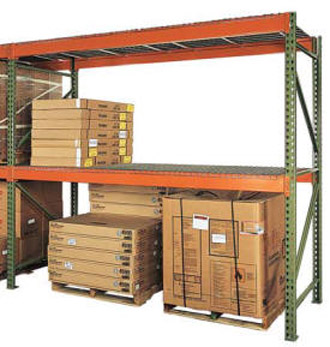
Pallet racking is a warehouse storage system designed to store palletized products vertically, making better use of available floor space while keeping individual pallets accessible. The most common type is adjustable pallet racking, often called selective pallet racking, which uses upright frames and horizontal beams to create multiple levels of storage.

Pallet rack can be configured to fit different warehouse layouts, pallet sizes and load requirements. Beam levels can be adjusted as your storage needs change, making pallet racking a flexible solution for warehouses, distribution centers, manufacturing facilities and other commercial storage applications.

Midwest Material Handling supplies new and used pallet racking throughout Ohio, including pallet rack beams, upright frames and wire decking. Many common sizes are available from our inventory, and we can help you determine the right rack and components for your application.


used teardrop style pallet rack beams, 96"L x 2.75"H  Used Pallet Rack Uprights, 96"H x 42"H

New & Used Pallet Rack

Midwest Material Handling offers both new and used pallet rack for warehouses and businesses throughout Ohio. Whether you are adding storage to an existing facility, replacing damaged rack or building a new warehouse layout, we can help you find the right combination of rack and components for your needs.

New pallet rack is a good choice when you want a clean, consistent system with specific sizes and configurations. Used pallet rack can provide significant savings and is a practical option for many warehouse applications. Our used rack is fully inspected before it is offered for sale.

We carry a large inventory of pallet rack beams, upright frames and wire decking at our Central Ohio warehouse. Many common sizes are available for local (same day) pickup, and we can also arrange delivery throughout Ohio and beyond.


Key Components of a Selective Pallet Rack system

Pallet rack systems are made up of three basic components: beams, uprights and wire decking. They work together to create a stable storage position. Understanding these components can help you choose the right system, replace damaged components or add to an existing system.

Click any card below for more information and specifications on each pallet rack component.
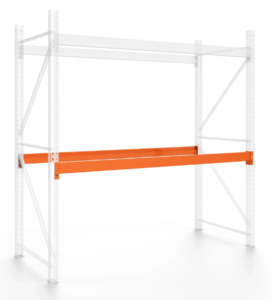
teardrop style Pallet Rack Beams orange

Pallet Rack Beams

Pallet rack beams connect the upright frames and support the pallets at each storage level. Beam size and capacity depend on the beam length, profile and the weight being stored. We carry beams in a variety of sizes for both new and used pallet rack systems.
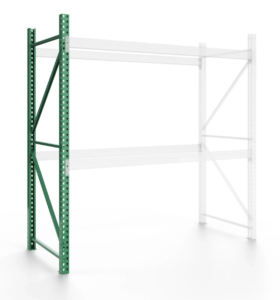
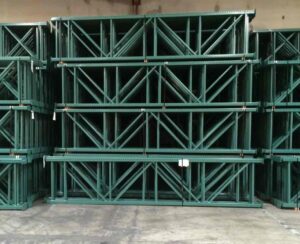
teardrop style Pallet Rack Upright by Husky Rack & wire and Interlake mecalux

Pallet Rack Uprights

Pallet rack uprights are the vertical frames that support the beams and carry the weight of the entire rack system. Uprights are available in different heights and depths to accommodate different storage requirements. We offer both new and used upright frames.
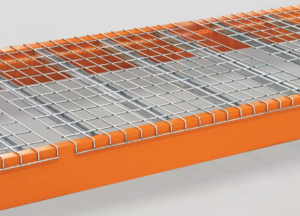
Wire Decking

Pallet Rack Wire Decking

Wire decking sits on the pallet rack beams to provide a stable surface for pallets and other stored products. Wire deck panels improve visibility and allow light and sprinkler water to pass through the rack. We stock wire decking in several sizes to fit common pallet rack configurations.

Selective Pallet Rack Configurations

Selective pallet rack can be configured to fit your warehouse layout, inventory requirements and material handling equipment. Explore the most common configurations and rack styles below.

Single-Deep Selective Rack

The most common selective pallet rack configuration. Pallets are stored one position deep on each side of the aisle, giving forklifts direct access to every pallet location.

Best for: General warehousing, distribution, manufacturing and retail storage

Double-Deep Selective Rack

Double-deep pallet rack allows pallets to be stored two positions deep, with one pallet positioned behind another. This increases storage density while maintaining access to multiple pallet positions from the aisle. Common in carpet rack applications.

Best for: High-volume inventory with multiple pallets of the same product. Carpet Rack applications.

Back-to-Back Rows

Two rows of selective pallet rack are installed back-to-back to create a shared rack structure. This is one of the most common ways to efficiently arrange pallet rack throughout a warehouse.

Best for: Maximizing pallet storage while maintaining accessible aisles

Wall-Configured Rows

Selective pallet rack can be installed along warehouse walls to make use of perimeter space that might otherwise go unused. This configuration is particularly useful where a full aisle is not needed behind the rack.

Best for: Perimeter storage, warehouse walls and maximizing available floor space

End-of-Aisle Rack

Selective rack can be positioned at the end of an aisle to take advantage of available space outside the main storage rows. End-of-aisle locations can provide additional pallet positions without creating another full aisle.

Best for: Adding storage capacity in unused end-of-aisle space. Also good for displaying or highlighting certain products in a retail environment.

Narrow-Aisle Configuration

Selective pallet rack can be installed with narrower aisles to increase the number of pallet positions within the same warehouse footprint. The appropriate aisle width depends on the forklift or material handling equipment being used.

Best for: Increasing storage density, including applications using specialized or wire-guided vehicles

Pallet Rack Sizes & Uses

Pallet rack is available in a wide range of sizes and configurations to fit different warehouses, pallet sizes and storage requirements. The right combination of beam length, upright height and upright depth depends on the products you are storing, the available space and how many pallets you need to store.

Beam Length:

Pallet rack beam length determines how many pallets can fit in each rack bay. Common lengths include 8, 9, 10 and 12 feet, but other sizes are available. The correct beam length depends on your pallet dimensions and the number of pallets you want to store per level.

Upright Height & Depth:

Pallet rack upright frames are available in different heights and depths. Height determines how many storage levels you can have, while depth needs to provide adequate support for the pallets being stored. The building height, forklift access and pallet dimensions all factor into choosing the right upright.

Storage Levels:

Pallet rack can be configured with multiple beam levels to make better use of your available vertical space. Beam heights can be adjusted to accommodate different pallet loads and storage requirements.

Many of our customers use the warehouse floor as the first pallet storage level. For example, a rack with two beam levels above the floor would provide three pallet storage levels. We typically describe this as “floor plus 2 beam levels” when discussing rack configurations.

When selecting pallet rack, it is important to consider more than just the dimensions. Pallet size, load weight, forklift type, building height and available aisle space all affect the right configuration. Midwest Material Handling can help you determine the appropriate rack sizes and components for your application.
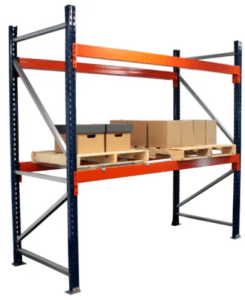

Interlake Mecalux Teardrop Pallet racking

Pallet Rack Capacities

Pallet rack capacity depends on the combination of specific beams, upright frames, beam spacing and configuration of the rack system. The weight of the pallets being stored must be considered when selecting the appropriate rack components.

Beam capacity is based on several factors, primarily beam length and beam profile (height). Upright capacity also depends on the frame height, depth, beam elevations and the loads being supported. *Remember, beam capacities are rated per pair and are based on a uniformly distributed load.

It is important to know the capacity of your pallet rack before adding or changing storage levels. Never assume that a beam or upright will support a particular load simply because it fits the rack.

If you are unsure about the capacity of an existing pallet rack system, Midwest Material Handling can help you identify the components and determine what information is needed to properly evaluate the rack.

Need help determining pallet rack capacity? See our Pallet Rack Capacity Guide →


Teardrop & Keystone Pallet Rack

Teardrop and Keystone are two common styles of pallet rack. The main difference is the way the beams connect to the upright frames. If you are adding to an existing system or replacing components, identifying the rack style is important for finding compatible parts.

As a general rule, Teardrop pallet rack often has orange beams and green uprights, while Keystone rack commonly has yellow beams and gray uprights. These colors can be helpful when identifying a rack system, but they are not absolute. Rack manufacturers and suppliers may use different colors, so the connection style and component dimensions should always be verified before purchasing replacement parts.
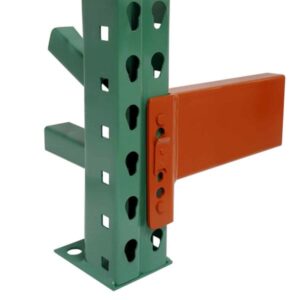
Teardrop Style Pallet Racking

Teardrop Pallet Rack

Teardrop pallet rack is the most common style we see. The beams use teardrop shaped connectors that lock into the openings in the upright frames. An easy way to identify it is by the inverted teardrop shape of the mounting holes. This design allows beams to be installed, adjusted or removed without tools. Teardrop rack is available in a wide range of sizes and is compatible with many types of wire decking and pallet rack accessories.
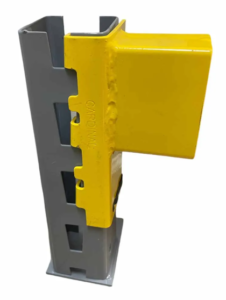
Keystone style pallet racking

Keystone Pallet Rack

Keystone pallet rack uses a different connection between the beams and upright frames. The beam connectors fit into the slotted upright and are secured with a locking mechanism. Keystone rack is still widely used, particularly in existing warehouse systems. Keystone style rack is no longer stocked and widely manufactured and only a small handful of manufacturers will still build it (and only a couple of times a year at that). If you need to add to or replace Keystone rack, it is important to match the components correctly. Keystone racking can still be readily found on the used market.


Need Help Identifying Your Pallet Rack?

Adding to an existing pallet rack system or replacing damaged components can be challenging if you don’t know the rack manufacturer or style. The beam connection, upright hole pattern and dimensions can help determine which components will work with your existing rack.

If you’re not sure what type of pallet rack you have, send us a few photos of the rack and we can help identify it. You can also use our detailed Pallet Rack Identification Guide to compare common rack styles and beam connections before ordering.

Visit our Pallet Rack Identification Guide →


In-Stock Pallet Rack, Delivery & Local Pickup

Many of our most common pallet rack components are in stock at our Central Ohio warehouse and available for same-day pickup or same-day shipping. We stock a wide variety of new and used pallet rack beams, upright frames and wire decking.

Need pallet rack delivered? We can arrange delivery throughout Ohio and beyond. We have worked with the same local cartage company for nearly 30 years, and most shipments are picked up and delivered the very same day. We also offer local and regional flatbed service from a trusted local vendor.

Pick It Up and SAVE THE FREIGHT!

Freight can be a significant part of the cost when purchasing pallet rack. If you’re located near our Central Ohio warehouse, picking up your order can eliminate the freight cost. We can have your order pulled and ready for pickup when you arrive.
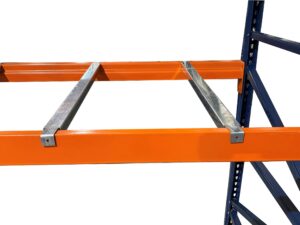
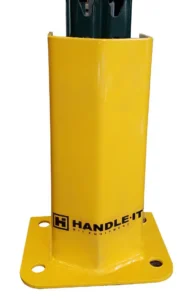
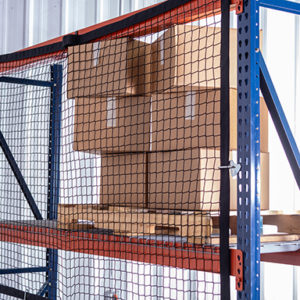
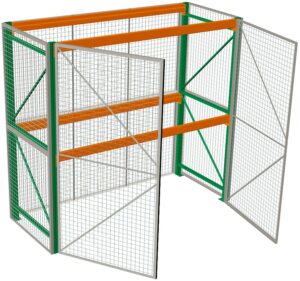
Flanged Cross Bar Post Protector Steel Rack Safety Netting Wire Security Enclosure

Pallet Rack Accessories

Pallet rack accessories can help protect your rack, improve safety and make your storage system more functional. We offer a variety of accessories for new installations and existing rack systems, including:

  • Post protectors & end of aisle protectors
  • Backstop beams and backstop guards
  • Protective wire panels and safety netting
  • Row spacers & wall ties
  • Pallet supports and flanged cross bars
  • Wire security enclosures

If you need accessories for a new or existing pallet rack system, we can help you find the right components for your application.

Explore Pallet Rack accessories →


Pallet Rack Layout & Installation

Selecting the right pallet rack is only part of the process. Proper layout planning helps you make the most of your available space while maintaining safe and efficient warehouse operations.

Our team can help with pallet rack layout and system configuration based on your building dimensions, pallet sizes, load weights, forklift requirements, aisle space and future expansion plans.

We also offer professional pallet rack installation and dismantling services for larger or more complex projects. Whether you’re installing a new system, expanding an existing rack system or rearranging your warehouse, we can help make sure the project is properly planned and installed.

Learn more about Pallet Rack installation services →

HAVE QUESTIONS ABOUT PALLET RACK? We're Here to Help!

Talk With a Pallet Racking Specialist

Choosing pallet racking isn’t always as simple as picking a beam length and upright height. If you’re unsure about rack capacity, compatibility, layout or whether new or used rack is right for your application, we’re happy to help.

Send us photos of your existing rack, tell us what you’re storing and give us the dimensions you have available. We’ll help you figure out what you need.

Call us today at (614) 733-0505 to discuss your pallet racking needs.

Frequently Asked Questions (FAQ'S)

From a buyer’s perspective, deciding between used and new pallet rack can be confusing. Let’s first discuss the advantages of purchasing used equipment. Obviously, the primary consideration when purchasing used equipment is cost. A secondary, but equally important benefit is that used equipment is often available immediately, which can save both time and freight costs.

Many buyers assume that purchasing used pallet racking and wire decking is similar to purchasing a used car, with savings of 50% or 60% compared with new equipment. Unfortunately, this is rarely the case.

But why?

When we purchase used equipment from a seller, the vast majority of the time the racking is still standing and needs to be dismantled. Once we send a crew in to disassemble the rack, it needs to be stacked, banded and prepared for shipment. The used pallet rack then needs to be transported to our location, typically by flatbed truck.

Due to the size and length of pallet racking and wire decking, used material is generally stored outside. Over time, the powder-coated finish can begin to rust and oxidize. Many buyers have little concern about discoloration or cosmetic appearance and are primarily interested in getting quality equipment that works. When all of these factors are considered, the savings between new and used pallet rack are often in the range of 15% to 20%.

One other very important consideration is the condition of used upright frames. Historically, we have rarely sold used pallet rack uprights because many have some type of column damage. In our experience, forklift forks or pallets commonly damage the lower 12 to 24 inches of the front upright columns.

If an upright has a significant ding, dent or other structural damage, buyer beware. Damage to an upright can compromise its structural integrity, and we will not sell upright frames that we believe are unsafe or unsuitable for use. There are sellers who may offer damaged uprights, but that’s not something we are willing to do.

While we stock and sell a significant amount of used equipment, primarily pallet rack and wire decking, we are selective about the used material we offer for sale. We typically sell used material that is in very good overall condition, generally rated 8-9 condition out of 10. We do not sell used material that falls below our condition standards.

All of our used pallet rack is inspected when it arrives at our facility. We assign a condition rating and include that information in our proposals so you know what condition you are buying.

When the rack cannot be viewed in person, we can provide photos so you can see the actual material before purchasing. We want our customers to know exactly what they are getting.

In some cases, new pallet rack can actually be surprisingly competitive with used equipment, particularly when new material is readily available. We also stock new wire decking, with many of our wire deck panels manufactured right here in Columbus, Ohio. If you are local, pick it up and save the freight.

Absolutely not! Pallet rack is relatively straightforward to assemble, and many of our customers install smaller systems themselves. The beams lock into the upright frames using the beam connectors and safety clips, and a rubber mallet is typically all that is needed for assembly.

Larger or taller systems generally require two or more people to safely position the upright frames and beams. The longer and heavier the components, the more important it is to have enough people and the proper equipment to handle them safely.

Pallet rack can also be dismantled and relocated if your storage needs change. This flexibility is one of the advantages of adjustable pallet racking.

Proper installation is important, particularly for larger systems. Uprights should be installed, leveled and anchored according to the rack manufacturer’s specifications and applicable requirements for the installation. If you would rather have the work done for you, Midwest Material Handling offers professional pallet rack installation and dismantling services.

We work with pallet rack and wire decking from many of the major manufacturers used in warehouses throughout Ohio and across the country.

Some of the manufacturers and brands we regularly work with include Interlake-Mecalux, Husky Rack & Wire, Ridg-U-Rak, Unarco, Steel King, Penco, Speedrack and others.

We also work with both new and used pallet rack components, so if you’re trying to expand an existing system or replace damaged beams or uprights, we can help identify what you have and determine which components are compatible.

If you’re not sure what manufacturer or style of pallet rack you have, send us a few photos. We can often identify the rack from the beam connection, upright hole pattern and other identifying features.

Visit our Pallet Rack Identification Guide to learn more about identifying your existing rack.

Simply measure from the inside of Upright column to inside of Upright column.

Pallet rack beam capacity depends on several factors, including the beam length, beam profile, material and the way the beam is loaded. Longer beams generally have lower capacities than shorter beams of the same profile.

Beam capacities are normally based on a pair of beams supporting a uniformly distributed load. The capacity rating applies to the specific beam configuration and should not be assumed to apply to a different beam length, profile or loading condition.

When determining the capacity of an existing pallet rack system, it is important to identify the beam manufacturer, beam length and beam profile. If you are unsure about the capacity of your pallet rack beams, Midwest Material Handling can help identify the components and determine what information is needed to properly evaluate the system.

No. Pallet rack beams are not all interchangeable. Compatibility depends on the type of rack, the beam connection and the upright design.

Standard teardrop pallet rack is generally the most interchangeable style. Many manufacturers use a common teardrop connection, allowing beams from different manufacturers to work with compatible teardrop upright frames. However, there can be differences between manufacturers and rack generations, so compatibility should always be confirmed before mixing components.

Other pallet rack styles use proprietary connections that are not interchangeable with standard teardrop rack. Keystone, structural and other older or manufacturer-specific systems may require matching beams and upright frames.

Interlake is a good example of why identification matters. Some Interlake systems use a New Style connection that is different from traditional teardrop rack. A beam that appears similar may not be compatible with a particular upright.

Send us photos of the upright and beam connection, along with the beam length and upright dimensions, and we can help determine what you have and what components are compatible. You can also use our Pallet Rack Identification Guide to compare common rack styles and connections.

Keystone pallet rack is still in use in many existing warehouse systems, but it is no longer widely manufactured. Keystone components are produced by only a limited number of manufacturers and are typically manufactured only a few times each year.

Because availability can be limited, it is important to properly identify your existing rack before looking for replacement or additional components. If you have Keystone pallet rack and need additional beams, uprights or other components, we can help determine what you have and what options may be available.

A 96 inch pallet rack beam is one of the most common beam lengths we sell. A 96 inch beam can typically accommodate two standard 48 inch long pallets side by side, with the appropriate clearance between the pallets and the uprights.

Other common beam lengths include 4, 8, 9, 10 and 12 feet.

Some of the most common pallet rack upright heights we sell are 96″, 144″ and 192″. Other heights are also available depending on the application and the amount of vertical storage space available.

The right upright height depends on your building height, pallet dimensions, required storage levels, forklift capabilities and any clearance requirements above the stored pallets.

For example, a 96″ upright may be appropriate for a smaller storage application, while 144″ or 192″ uprights can provide additional vertical storage in facilities with sufficient building height.

If you’re adding to an existing pallet rack system, it is important to match the new uprights to the existing system and consider the required beam elevations and load capacity.

A 42 inch deep upright is one of the most common depths we sell and is a good fit for many standard 46″-48″ deep pallets. The rack depth provides adequate support while allowing the pallet to extend slightly beyond the front and rear of the rack (which is by design).

The correct upright depth depends on the actual pallet dimensions, pallet construction and the way the pallets will be stored.

We use a 1/2” x 4” wedge Anchor with washer and nut. For Post Protectors, we use a 1/2″ x 4.25″ wedge anchor with washer and nut. Simpson Strong Tie Anchors can also be used which are more expensive but speeds up installation.

The age-old question… While it is impossible to totally prevent this type of damage from occurring (short of improved forklift operator training), we have found that while many products exist in the marketplace to try to prevent damage, the basic 12”H, 18”H or 24”H Steel Protector works the best! They are probably also the least expensive method to protect Uprights from damage.

Yes. A beam level can be installed near or at the top of the upright frame as long as the rack is designed and installed according to the manufacturer’s requirements and the required clearances are maintained.

Putting the top beam level at the top level on the upright can also help maximize your available horizontal storage space.

Yes. All new Beams include safety clips which vary in design from Manufacturer to manufacturer. For USED Beams we suggest a nut and bolt, which is the safest, most assured way to preventing a Beam from becoming dislodged.

Safety clips are an important part of the beam-to-upright connection and should be properly installed before the rack is placed into service.

One important, but often overlooked detail is to include the width of the upright frames in your overall layout. The vast majority of the pallet rack uprights we sell have a 3 inch column width.

For example, if you are installing two 96 inch pallet rack sections side by side, you will have three upright frames. The two 96 inch beam lengths total 192 inches, and the three 3 inch upright columns add another 9 inches, for a total overall length of 201 inches, or 16 feet 9 inches.

When planning your pallet rack layout, remember to account for the upright width along with the beam lengths. This can make a significant difference when determining how much rack will fit in the available space.

Pallet rack can be shipped by LTL freight or flatbed, depending on the size of the order and where it is going. For larger pallet rack orders, flatbed delivery is often the easiest and most economical option because the material can be loaded and unloaded efficiently while reducing the amount of handling.

We have worked with the same local cartage company for nearly 30 years and also have relationships with freight carriers and third-party logistics providers throughout the country. We can help determine the most practical and economical way to get your pallet rack delivered.

If you’re located near our Central Ohio warehouse, local pickup is often the best option. You can pick up your pallet rack and SAVE THE FREIGHT!

For customers outside the local area, we’ll work with you to arrange delivery to your facility.

We work hard to keep our pallet rack pricing competitive by keeping our overhead and freight costs under control. One of the biggest differences is that we do not mark up freight. When we arrange delivery, you pay the actual freight cost rather than an inflated freight charge.

Freight can represent a significant portion of the total cost of a pallet rack order, particularly when shipping long and heavy components. That’s why local pickup can be such a good value. If you’re able to pick up your order at our Central Ohio warehouse, you can eliminate the freight cost altogether.

We also maintain a large inventory of new and used pallet rack components, allowing us to offer many common sizes without waiting for a long manufacturing lead time.

If you’re comparing pallet rack prices, ask us for a quote. We’ll give you the equipment cost and the actual freight cost so you can see exactly what you’re paying.

A common member upright is an upright frame that supports pallet rack beams on both sides. Instead of having a separate upright at each end of every rack section, the middle upright is shared by the two adjacent sections.

For example, a row with two pallet rack sections requires three upright frames. The two outside uprights support one side of the row, while the center upright acts as the common member between the two sections.

This configuration allows multiple pallet rack sections to be connected in a continuous row while using fewer upright frames.

When planning a pallet rack layout, understanding common member uprights is important because the number of uprights affects both the overall length of the rack and the number of components you need.

We welcome you to visit, browse or shop our online catalog.
Search by item, product ID or category. Also, see featured products.

Midwest Online Catalog
Scroll to Top