

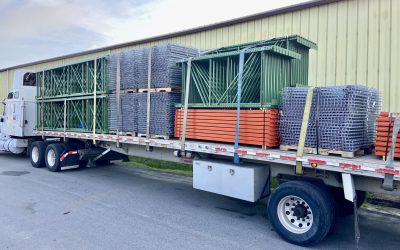
How Freight Class Is Determined for Pallet Rack and Wire Decking
If you have ever tried to ship pallet rack, you already know it is not straightforward.
Pallet rack systems and wire decking are some of the most difficult items to move through LTL freight. They are long, heavy, and not easy to handle. That combination drives up freight class, increases cost, and creates more opportunity for damage if things are not done correctly.
If you are planning a project and looking at warehouse racking systems, understanding freight class early can save you time, money, and frustration.
Why Pallet Rack Is So Difficult to Ship
Most products fit neatly on a pallet. Pallet rack does not.
Uprights are tall and awkward. Beams are long and heavy. Wire decking is dense but needs to be stacked correctly or it shifts during transit. None of it is ideal for standard LTL handling.
That is where problems start.
Freight gets moved multiple times between terminals. The more it gets handled, the higher the chance something gets bent, scratched, or worse.
The best way to ship pallet rack is usually on a flatbed or stake truck. It can be loaded from the side, secured properly, and handled less. The downside is cost. It is often more expensive, so many shipments still go LTL.
When that happens, understanding freight class becomes critical.
What Actually Determines Freight Class
Freight class is not random. Carriers look at four things every time.
Density
This is the big one. How much weight is packed into the space. Heavy, compact items are easier to ship and usually cost less.
Handling
How easy is it to move. Long beams and tall uprights are not easy. That increases the class.
Stowability
Can it stack cleanly with other freight. If it cannot, it takes up valuable space in the trailer.
Liability
What is the risk. If something is easy to damage or high value, that gets factored in.
Put all four together and you get your freight class. That number directly affects what you pay.
Understanding NMFC Without Overcomplicating It
Every product that ships LTL is assigned an unique NMFC (National Motor Freight Classification) number.
It is just a standardized way for carriers to say, “this is what this item is, and this is how it should be shipped.”
For pallet rack and wire decking, those classifications are already defined. There is no guessing, but there is a right way and a wrong way to ship them.
Freight Class for Pallet Rack Beams and Uprights
Beams and uprights fall under NMFC 164340.
In simple terms, length drives the classification.
- Over 8 feet up to 16 feet typically lands at class 125
- Over 16 feet up to 24 feet moves to class 200
- Anything longer jumps to class 300
The longer it gets, the harder it is to handle. That is why the class increases.
Freight Class for Wire Decking
Wire decking is a different story.
It falls under NMFC 164150 and typically ships at class 70.
It is still heavy, but it stacks well, stays compact, and is easier to manage. That keeps the freight class lower and shipping more affordable.
Where People Get Burned on Freight Costs
This is where experience matters.
A lot of issues come from:
- Poor packaging and strapping
- Incorrect classification
- Not planning shipment size properly
All of that leads to higher costs or damaged material showing up on site.
Freight class is not just a number. It is something you can work with if you understand it upfront.
We Help Customers Get This Right Every Day
Shipping pallet rack is part of the job, not an afterthought.
Midwest Material Handling has been coordinating these shipments for over 30 years. We know what works, what does not, and where problems usually happen.
Sometimes LTL makes sense. Sometimes it does not. Sometimes a small change in how the material is bundled saves a significant amount on freight.
If you are planning a project, we can help you think through it before it becomes a problem.
Frequently Asked Questions
What freight class is pallet racking?
It usually falls between class 125 and class 300 depending on length.
Why is wire decking a lower freight class?
It is dense and stackable, which makes it easier to ship.
What is the safest way to ship pallet rack?
Flatbed or stake truck is usually the safest option, but LTL is still common depending on the situation.
