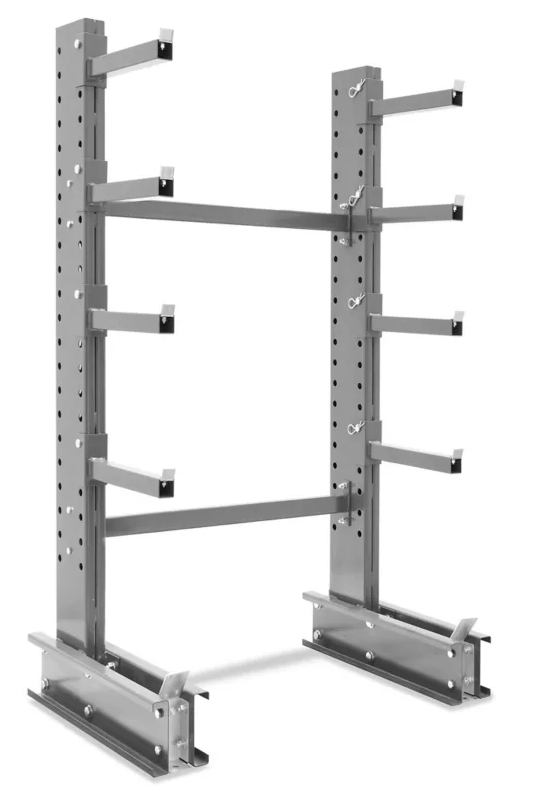
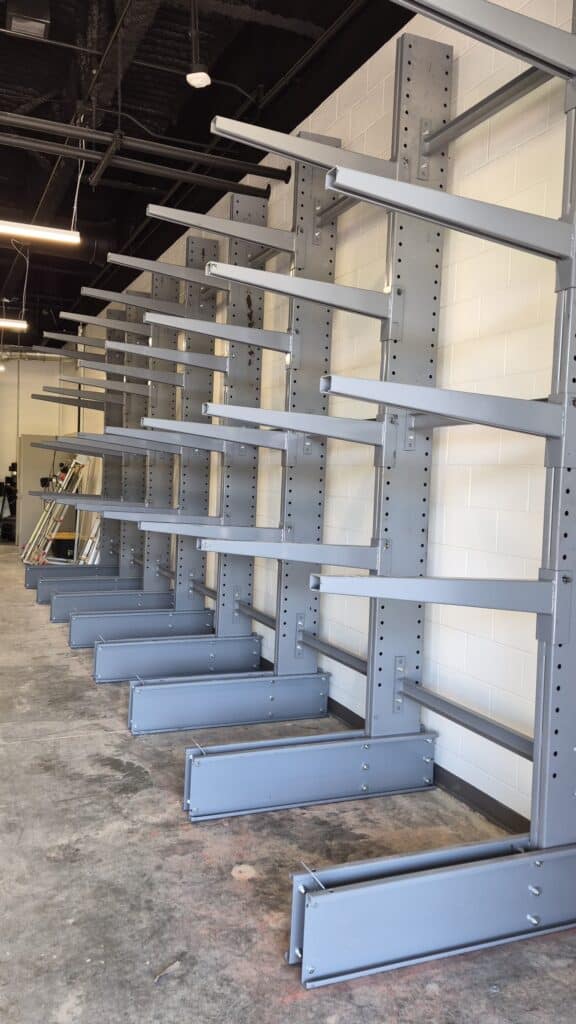
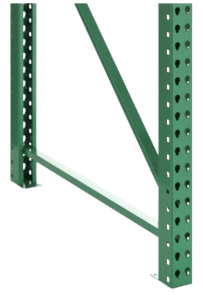
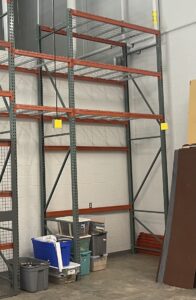
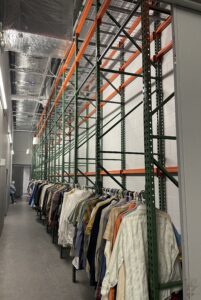
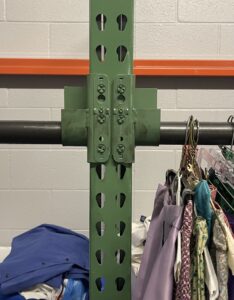
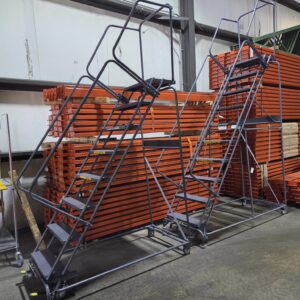
Cantilever rack is one of several storage solutions within our broader warehouse storage systems product family. It is designed to store long, bulky materials such as lumber, steel, pipe and tubing. However, not all cantilever rack is built the same way.
The two primary styles are roll-formed cantilever rack and structural cantilever rack. The biggest difference is how the steel components are manufactured and constructed. Understanding these differences can help you compare rack systems and determine which is right for your application.
Generally speaking, roll-formed cantilever rack is commonly used for lower-capacity applications, typically in the range of 500 to 5,000 pounds per arm. For applications requiring capacities above 5,000 pounds per arm, taller rack configurations or use in refrigerated warehouses, coolers and freezers, structural cantilever rack is often preferred.
Structural Cantilever Rack
Structural cantilever rack is built using structural steel sections for its primary load-bearing components. Its uprights, arms and bases are designed to provide strength and stability under demanding loads.
Uprights
Structural uprights commonly use I-beam or wide-flange steel sections. These heavy-duty steel members form the backbone of the rack system.
Arms
Structural arms are manufactured from structural steel sections designed to support specified loads. Their dimensions and ratings vary depending on the manufacturer and rack configuration.
Bases
Structural bases provide support and stability for the uprights. Their construction is designed to work with the upright and the loads carried by the system.
Connections
Structural cantilever rack commonly uses bolted connections to secure the arms and assemble the system. The exact connection design varies by manufacturer.
Roll-Formed Cantilever Rack
Roll-formed cantilever rack is manufactured by passing steel through a series of rollers that shape it into specific profiles. The resulting components are engineered for the loads and applications for which the system is designed. Construction varies by manufacturer, so not all roll-formed cantilever rack uses the same profiles or connection methods. Installationof roll-formed cantilever rack takes a bit more time vs. structural as the upright columns and bases need to be assembled on-site. The arms and brace sets are a single components and simply bolt on or are connected by a locking pin.
Uprights
Roll-formed uprights are made from shaped steel profiles rather than conventional structural I-beams. The profile design and steel specifications vary by manufacturer.
Arms
Roll-formed arms use formed-steel profiles engineered to support their rated loads. Some may resemble structural steel channels, but their cross-sections and manufacturing methods are different.
Bases
Base construction varies between manufacturers. Some use welded assemblies, while others use combinations of formed-steel components.
Connections
Roll-formed systems may use pin-style, wedge-style or other arm attachment methods. Some designs allow for relatively quick assembly and adjustment.
Key Differences at a Glance
Feature
Structural Cantilever Rack
Roll-Formed Cantilever Rack
Steel construction
Structural steel sections
Steel shaped through roll-forming
Uprights
Commonly I-beam or wide-flange steel
Formed-steel profiles
Arms
Structural steel sections
Formed-steel profiles
Bases
Structural steel construction
Design varies by manufacturer
Connections
Commonly bolted
May use pins, wedges or other designs
Capacity
Commonly used for demanding, higher-capacity applications
Varies by design and manufacturer
Assembly
Typically uses bolted connections
Connection method varies by manufacturer
One important distinction is that roll-formed cantilever rack is not a single standardized design. Manufacturers use different profiles, base constructions and arm connections, so two roll-formed systems can look and perform quite differently.
What About Cost?
Roll-formed cantilever rack can offer a lower cost, while structural cantilever rack may require a greater investment. The actual price difference depends on the manufacturer, configuration and required capacity.
The Bottom Line…
The primary difference between structural and roll-formed cantilever rack is the construction of their steel components. Structural systems use structural steel sections, while roll-formed systems use steel shaped into engineered profiles.
Neither category alone tells you everything about a rack’s strength or suitability. Always compare the manufacturer’s specifications and rated capacities for the exact system you are considering.
For help comparing options, visit Midwest Material Handling’s Cantilever Rack page to learn more about available solutions in Ohio.
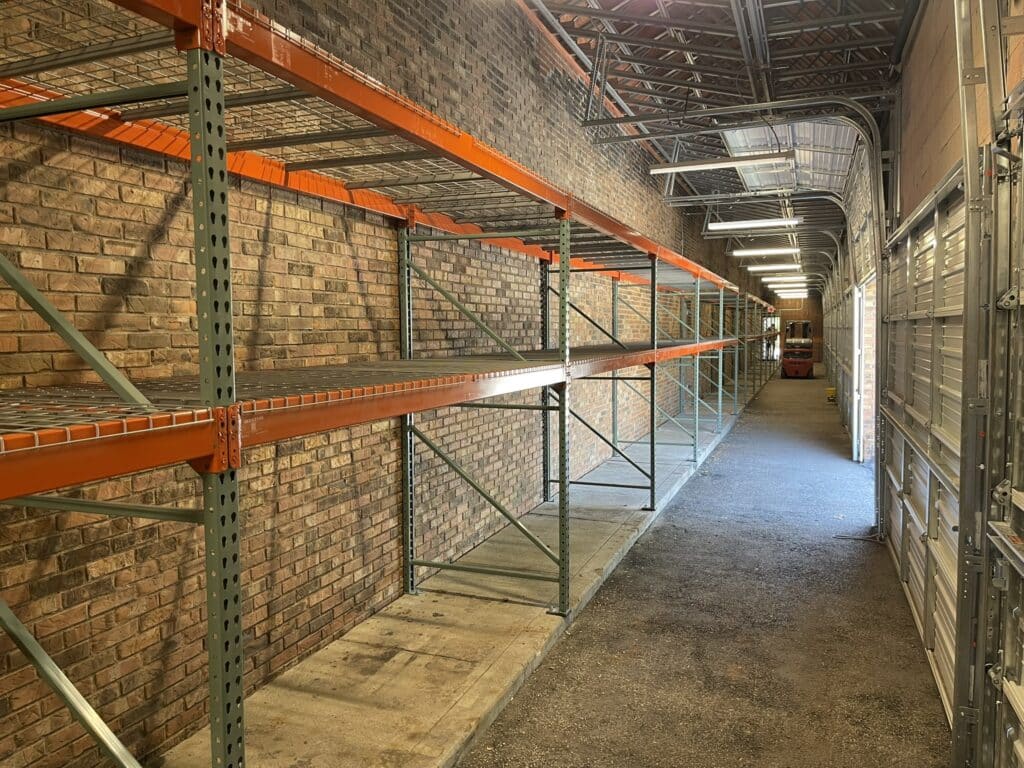
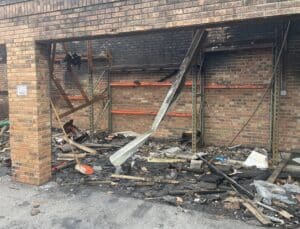
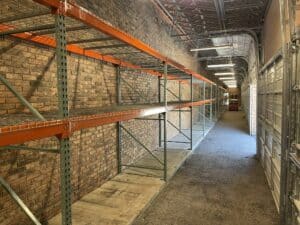
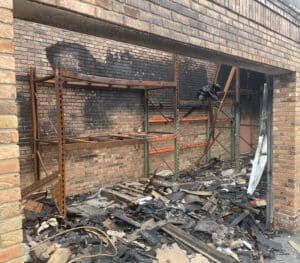
About 25 to 30 years ago, Midwest Material Handling first supplied Keystone style pallet racking for a well-established Ace Hardware store in the Dublin, Ohio area. A longstanding local business, the store has served its community for decades. After a devastating fire a couple of years ago which destroyed part of the building and many of its contents, we recently returned to furnish and install an entirely new pallet rack system as part of the rebuilt space.
It was a full circle moment for our team. Decades after supplying the original rack, we had the opportunity to help this established business create a new storage area designed around its current needs. The new installation features teardrop style pallet racking in a redesigned outdoor area with an awning and garage doors. The space will be used to store tool rental equipment and bulk products such as bagged concrete and salt.
While replacing the original rack might sound straightforward, this project presented some unique installation challenges that required careful attention to the existing site conditions.
When we first supplied the original Keystone pallet racking roughly 25 to 30 years ago, it was a familiar storage solution. The system served the business for many years before the fire destroyed the building and the original installation. As the property was rebuilt, the Ace Hardware store needed a new storage system for an area dedicated to tool rentals and bulk merchandise. Midwest Material Handling returned to furnish and install a completely new system using teardrop style pallet racking.
Replacing the original rack also provided an opportunity to configure the storage area around the products and equipment the store needed to accommodate. The result is a new system designed for the rebuilt space, with wider storage openings and a layout suited to the customer’s intended use.
Working With An Existing Sidewalk
One of the more unusual aspects of this pallet rack installation was the surface beneath it. Rather than installing the rack on a new concrete floor, we installed it on an existing sidewalk. The concrete was uneven and extremely soft, presenting challenges when it came to leveling and supporting the rack uprights. A properly supported base is an important consideration with any pallet rack installation. Uneven concrete can prevent base plates from sitting properly, so the condition of the supporting surface needs to be addressed before the rack is put into service.
To accommodate the uneven sidewalk, we used shims at all of the front uprights. Instead of conventional steel shims, we selected hardened plastic shims to avoid the rusting concerns associated with steel in an outdoor environment. These details may not be obvious when looking at the completed rack, but they were an important part of adapting the installation to the existing conditions.
Installing pallet racking on an older concrete surface requires more than simply positioning the uprights and beams. The concrete’s condition, its ability to support the intended loads and the rack’s leveling and anchoring requirements must all be considered.
Nine Foot Beams for Wider Product Storage
Another feature that makes this project unique is the use of 9 foot pallet rack beams. The Ace Hardware store requested wider than usual storage openings to accommodate the products and equipment planned for this area. Standard rack configurations do not always provide the space needed for every application, particularly when storing bulky merchandise or larger rental equipment. The 9 foot beams provide wider openings for the store’s intended storage arrangement, helping accommodate tool rental equipment, bagged concrete and other bulk products.
Selecting the right rack configuration starts with understanding what needs to be stored and how the customer plans to access it. Beam length, available floor space and the dimensions and weights of the products all play a role in determining the appropriate system. By tailoring the configuration to the customer’s requirements, we helped create an organized storage area that makes better use of the available space.
A Redesigned Outdoor Area for Tool Rentals and Bulk Products
The rebuilt area features an awning and garage doors, creating a dedicated space that can be closed off and secured when needed. With the new teardrop pallet racking installed, the store has an organized area for tool rental equipment and bulk merchandise, including bagged salt, fertilizer and concrete.
The combination of the redesigned structure and new pallet rack system gives the business a practical way to organize products and equipment while making use of the designated outdoor storage area. The finished installation came together beautifully. It’s always rewarding to see a project take shape, especially when we have the opportunity to return to a customer decades after supplying the original equipment.
From Keystone Style Rack to Modern Teardrop Pallet Racking
This project also illustrates how pallet rack systems change over time. Older facilities may still have Keystone style pallet racking installed from decades ago. Finding compatible replacement components for these systems can be challenging because Keystone components are manufactured and available only through select sources and are not continuously manufactured throughout the year.
Teardrop pallet racking is widely used in modern warehouse and storage applications. Replacing an older system can provide an opportunity to reconsider beam lengths, storage configurations and the way a space is used. For businesses rebuilding after a fire, renovating an older facility or expanding their storage capacity, the right solution depends on the building, the products being stored and the conditions at the installation site.
Fire damage also requires special consideration. Pallet rack components exposed to fire should be evaluated before reuse because heat can affect the structural integrity of steel even when damage is not immediately visible. In this project, the original system was replaced with entirely new pallet racking as part of the rebuilt space.
Need New or Used Pallet Racking in Ohio?
Midwest Material Handling supplies new and used pallet racking for warehouses, distribution centers, manufacturing facilities, hardware stores and businesses throughout Ohio. From replacing older rack systems to planning new storage configurations, our team works with customers to find practical solutions for their available space and storage requirements. Whether you’re outfitting a new facility, replacing damaged pallet racking or making better use of an existing storage area, we can help you explore your options.
Can pallet racking be installed on existing concrete?
Pallet racking can sometimes be installed on existing concrete, depending on the condition of the surface. Uneven, deteriorated or soft concrete requires careful evaluation to determine whether it can adequately support the intended loads and accommodate the rack’s anchoring requirements.
What is the difference between keystone and teardrop pallet racking?
Keystone and teardrop pallet racking use different connection designs. Their components are not necessarily interchangeable, so identifying your existing rack is important when looking for replacement beams or uprights. Midwest Material Handling can help identify older pallet rack systems and explore replacement options.
What size pallet rack beams do I need?
The appropriate beam length depends on the products being stored, the required storage opening and the intended load capacity. Wider beams can accommodate larger products and equipment, but the rack must be properly configured for the intended application.
Does Midwest Material Handling sell and install pallet racking throughout Ohio?
Yes. Midwest Material Handling supplies new and used pallet racking for businesses throughout Ohio and beyond. We can help you explore options for replacing an older system, outfitting a new facility or improving an existing storage area.
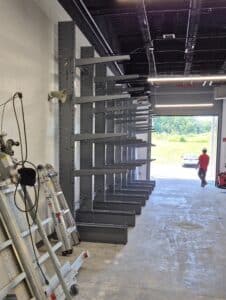
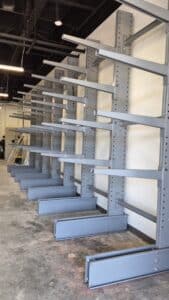
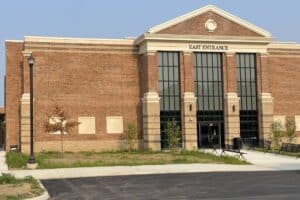
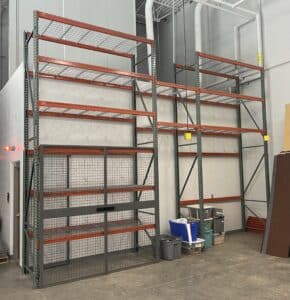
When Lancaster High School was recently rebuilt, its woodworking program needed practical storage for the lumber, tools and other materials used by students. Midwest Material Handling supplied and installed the storage equipment for the woodworking area, including a Modern Equipment Company (MECO) cantilever rack system for lumber storage and several sections of selective pallet rack along the opposite wall for tools and other shop materials.
Cantilever Rack for Lumber Storage
When Lancaster High School was recently rebuilt, its woodworking program needed practical storage for the lumber, tools and other materials used by students. Midwest Material Handling supplied and installed a Modern Equipment Company (MECO) cantilever rack system for lumber storage along with several sections of selective pallet rack for tools and other shop materials.
Midwest Material Handling Handles the Installation
For this project, Midwest Material Handling did more than supply the rack. We handled the installation as well. Our team installed the Modern Equipment Company cantilever rack system for the lumber and several sections of selective pallet rack on the opposite wall for tools, supplies and other woodworking materials. Using both cantilever rack and pallet rack allowed the school to make better use of the available space while giving different types of materials their own designated storage areas.
Cantilever Rack Installation in Ohio
The Lancaster High School project is a good example of the storage solutions we provide throughout Ohio. Cantilever rack works especially well for lumber, pipe, tubing, steel and other long or bulky materials. Selective pallet rack can provide additional storage for tools, supplies and general materials.
At Midwest Material Handling, we don’t just sell rack. We can help you determine the right system for your application, supply the equipment and handle the installation. If you need cantilever rack in Ohio, contact Midwest Material Handling for pricing, availability and installation options.
Project Details
Location: Lancaster, Ohio Application: High school woodworking program Equipment: Modern Equipment Company (MECO) cantilever rack and selective pallet rack Service: Rack supply and installation
Not everything in a warehouse belongs in an open pallet rack bay. Valuable inventory, tools, equipment, small parts and other items may need to be kept separate from general warehouse storage and accessible only to authorized employees. But building a permanent room isn’t always practical, especially when you already have pallet rack in place.
A modular pallet rack wire enclosure can provide a simple solution. Wire security panels can be attached directly to existing pallet rack to create a dedicated, lockable storage area without replacing the rack or building conventional walls.
What Is a Pallet Rack Wire Enclosure?
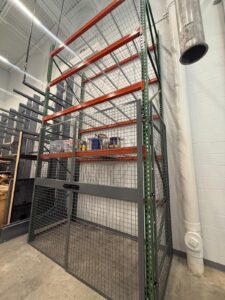
A pallet rack wire enclosure uses modular wire mesh panels, doors and mounting hardware to enclose one or more pallet rack bays. The panels attach to the pallet rack uprights, creating walls around the storage area. A door provides access, and the enclosure can be secured with a padlock to limit access to authorized personnel.
Because the system is modular, it can be configured around the existing pallet rack and warehouse layout. It can also be incorporated into a new pallet rack installation. The result is a secure storage area that still allows you to see what’s inside.
How Do Wire Enclosures Attach to Pallet Rack?
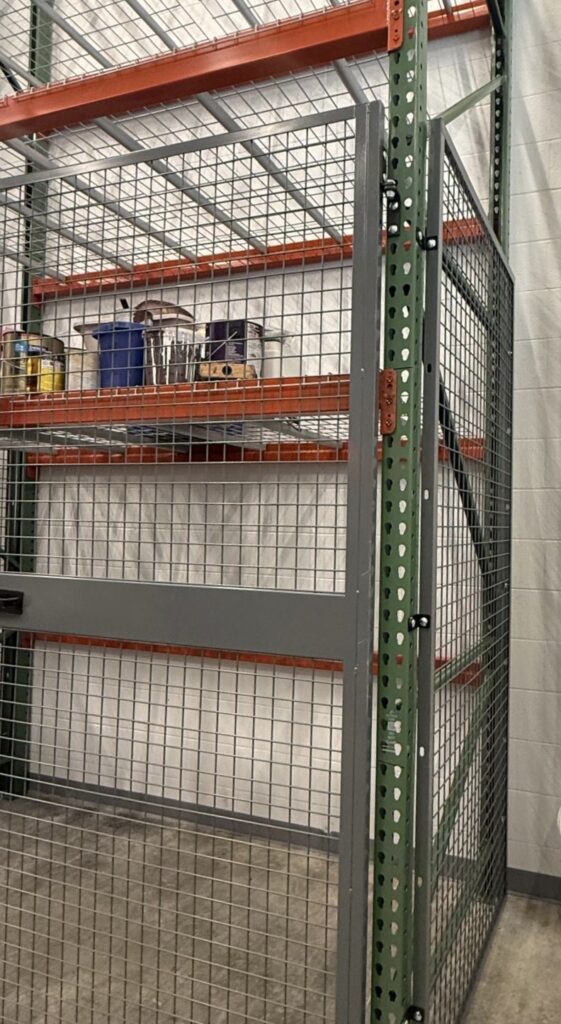
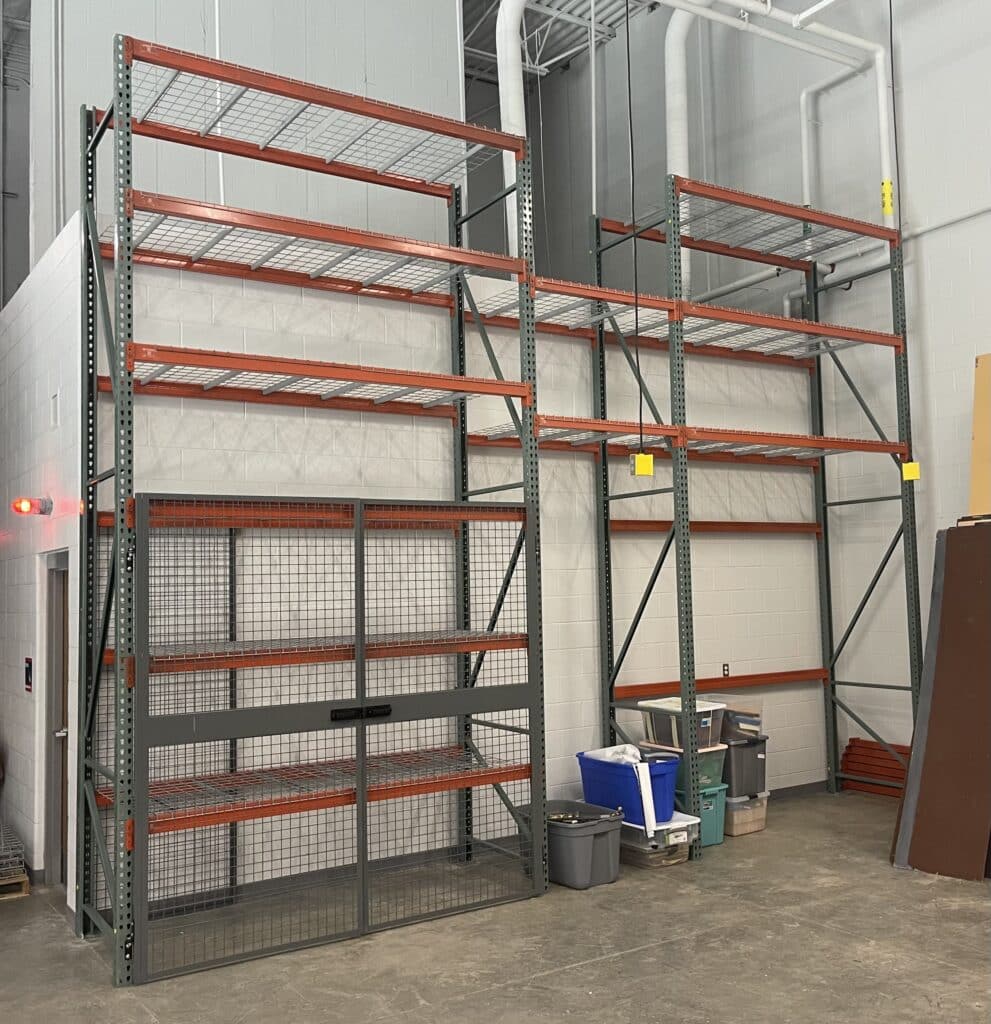
One of the biggest advantages of this type of enclosure is how it integrates with the pallet rack you already have. The wire panels bolt to the pallet rack uprights using mounting brackets and hardware. This allows the rack itself to become part of the enclosure rather than requiring a completely separate support structure. We recently installed two of these enclosures as part of a warehouse project. The photos show how the panels attach directly to the pallet rack uprights.
See How the Panels Attach to the Rack
We’ve also included a video showing how the modular panels bolt to the pallet rack uprights.
Seeing the installation makes it easy to understand how the system can be added to an existing pallet rack layout.
Can You Add a Wire Enclosure to Existing Pallet Rack?
Yes. That’s one of the main reasons modular wire enclosures are so useful. They can be installed on virtually any style of pallet rack, whether the rack is new or has been in service for years. Instead of replacing your existing rack, an enclosure can be designed around the rack that’s already in your warehouse.
Of course, the existing rack should be evaluated before installation to make sure its condition, dimensions and configuration are suitable for the proposed enclosure. For a warehouse that already has pallet rack in place, this can be an efficient way to add secure storage without starting over.
What Can You Store in a Pallet Rack Wire Enclosure?
There are many situations where a warehouse needs a storage area that is separate from general inventory.
Common applications include:
Valuable inventory
Tools and equipment
Maintenance supplies
Electronics
Small parts
Replacement parts
Specialized equipment
Controlled-access inventory
Items that need additional protection
The wire mesh construction provides a physical barrier while maintaining visibility. Employees can see the contents without having to open the enclosure.
Lockable Storage With Padlock Access
A key feature of these enclosures is the lockable access door. The door is designed for padlock access, providing a straightforward way to control who can enter the storage area. A manager, department or designated employee can control access to the key or combination.
This makes the system particularly useful when certain inventory or equipment needs to be kept away from general warehouse traffic. A wire enclosure isn’t intended to be a guarantee against theft, but it does provide a physical barrier and a controlled-access storage area that is more secure than an open pallet rack bay.
A Recent Pallet Rack Wire Enclosure Installation
Midwest Material Handling recently completed a project that included two modular wire enclosures. The enclosures were installed around existing pallet rack to create secure storage areas within the warehouse. The panels were bolted to the pallet rack uprights and fitted with access doors that can be secured with padlocks.
For this particular installation, we used components from Husky Rack & Wire. The modular design allowed us to configure the panels around the existing pallet rack rather than replacing the rack or constructing a separate storage room. This project is a good example of how an existing pallet rack system can be adapted to meet changing storage and security requirements.
What Are the Advantages of Modular Pallet Rack Security Panels?
The biggest advantage is flexibility. You can add a secure storage area without completely changing the way your warehouse is laid out. The enclosure can be designed around the pallet rack you already have and configured for the items you need to store.
Other advantages include:
Uses Existing Pallet Rack
If you already have pallet rack, you may be able to use that structure as part of the enclosure instead of installing a separate security cage.
Provides Controlled Access
The lockable door allows access to be limited to authorized personnel.
Maintains Visibility
The wire mesh lets you see the contents of the enclosure while still providing a physical barrier.
Protects Valuable Items
A dedicated enclosure provides an additional level of protection for inventory, tools, equipment and other valuable items.
Flexible Configuration
Modular panels can be arranged to fit different pallet rack layouts and storage requirements.
Works With New or Existing Rack
An enclosure can be incorporated into a new rack installation or added to pallet rack that’s already in use.
Are Pallet Rack Wire Enclosures Right for Your Warehouse?
If you have pallet rack and need a secure place to store valuable or restricted items, a modular wire enclosure may be worth considering. Instead of building a permanent room or purchasing a completely separate storage structure, you can use the pallet rack already in your warehouse to create a dedicated, lockable storage area.
The right configuration will depend on your rack, available space, what you’re storing and how the enclosure will be accessed. Midwest Material Handling can help you determine whether a pallet rack wire enclosure is a good fit for your facility.
Frequently Asked Questions
Can a wire enclosure be installed on existing pallet rack?
Yes. Modular wire panels can be attached to existing pallet rack uprights. They can be used with virtually any style of pallet rack, provided the existing rack is suitable for the installation.
Can pallet rack wire enclosures be locked?
Yes. The access doors are designed for padlock access, allowing the enclosed area to be secured and access limited to authorized personnel.
Can I enclose just one pallet rack bay?
Yes. The modular design allows an enclosure to be configured around a single bay or multiple bays, depending on your storage needs and the available rack layout.
Can wire enclosures be added to older pallet rack?
In most cases, yes. One of the advantages of a modular system is that it can be designed around existing pallet rack. The condition and configuration of the rack should be evaluated before installation.
What can I store in a pallet rack wire enclosure?
Common applications include valuable inventory, tools, equipment, electronics, maintenance supplies, small parts and other items that need controlled access.
Does the wire mesh prevent visibility?
No. One advantage of wire mesh is that you can see the contents of the enclosure without opening the door.
Do pallet rack wire enclosures require a separate frame?
Not necessarily. The modular panels can be attached to the existing pallet rack structure, depending on the rack and enclosure configuration.
Are pallet rack wire enclosures permanent?
They are not the same as constructing a permanent room. The panels are mechanically attached to the rack and can generally be modified or reconfigured when storage requirements change.
Need a Secure Storage Area for Your Pallet Rack?
A modular pallet rack wire enclosure can turn an existing pallet rack bay into a secure, lockable storage area without building a conventional room. If you need to protect valuable inventory, tools, equipment or other items that require controlled access, Midwest Material Handling can help you determine the right enclosure configuration for your warehouse.
Contact Midwest Material Handling to discuss your pallet rack wire enclosure project.
If you work with boltless shelving, you may have come across both RiveTier 2 and RiveTier 3. At first glance, the two systems may look very similar. Both use the familiar rivet-style, boltless construction that has made RiveTier shelving a popular choice for warehouses, stockrooms, garages and industrial storage applications.
But there are some important differences between the two systems.
RiveTier 2 is the long-established RiveTier design that has been used for decades. RiveTier 3 represents a newer generation of the system with changes to the beam design, component configuration and compatibility with other boltless shelving.
If you are expanding an existing shelving system, replacing damaged components or trying to determine which RiveTier system you have, understanding the differences can save you time and help you order the right parts.
RiveTier 2: A Proven Boltless Shelving System
RiveTier 2 has been a mainstay of boltless shelving for many years. Like other rivet shelving systems, it is designed to assemble without nuts and bolts. The beams attach to the upright posts using rivet connections, allowing shelves to be installed, assembled and adjusted without specialized tools. RiveTier 2 has been used in a wide range of applications, including warehouse storage, parts storage, inventory rooms, industrial facilities and general-purpose shelving. Boltless shelving is part of our larger family of storage rack systems and products.
One of the defining characteristics of RiveTier 2 is that it was designed as a specific Western Pacific Storage Solutions system. Its components were intended to work together as a complete RiveTier 2 shelving system. That is important when you are dealing with an older installation. If you have RiveTier 2 shelving that has been in your facility for years, you cannot assume that a newer RiveTier 3 component will fit simply because it looks similar.
RiveTier 3: A More Flexible Design
RiveTier 3 maintains the basic concept that made RiveTier shelving popular: strong, adjustable boltless shelving that can be assembled without traditional hardware. But the design was changed in several important ways. One of the biggest changes is the beam design. RiveTier 3 uses mitered beams, which allows the same basic beam design to be used in different positions within the shelving unit. This reduces the number of different beam configurations needed and makes the system more flexible when planning a shelving layout.
RiveTier 3 also offers several beam styles and upright configurations, allowing the system to be configured for different shelf heights, capacities and applications. The result is a boltless shelving system that retains the simplicity of rivet construction while offering a more flexible component design.
The Biggest Difference: Component Compatibility
For someone who already has boltless shelving in their warehouse, this may be the most important difference between RiveTier 2 and RiveTier 3 . RiveTier 2 was more proprietary in its component design. If you had a RiveTier 2 installation, you generally needed RiveTier 2 components when adding shelves or replacing damaged parts. RiveTier 3 was designed with greater compatibility in mind.
Manufacturer information identifies RiveTier 3 components as compatible with certain other boltless shelving systems, including Hallowell, Rapid Rack and Jaken. That can make RiveTier 3 particularly useful when working with an existing shelving installation that contains compatible components from another system. However, there is an important distinction:
RiveTier 3 is not simply interchangeable with RiveTier 2.
The fact that RiveTier 3 can work with certain other boltless shelving systems does not mean that every RiveTier 2 component will fit RiveTier 3 or vice versa. If you are replacing or adding components, it is important to identify the system before ordering.
RiveTier 2 vs. RiveTier 3: Side-by-Side
Feature
RiveTier 2
RiveTier 3
Construction
Boltless rivet shelving
Boltless rivet shelving
Design
Established RiveTier system
Newer-generation RiveTier design
Shelf adjustment
1-1/2″ increments
1-1/2″ increments
Beam design
Traditional beam configurations
Mitered beam design
Component configuration
More proprietary
Greater flexibility
Other-system compatibility
Limited
Compatible with certain boltless systems
RiveTier 2 components
RiveTier 2 system
Not interchangeable
Applications
Warehouse, industrial and general storage
Warehouse, industrial and general storage
Beam options
Multiple configurations
Multiple configurations
Assembly
Boltless
Boltless
The important takeaway is that RiveTier 3 isn’t simply “RiveTier 2 with a different name.” It is a different generation of the system with changes intended to make the shelving more flexible and easier to configure.
What Is a Mitered Beam?
The mitered beam design is one of the more noticeable differences in RiveTier 3. With traditional boltless shelving designs, different beam configurations may be needed depending on whether the beam is being used across the front and back of the shelving or between the sides.
RiveTier 3’s mitered beam design changes the way those components connect at the corners. For the customer, that means a simpler component system and more flexibility when configuring a shelving unit. You don’t necessarily need to understand the engineering behind the mitered connection to appreciate the benefit. The important point is that RiveTier 3 was designed to simplify the way the components work together.
Are RiveTier 2 and RiveTier 3 Parts Interchangeable?
No. RiveTier 2 and RiveTier 3 should be treated as separate shelving systems. Even though both use the familiar RiveTier boltless construction, their components are not simply interchangeable. This is especially important if you are repairing or expanding an older shelving installation.
Before ordering beams, posts, shelf supports or other components, identify whether you have RiveTier 2 or RiveTier 3. If you aren’t sure, don’t guess. A photo of the shelving can often help identify the system and determine what components you need.
Can RiveTier 3 Work With Other Boltless Shelving?
In most applications, yes. One of the advantages of RiveTier 3 is its compatibility with certain other boltless shelving systems. Manufacturer information specifically identifies Hallowell, Rapid Rack and Jaken as compatible systems. That gives RiveTier 3 an advantage when you are working with an existing boltless shelving installation and need to expand or modify it.
But compatibility should always be confirmed before mixing components. Boltless shelving can look remarkably similar from one manufacturer to another, but similar-looking posts and beams do not necessarily mean they are compatible.
Which RiveTier System Do You Have?
If you have shelvingthat has been in your facility for a long time, there’s a good chance you are dealing with RiveTier 2 or another older boltless shelving configuration. If you’re replacing a damaged beam or upright, adding another shelf level or expanding an existing row, identifying the system is the first step. Look at the posts, beams and connections rather than relying solely on the overall appearance of the shelving.
If you’re still unsure, take a few photos of the shelving, including:
The upright post
The connection between the beam and post
The beam itself
The overall shelving unit
Any labels or markings
Those details can make it much easier to determine what you have.
Which System Is Right for Your Application?
Neither RiveTier 2 nor RiveTier 3 should automatically be considered the “better” shelving system. RiveTier 2 has a long track record and remains an important system for facilities that already have RiveTier 2 shelving. RiveTier 3 offers a newer component design and greater flexibility, including compatibility with certain other boltless shelving systems.
The right choice depends on what you are trying to accomplish. If you are starting a new shelving project, RiveTier 3 may offer advantages in flexibility and component compatibility. If you are expanding an existing RiveTier 2 installation, staying with the correct RiveTier 2 components may be the better approach. And if you’re replacing parts on an older system, identifying the existing shelving before purchasing components is critical.
Need Help Identifying Your RiveTier Shelving?
Not sure whether you have RiveTier 2, RiveTier 3 or another boltless shelving system? Midwest Material Handling can help.
Send us a few photos of your existing shelving and tell us what you are trying to add or replace. We can help identify the system and determine what components you need. Whether you’re adding a few shelves to an existing installation or planning a complete warehouse storage project, getting the right components the first time can save you both time and money.
Have questions about RiveTier shelving or need help finding the right components? Contact Midwest Material Handling today.
Frequently Asked Questions (FAQ’s)
What is the difference between RiveTier 2 and RiveTier 3?
RiveTier 2 is the established RiveTier boltless shelving system that has been used for decades. RiveTier 3 is a newer generation with changes to the beam design, component configuration and compatibility with certain other boltless shelving systems.
Can I use RiveTier 3 beams with RiveTier 2 uprights?
No. RiveTier 2 and RiveTier 3 are separate systems and their components should not be assumed to be interchangeable.
Is RiveTier 3 compatible with other boltless shelving?
RiveTier 3 was designed for greater compatibility with certain other boltless shelving systems. Manufacturer information specifically identifies Lyon, Hallowell, Rapid Rack and Jaken as compatible systems. Compatibility should always be confirmed before mixing components.
What is different about RiveTier 3 beams?
RiveTier 3 uses a mitered beam design. This changes how the beams connect and reduces the need for separate beam configurations, giving the system greater flexibility.
Is RiveTier 2 still useful?
Absolutely. RiveTier 2 has been used successfully for decades and can be an excellent option when you are expanding or repairing an existing RiveTier 2 installation. The key is using the correct components for the system.
How can I tell if I have RiveTier 2 or RiveTier 3?
The best way is to examine the upright posts, beam connections and other components. If you aren’t sure, take photos of the shelving and have a material handling professional help identify the system before ordering replacement parts.
Can Midwest Material Handling help identify my RiveTier shelving?
Yes. If you’re unsure what system you have, send photos of the shelving and the components you’re trying to replace or add. Midwest Material Handling can help determine what you’re working with and what parts may be appropriate.
If you have been shopping for pallet rack wire decking, you may have come across the term “hybrid wire deck.” But what exactly does this term hybrid mean?
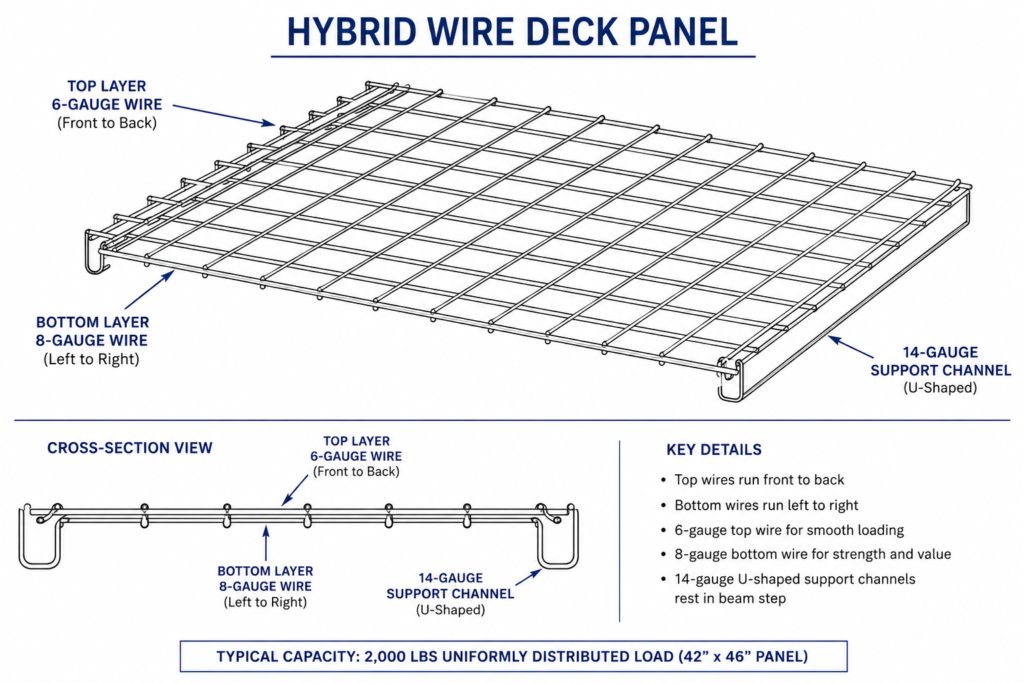
Simply put, a hybrid wire deck panel uses two different gauges of wire in the same deck. The most common configuration uses 6 gauge wire on top and 8 gauge wire on the bottom.
Hybrid wire deck panels are commonly used with selective pallet rack, the most common type of pallet rack found in warehouses and distribution facilities.
As wire costs have steadily increased, this design provides an economical alternative to a standard wire deck while maintaining the strength and durability needed for most warehouse applications.
How Is a Wire Deck Panel Constructed?
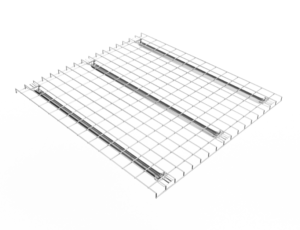
A wire deck panel is designed to sit inside the step of a pallet rack beam. Most step beams have a 1 5/8 inch step along the front and rear of the beam. The deck has U shaped support channels that rest in these beam steps. On a hybrid wire deck, the support channels are typically made from 14 gauge steel.
Two layers of welded wire are then attached to the support channels. The top layer uses heavier 6 gauge wire, while the bottom layer uses 8 gauge wire.
Why Are the Wires Installed in Different Directions?
The orientation of the wire is intentional. The 8 gauge bottom wire runs from upright to upright, or left to right across the rack. The heavier 6 gauge top wire runs from the front beam to the rear beam. This allows boxes, skids and pallets to move smoothly across the heavier top wires as they are loaded into the rack.
Why Use a Hybrid Wire Deck?
The primary reason is cost. Using 8 gauge wire for the bottom layer reduces the amount of steel required to manufacture the deck. At the same time, the 6 gauge top wire and 14 gauge support channels provide the strength and durability needed for everyday warehouse storage.
The result is a lower-cost wire deck that still provides more than enough capacity for most industrial applications.
How Much Weight Can a Hybrid Wire Deck Hold?
A typical 42 inch x 46 inch hybrid wire deck panel has a capacity of approximately 2,000 pounds uniformly distributed load. For comparison, a standard wire deck panel of the same size typically has a 2,500 pound capacity.
That is only a 500 pound difference, or about 20 percent. For many warehouses, 2,000 pounds is more than enough for the products being stored. If you are storing particularly heavy pallets, a standard or higher-capacity wire deck may be the better choice.
Why Choose Wire Decking Over Wood?
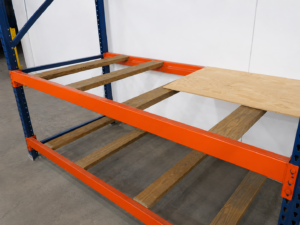
Pallet rack beams were originally designed with steps that could accommodate 2×4 or 2×6 lumber, often with wood plywood decking installed on top. As lumber prices increased and robotic welding made wire deck manufacturing more efficient, wire decking became a cost-effective alternative to wood.
Wire decking also provides several advantages, including improved airflow for fire suppression systems, increased visibility and no wood surface for dust and debris to collect.
Is a Hybrid Wire Deck Right for Your Rack?
For many warehouses, a hybrid wire deck provides an excellent combination of price, durability and capacity. If you are replacing existing decking or adding wire decking to a new pallet rack system, Midwest Material Handling can help you determine the right size and capacity for your application.
One of the questions we are asked most often is, “What is the most common depth for a pallet rack upright?”
The answer, by a wide margin is 42 inches.
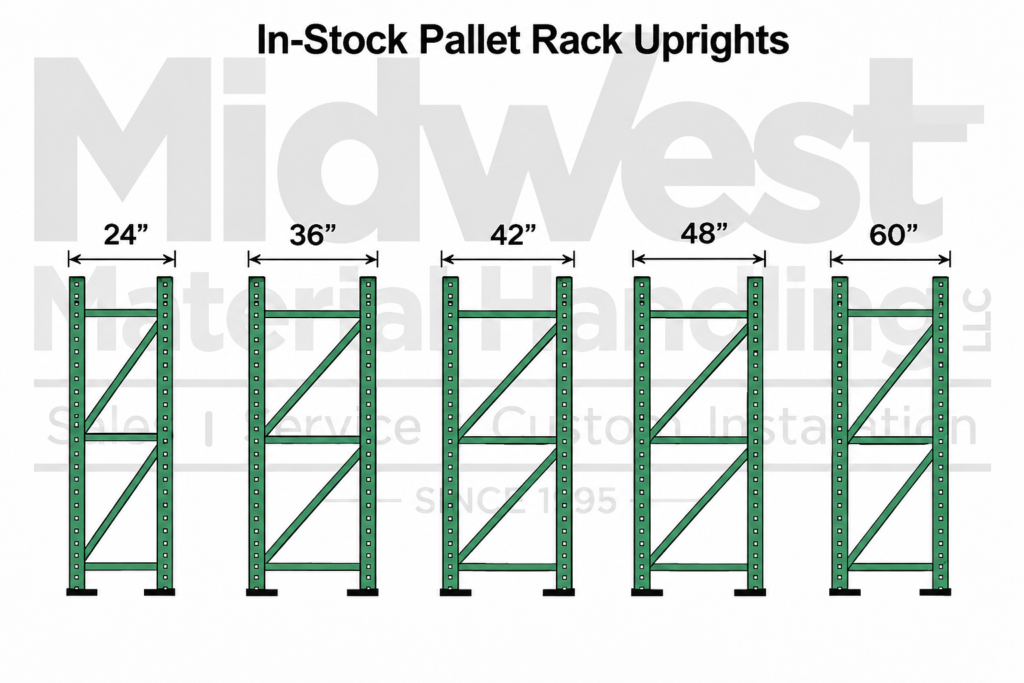
While we regularly stock 24 inch, 36 inch, 42 inch and 48 inch deep and 60 inch deep uprights (in 20 foot heights only), the 42 inch deep upright is by far the most popular. In fact, approximately 80% of the upright frames we sell are 42 inches deep.
Many customers call us looking for 48 inch deep uprights because they assume a four foot deep rack must use a 48 inch deep frame. While 48 inch deep uprights are common and we stock them, they are not the industry standard for most selective pallet racking applications.
How Is Pallet Rack Upright Depth Measured?
One question we hear from customers is how pallet rack upright depth is actually measured. Upright depth is measured from the outside face of the front column to the outside face of the rear column. It is not measured between the columns or from the centerline of each column.
For example, a 42 inch deep upright measures approximately 42 inches from the outside of the front column to the outside of the rear column (front to back). Likewise, a 48 inch deep upright measures approximately 48 inches using the same method.
Why 42 Inch Deep Uprights Are the Industry Standard
The reason is simple. A standard GMA pallet measures approximately 46 inches deep. In most pallet rack systems, the 46 inch dimension rests on the front and rear load beams.
Pallet rack is designed so the pallet transfers its weight directly onto both load beams. Ideally, the pallet should overhang the front beam by about 2 inches and the rear beam by about 2 inches. This allows the load to be supported exactly as the rack was engineered.
A 42 inch deep upright provides almost the perfect fit for a standard 46 inch deep pallet. A common misconception is that a 48 inch deep upright is the correct choice for a standard pallet. In most applications, it is actually too deep. Because there is little or no pallet overhang, the pallet may not bear on both beams as intended by the rack design.
When Should You Use a 48 Inch Deep Upright (or Deeper)?
Although less common, 48 inch deep uprights definitely have their place.
The standard rule of thumb for choosing the correct size upright is to take your skid depth and deduct 4″-6″ from it. The 4″-6″ allows for the skid to “overhang” over the front and back beam. Remember, we always want the load to be applied to both beams!
They are commonly used for:
Extra deep or oversized pallets, like automotive
Snow plows and attachments
Farm implements
Large equipment and machinery
Other products that require additional rack depth
A 48 inch deep upright is also a popular choice for hand-loaded shelving applications where employees are storing boxes instead of pallets and want the maximum amount of shelf depth available.
Pallet Rack Upright Depths We Stock
Midwest Material Handling maintains a large inventory of pallet rack uprights in the industry’s most popular depths, including:
24 inch deep uprights
36 inch deep uprights
42 inch deep uprights
48 inch deep uprights
60 inch deep uprights (currently stocked in 20 foot heights)
Whether you need a single replacement upright or a complete warehouse rack system, we can help you select the proper depth for your application.
Replacing Existing Pallet Rack?
If you’re replacing an existing pallet rack, don’t guess at the upright depth. Measure it. Many customers are surprised to find they have 42 inch deep uprights when they were convinced they were 48 inches.
The easiest way to verify the depth is to measure from the outside face of the front column to the outside face of the rear column. Taking a few moments to measure your existing frame can help ensure you order the correct replacement upright the first time.
Keep in mind that upright depth alone does not identify the manufacturer. Different manufacturers produce 42 inch deep uprights, but the column shape, beam connector design, hole pattern and frame construction can vary considerably. If you’re unsure what you have, send us a few photos and measurements and we’ll be happy to help identify your pallet rack.
Frequently Asked Questions (FAQ’s)
What is the most common pallet rack upright depth?
The most common pallet rack upright depth is 42 inches. Approximately 80% of the upright frames we sell are 42 inches deep because they are ideally suited for standard 46 inch deep pallets.
Why isn’t a 48 inch deep upright the standard?
A standard GMA pallet is approximately 46 inches deep. A 42 inch upright provides about 2 inches of pallet overhang on both the front and rear load beams, allowing the pallet to rest on both beams as intended. A 48 inch deep upright is generally too deep for a standard pallet.
When should I use a 48 inch deep upright?
A 48 inch deep upright is often used for oversized pallets, snow plows, farm implements, machinery and hand-loaded shelving applications where additional shelf depth is beneficial.
What upright depths do you stock?
We stock pallet rack uprights in 24 inch, 36 inch, 42 inch and 48 inch depths. We also stock 60 inch deep uprights in 20 foot heights.
How do I measure the depth of my pallet rack upright?
Measure from the outside face of the front upright column to the outside face of the rear upright column. This measurement determines the nominal depth of the upright frame.
Need Help Choosing the Right Pallet Rack Upright?
Choosing the correct upright depth is one of the most important decisions when purchasing pallet rack. The right frame depth provides proper pallet support, maximizes storage efficiency and ensures your rack system is matched to the products you store. Whether you’re replacing a damaged upright, expanding an existing system or designing a new warehouse, Midwest Material Handling can help.
We stock new and used pallet rack uprights in 24 inch, 36 inch, 42 inch and 48 inch depths, along with 60 inch deep uprights in 20 foot heights. Many sizes are available for immediate pickup or fast shipment throughout Ohio and beyond. Contact Midwest Material Handling today for current inventory, pricing and expert advice. We’ll help you select the right pallet rack upright for your application the first time.
Summer construction projects don’t leave much room for delays. When schools are racing to complete renovations before students return, every day counts.
Recently, a large, local electrical contractor contacted Midwest Material Handling while working on expansion and renovation projects at four Columbus, Ohio area high schools. Their crews needed an efficient way to transport construction debris from inside the buildings to large roll off dumpsters located several hundred yards away.
More importantly, they needed the equipment immediately. Fortunately, we had the solution in stock.
Four Self Dumping Hoppers Delivered in Just Two Days
After reviewing the contractor’s application, they purchased four self dumping hoppers to support multiple job sites simultaneously. Because we stock many of our most popular self dumping hopper models, we were able to process the order, arrange shipping and deliver all four hoppers in just two days.
Fast turnaround helped keep the contractor’s crews productive and prevented unnecessary project delays. When schedules are tight, having equipment available when you need it can make all the difference.
Self Dumping Hoppers Are More Versatile Than Most People Think
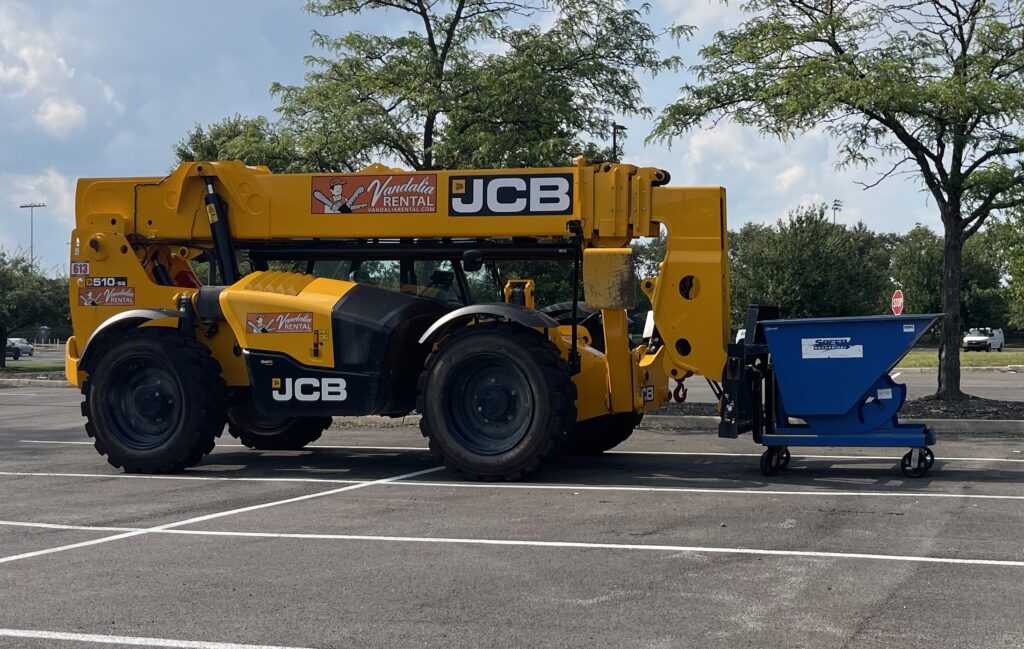
Although they’re commonly referred to as self dumping forklift hoppers, these containers aren’t limited to warehouse forklifts. In this project, the contractor used a JCB telehandler that was already on site. While the telehandler may have been more machine than the application required, it was available and handled the job perfectly.
Self dumping hoppers can be used with almost any piece of equipment equipped with forks and sufficient lifting capacity, including:
Warehouse forklifts
Rough terrain forklifts
Telehandlers
Construction forklifts
Skid steers with fork attachments
Wheel loaders with fork attachments
The equipment may vary, but the hopper performs the same reliable job.
Ideal for Construction, Warehouses and Manufacturing
While self dumping hoppers are commonly found in warehouses and manufacturing facilities, they’re equally valuable on construction sites.
Typical applications include:
Construction debris
Drywall and demolition waste
Scrap conduit and electrical materials
Wood and metal scrap
Cardboard and packaging
Recycling operations
General facility cleanup
By allowing operators to safely collect, transport and dump material, self dumping hoppers reduce manual labor while improving productivity and jobsite safety.
In Stock and Ready to Ship
One of the biggest advantages we offer isn’t just the quality of our self dumping hoppers. It’s having inventory available when customers need it most. This project demonstrates how fast delivery can help contractors stay on schedule. From the initial phone call to delivery, all four hoppers arrived in just two days, allowing work to continue without interruption.
If you need a self dumping hopper for your warehouse, manufacturing facility or construction project, Midwest Material Handling can help you select the right model and get it to your jobsite quickly.
Frequently Asked Questions (FAQ’s)
Can a self dumping hopper be used with rough terrain or reach forklifts?
Absolutely. Self dumping hoppers can be used with telehandlers, rough terrain forklifts and other equipment equipped with forks, provided the machine has adequate lifting capacity.
How quickly can you ship a self dumping hopper?
Many of our most popular self dumping hopper models are in stock and ready to ship. Depending on inventory and your location, many orders can be delivered within just a few days.
What industries use self dumping hoppers?
Self dumping hoppers are commonly used in warehouses, manufacturing facilities, construction sites, recycling operations, maintenance departments and distribution centers.
What materials can a self dumping hopper handle?
They’re designed to handle construction debris, scrap metal, cardboard, wood, packaging materials, recycling and many other types of industrial and commercial waste.
Need a Self Dumping Hopper Fast?
Whether you’re cleaning up a construction site, managing scrap in a manufacturing facility or improving material handling in your warehouse, Midwest Material Handling has a variety of self dumping hoppers in stock and ready to ship. Contact our team today for current pricing, availability and expert assistance selecting the right hopper for your application.
When Thomas Worthington High School underwent its extensive renovation and expansion, the theater department had an opportunity to completely rethink how it stored costumes, scenery, lumber, stage props and valuable equipment. Rather than relying on traditional shelving, the school partnered with Midwest Material Handling to design, furnish and install a customized storage system that would maximize limited floor space, utilize the building’s full vertical height and create safer, more organized work areas for students and staff.
At first glance, this may sound like a typical pallet rack project. FAR FROM IT.
Every room presented a different challenge, and there wasn’t an off-the-shelf solution that could accomplish everything the theater department envisioned. Instead, this became a true design-build project requiring careful planning, multiple site visits, engineering, creative problem solving and close collaboration with the Head of the Theater Department and representatives from the Worthington School District.
When most people think of pallet rack, they picture warehouses filled with pallets, forklifts and distribution centers. At Midwest Material Handling, we’ve spent decades helping customers discover that industrial storage systems can be used for much more than storing palletized products. The result is one of the most unique storage systems Midwest Material Handling has designed and installed in many years.
Unlike a traditional warehouse, every storage requirement inside the theater department was completely different. The scene shop needed organized storage for lumber, wooden wall panels, scenery, stage props and valuable equipment while maintaining an efficient workspace for students and staff. Across the hallway, the theater department wanted to organize decades of theatrical costumes. The challenge wasn’t simply hanging clothing. Many of these costumes are surprisingly heavy due to elaborate fabrics, costumes, accessories and specialty materials accumulated over many years of productions.
The department also wanted upper-level storage for storage bins, furniture and oversized props that are only used occasionally. Perhaps the biggest challenge of all was available floor space. The renovated theater areas offered limited square footage, making it critical to maximize vertical storage. By utilizing 192-inch (16-foot) pallet rack uprights, we were able to dramatically increase storage capacity without increasing the building’s footprint. Traditional shelving simply could not provide the height, flexibility or load capacity needed for this application.
By building upward instead of outward, the theater department gained significantly more storage while preserving valuable floor space for set construction, instruction and day-to-day operations.
Complete Design-Build Services
Many companies can supply storage equipment. Our role on this project extended much further. Midwest Material Handling was responsible for the complete design-build process, including planning, engineering coordination, equipment sourcing, logistics management, material offloading and professional installation.
From the very first site visit through the final installation, our goal was to provide one coordinated solution rather than simply deliver storage equipment. That approach allowed the theater department to focus on how they wanted the spaces to function while we focused on developing storage systems that would support those goals.
A True Design-Build Collaboration
Projects like this don’t begin with product catalogs. Throughout the planning process, our sales staff and Installation Project Manager made multiple visits to Thomas Worthington High School to better understand how the theater department actually operates. We met several times with the Head of the Theater Department as well as representatives from the Worthington School District to discuss ideas, evaluate space limitations and verify critical dimensions.
Because every storage area served a different purpose, accurate measurements were essential. Multiple site visits allowed us to refine layouts, confirm dimensions and make adjustments before equipment was ever ordered. As often happens with successful design-build projects, the design evolved throughout the planning process.
Several revisions were made as new ideas emerged and additional opportunities to improve the layout became apparent. While the school clearly communicated its goals and operational needs, much of the final design was entrusted to our team. That freedom allowed us to combine standard industrial storage products in creative ways to develop solutions specifically tailored to the theater department’s needs.
One of the most rewarding aspects of this project was the collaborative relationship we developed with the Head of the Theater Department and two Administrators from the School District. She brought firsthand knowledge of how the department stores scenery, costumes and production materials, while our team contributed decades of experience designing industrial storage systems.
Together, we created storage solutions that neither side could have developed alone. She was thrilled with the finished result.
The Scene Shop
The first area we designed was the theater department’s scene shop, just off of the main stage area. This is where students design, build and store the scenery, props and wooden wall panels used in theater productions. Unlike a warehouse, every square foot in the room serves multiple purposes. Students need room to safely work while also having convenient access to lumber, tools, scenery and construction materials.
Simply adding shelving would have consumed valuable workspace. Instead, we designed an integrated storage system that combined selective pallet rack, cantilever rack, controlled access storage and bulk storage into one efficient work environment. Every component was selected with a specific purpose in mind.
Vertical Storage for Wooden Wall Panels
One of the unique storage challenges involved the large wooden wall panels used to build theatrical stage sets. The Head of the Theater Department wanted these panels stored vertically so they would remain organized, protected and easy to access while occupying as little floor space as possible.
We designed a dedicated vertical storage section using pallet rack components that securely holds the wooden wall panels upright while keeping valuable floor space available for production work. This solution allows staff and students to quickly retrieve and return panels as productions change throughout the year while protecting the materials from unnecessary damage. It’s another example of how standard industrial storage products can be adapted to solve highly specialized storage challenges.
Controlled Access Storage for Valuable Equipment
Safety was an important consideration throughout the project. The theater department needed secure storage for valuable tools and equipment that should not be readily accessible to students. To accomplish this, we incorporated wire security enclosures directly into the pallet rack system, creating controlled access storage for items such as power tools, saws and other valuable equipment.
The enclosed storage areas allow staff to securely store valuable equipment while continuing to utilize the upper pallet rack levels for additional bulk storage. A second standalone pallet rack section with its own controlled access enclosure was installed on an adjacent wall, providing another secure storage location for equipment and supplies. By integrating the security enclosures into the pallet rack system, we were able to maximize available storage space while improving both organization and security.
All of the pallet rack, wire security enclosures and cable reel brackets used on this project were manufactured by Husky Rack & Wire, a longtime supplier of quality industrial storage products.
Cantilever Rack Designed Around a Large Table Saw
Perhaps the most interesting feature of the entire scene shop is the cantilever rack system. The theater department needed storage for lumber in a variety of lengths and dimensions used to construct scenery and stage sets. Rather than simply placing cantilever rack along the wall, we designed the entire system around the planned location of the table saw. The saw is positioned within the cantilever rack so long boards remain supported by the cantilever arms while they are being cut.
In other words, the storage system actually becomes part of the workspace. This innovative layout improves efficiency, helps support longer materials during cutting and makes the best possible use of the available floor space. Like many aspects of this project, it wasn’t simply about installing storage equipment.
It was about understanding how the theater department works every day and designing a storage system that supports those activities.
Engineering the Costume Storage System
Across the hallway from the scene shop, the theater department faced a completely different storage challenge.
Over many years, Thomas Worthington High School had accumulated an extensive collection of theatrical costumes used in countless productions. The goal was to create an organized storage system that would keep those costumes protected, easy to access and efficiently organized while also providing additional overhead storage for seasonal decorations, storage bins, furniture and oversized stage props. At first glance, the project appeared relatively straightforward. Install pallet rack. Hang steel pipe between the uprights. Store costumes. The reality was far more involved.
During one of our design meetings, the Head of the Theater Department explained just how heavy many of the costumes had become over the years. Between elaborate fabrics, period costumes, uniforms, armor, accessories and specialty garments, the weight being concentrated on each hanging bar would be far greater than most people would expect. That conversation completely changed the design. Instead of making assumptions, we decided to engineer the system from scratch.
Using Standard Components in an Innovative Way
One of the themes throughout this project was using proven industrial products in creative ways. For the costume storage system, we utilized cable reel brackets manufactured by Husky Rack & Wire. These brackets are normally designed to support cable reels mounted on pallet rack in industrial environments. For this project, however, they became the perfect solution for supporting custom costume hanging bars.
Rather than designing expensive custom brackets, we adapted an existing industrial product for an entirely different purpose. The result was both practical and economical while maintaining the strength and durability expected from industrial storage equipment. It’s a perfect example of how thoughtful engineering can transform standard products into highly specialized storage solutions.
Engineering Changed the Design
Originally, we hoped to use eight-foot hanging bars between supports. From a storage standpoint, longer spans would have reduced the number of vertical supports while providing larger hanging sections for costumes. However, engineering told a different story. After evaluating the anticipated loading and calculating expected pipe deflection, it became clear that an eight-foot span would not provide the long-term performance we wanted.
Rather than compromise the design, we changed it. The final system utilizes four-foot hanging sections, dramatically reducing pipe deflection while providing the strength necessary to safely support years of accumulated costumes. Sometimes the best engineering decision is changing the original plan. This was one of those cases.
Locally Fabricated Hanging Bars
Once the engineering calculations were complete, we had the hanging bars fabricated locally here in the Columbus area using Schedule 40 steel pipe.
Every piece was cut to our specified lengths before arriving at the jobsite.
The finished system combines:
Husky Rack & Wire cable reel brackets
Locally fabricated Schedule 40 steel pipe
Selective pallet racking
Wire deck panels
Together, these components created a storage system specifically engineered for the theater department’s unique requirements.
Making the Most of Vertical Space
The costume storage area also demonstrates one of the biggest advantages of pallet rack. The theater department simply didn’t have unlimited floor space. Instead of expanding outward, we expanded upward.
By utilizing 192-inch (16-foot) pallet rack uprights, we were able to create multiple storage levels within the same footprint. Below, the theater department gained organized hanging storage for costumes. Above, they gained valuable bulk storage for plastic storage bins, seasonal decorations, oversized props and furniture that are only used occasionally.
Traditional shelving simply could not have accomplished this. The strength, adjustability and height of pallet rack made it possible to maximize every cubic foot of available space.
Safe Access to Upper Storage
Creating additional storage is only valuable if it can be accessed safely. To make the upper storage levels practical, the school also purchased a 24-inch-wide, 10-step rolling safety ladder. Although it isn’t shown in the project photographs, the ladder provides staff with safe and convenient access to the upper pallet rack levels while maintaining a clean and organized appearance throughout the hallway.
Every aspect of the project was designed with long-term functionality in mind.
Safety Was Designed Into Every Detail
Safety influenced nearly every decision throughout the project. The controlled access storage areas protect valuable equipment that should not be readily available to students. The engineered hanging system minimizes pipe deflection under heavy loads. The vertical storage for wooden wall panels improves organization while reducing clutter within the scene shop.
The cantilever rack safely stores long lumber while also supporting materials during cutting operations. The rolling safety ladder provides safe access to elevated storage. Even the layout of each storage system was designed to improve workflow while minimizing unnecessary handling of materials. Creating more storage was important.
Creating safer storage was equally important.
Coordinating 7 Different FOB Shipping Points
Although the finished project appears to be one seamless installation, coordinating the equipment required extensive planning behind the scenes. Materials originated from seven different FOB shipping points. The pallet rack, cable reel brackets and wire security enclosures were all manufactured by Husky Rack & Wire. All wire deck panels were manufactured by ITC Manufacturing. The Schedule 40 hanging bars were fabricated locally in the Columbus area.
Coordinating deliveries from multiple suppliers required careful scheduling long before installation ever began. Our responsibility extended far beyond simply supplying storage equipment. We coordinated product sourcing, scheduling, deliveries and logistics so every component would be available when installation began.
Adapting When Construction Schedules Changed
Like many large construction projects, this one required flexibility. Our installation had originally been scheduled several weeks earlier. Rental equipment, including a forklift and scissor lift, had already been arranged and delivered. Then construction schedules changed. At the time, the new asphalt driveway serving the theater addition had not yet been completed. Without a finished driveway, there was no practical location for trucks to safely receive, stage or unload materials.
Rather than allowing the project to stall, we immediately adjusted our logistics plan. Working with one of our most trusted transportation partners, Bonnie Speed Delivery of Plain City, Ohio, nearly all of the inbound shipments were redirected to their facility. There, the material was professionally received, inventoried and safely stored while construction continued.
Once the new asphalt driveway was completed, Bonnie Speed Delivery consolidated six separate inbound shipments into a single delivery, allowing our installation team to unload, organize and install the project efficiently. We’ve worked continuously with Bonnie Speed Delivery for more than 28 years. Their flexibility, responsiveness and dependable service have made them one of our most valued business partners, and this project was another excellent example of how strong partnerships benefit our customers.
Professional Installation and Project Coordination
With planning complete and materials finally on site, our fully insured, trained and skilled installation team, led by our Installation Project Manager, completed the installation over the course of two and a half days. Although Thomas Worthington High School is an established school, this project was part of a significant renovation and expansion that transformed much of the facility.
During our installation, numerous contractors were still completing the final stages of construction. Exterior landscaping was underway while electricians and other trades were finishing interior work throughout the building. Successfully working within that environment required careful coordination and communication. Our installation team transported every component throughout the building using carts to protect the newly renovated spaces while coordinating with the overall construction schedule.
The installation was completed during summer break, ensuring the theater department would be fully prepared before students returned for the new school year. Every installation performed by Midwest Material Handling is supervised by an experienced Installation Project Manager who works closely with our sales staff, customers, general contractors and project teams to ensure every detail is completed according to plan.
Serving Educational Facilities Throughout Ohio and Beyond
The Thomas Worthington High School theater expansion is one example of Midwest Material Handling’s longstanding commitment to serving educational institutions. For decades, we’ve been designing and installing storage systems for high schools, colleges and universities throughout Ohio and beyond. From theater departments and vocational education programs to maintenance facilities, athletic departments and warehouse operations, we understand that educational environments require much more than standard shelving.
Most importantly, every storage solution must support the way teachers, staff and students actually use the space. Our experience working with educational facilities allows us to look beyond standard products and develop practical, long-term storage solutions tailored to each customer’s specific needs. This project also reflects a growing trend we’re seeing in educational facilities. Schools are increasingly looking beyond traditional shelving and exploring industrial storage systems that provide greater capacity, improved organization and long-term durability.
In addition to Thomas Worthington High School, Midwest Material Handling recently completed a custom cantilever rack installation at the newly renovated Lancaster High School in Lancaster, Ohio, further demonstrating how industrial storage products can be adapted to meet the unique storage needs of educational environments. Whether we’re designing storage for a theater department, vocational program, maintenance shop or athletic facility, our goal remains the same: maximize available space while creating organized, durable and safe storage systems that will serve schools for decades.
What Made This Project Unique?
Every storage project presents its own challenges. This one was especially rewarding because it combined engineering, creativity, collaboration and logistics into one seamless solution.
Some of the highlights included:
Multiple collaborative planning meetings with the Head of the Theater Department and representatives from the Worthington School District.
Several design revisions as ideas evolved throughout the project.
Engineering calculations that changed the original hanging bar design from eight-foot spans to four-foot spans.
Standard Husky Rack & Wire cable reel brackets creatively repurposed to support engineered costume hanging bars.
Locally fabricated Schedule 40 steel pipe manufactured to our specifications.
Vertical storage designed specifically for large wooden wall panels.
Controlled access storage integrated directly into the pallet rack system.
Cantilever rack designed around the placement of the table saw so the rack itself becomes part of the workspace.
Multiple upper storage levels created using 192-inch (16-foot) pallet rack uprights.
Materials coordinated from seven different FOB shipping points.
Temporary warehousing and logistics coordination through Bonnie Speed Delivery.
Material offloading and installation completed by Midwest Material Handling’s fully insured, trained and skilled installation team under the direction of an experienced Installation Project Manager.
Projects like this remind us that some of the best storage solutions aren’t found in a catalog. They’re developed through collaboration, engineering and creative thinking.
Frequently Asked Questions (FAQ’s)
Why did Thomas Worthington High School choose pallet rack instead of traditional shelving?
Space was one of the biggest challenges. The theater department had a limited amount of floor space but needed to store a tremendous amount of costumes, scenery, lumber, props and equipment. By utilizing 192-inch (16-foot) pallet rack uprights, we were able to maximize the building’s vertical space, creating multiple storage levels without increasing the footprint. Traditional shelving simply could not provide the height, flexibility and load capacity required for this application.
By building upward instead of outward, the theater department gained significantly more storage while preserving valuable floor space for instruction, set construction and day-to-day operations.
Why were cable reel brackets used for the costume storage system?
The costume hanging system utilizes cable reel brackets manufactured by Husky Rack & Wire. These brackets are normally designed to support cable reels mounted on pallet rack in industrial facilities. For this project, we creatively repurposed them to support engineered Schedule 40 steel hanging bars, demonstrating how standard industrial products can often be adapted to solve unique storage challenges.
Why were the hanging bars reduced from eight feet to four feet?
Engineering weight calculations evaluating anticipated loading and pipe deflection determined that four-foot spans would provide significantly better long-term performance than eight-foot spans. Changing the design before fabrication ensured the system would safely support the considerable weight of years of accumulated theatrical costumes.
Why was cantilever rack selected for the scene shop?
Cantilever rack is ideal for storing long materials such as dimensional lumber because it provides unobstructed storage without front columns. For this project, we designed the rack around the planned location of the table saw so the cantilever arms also support long boards during cutting operations, making the storage system part of the workspace itself.
Why were controlled access storage areas included?
The theater department needed secure storage for valuable tools and equipment, including power tools, saws and other items that should not be readily accessible to students. By integrating wire security enclosures into the pallet rack system, we created controlled access storage without sacrificing valuable storage capacity.
How many manufacturers supplied equipment for this project?
Several manufacturers contributed products to the project, while materials originated from seven different FOB shipping points. Pallet rack, cable reel brackets and wire security enclosures were supplied by Husky Rack & Wire. Wire deck panels were supplied by ITC Manufacturing. Schedule 40 steel hanging bars were fabricated locally in the Columbus area.
Midwest Material Handling coordinated every aspect of product sourcing, logistics and installation.
Does Midwest Material Handling design custom storage systems?
Absolutely. Every project begins with understanding how the customer uses their space. From there, we combine proven industrial storage products with thoughtful engineering and creative design to develop customized storage systems that maximize space, improve organization and support long-term operations. Our services include design consultation, engineering coordination, equipment sourcing, logistics management, professional installation and ongoing customer support.
Does Midwest Material Handling work with schools and educational facilities?
Yes. Midwest Material Handling has a long history of designing and installing storage systems for high schools, colleges and universities throughout Ohio and beyond. Educational facilities often present unique storage challenges that require creative thinking, careful planning and engineered solutions. Our experience allows us to develop storage systems that maximize available space, improve organization, enhance safety and support the way educators, staff and students actually use their facilities.
Can Midwest Material Handling help with unusual storage challenges?
Absolutely. Some of our most successful projects involve applications far beyond traditional warehouse storage. Whether it’s a theater department, maintenance facility, manufacturing plant, municipality or commercial operation, we enjoy solving complex storage challenges by combining standard industrial products with innovative design.
Every Great Storage Solution Starts with Understanding the Space
At Midwest Material Handling, we believe the best storage solutions begin by understanding how a space is actually used. Whether we’re designing storage for a warehouse, manufacturing facility, theater department, municipality or educational campus, our objective is always the same: create safe, efficient and durable storage systems that help our customers make the best possible use of their available space. The Thomas Worthington High School theater expansion perfectly demonstrates that philosophy.
From the first planning meeting through the final installation, every decision was guided by collaboration, engineering and a commitment to finding the best possible solution. The result wasn’t simply more storage. It was a carefully designed environment that supports the way the theater department builds scenery, stores costumes, protects valuable equipment and prepares for productions throughout the school year.
Projects like this are why we enjoy what we do. They challenge us to think differently. They remind us that standard industrial storage products can often solve extraordinary problems when combined with experience, creativity and thoughtful design. If your school, university, municipality, warehouse or manufacturing facility has a unique storage challenge, we’d welcome the opportunity to help. From design and engineering to product sourcing, logistics management and professional installation, Midwest Material Handling delivers complete storage solutions that go far beyond simply supplying equipment.
From the first site visit to the final bolt tightened, this project reflects the way Midwest Material Handling approaches every job: listen carefully, design thoughtfully, coordinate thoroughly and install professionally.
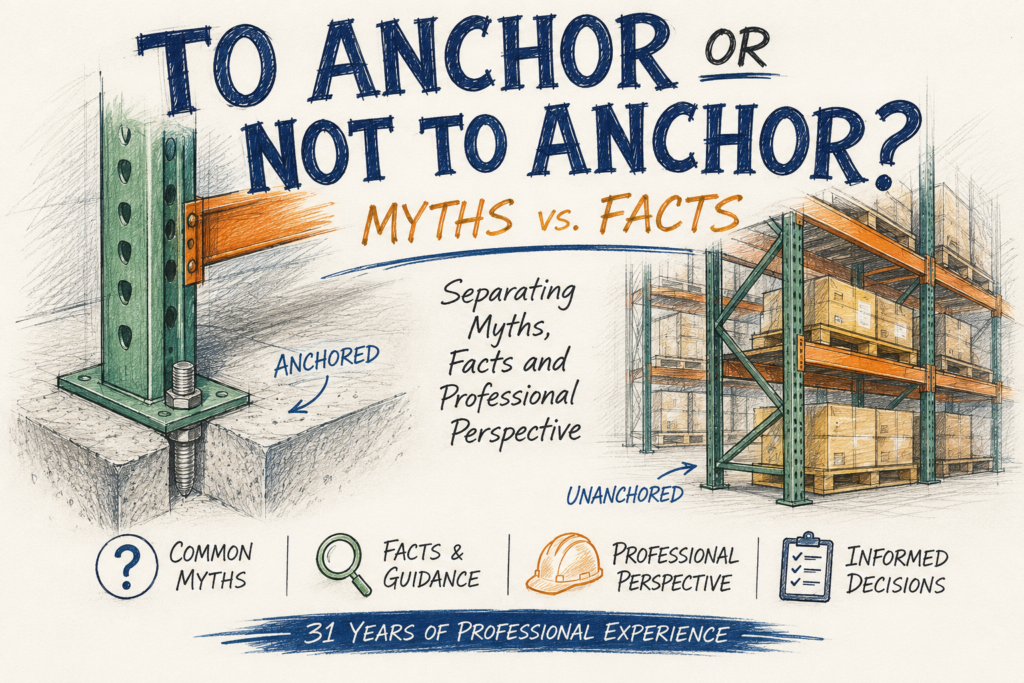
Does Pallet Racking Need to Be Anchored? Separating Myths, Facts & Professional Perspective
This is one of the most widely misunderstood topics we hear from warehouse owners, facility managers, installers and even professionals within the material handling industry. Few subjects generate more confusion than pallet rack anchoring because different regulations, standards and project requirements are often confused with one another.
The short answer is that it depends on which requirement you are referring to.
OSHA does not have a regulation that universally requires every pallet rack upright to be anchored. However, ANSI/RMI MH16.1, the nationally recognized engineering standard for industrial steel storage racks, generally requires rack columns to be anchored as part of the engineered rack design. In addition, rack manufacturers’ installation instructions, engineered drawings, seismic design criteria, local building codes and permit requirements may require anchoring for specific applications.
Much of the confusion stems from the fact that these requirements serve very different purposes and are enforced in very different ways. OSHA enforces workplace safety regulations. ANSI/RMI publishes nationally recognized engineering standards that are frequently referenced by manufacturers, engineers and code officials. Local building departments may enforce adopted building codes, while rack manufacturers require their products to be installed in accordance with their published instructions.
Understanding the difference between OSHA regulations, engineering standards, manufacturer requirements and local code requirements is the key to determining when pallet rack anchoring is actually required. At Midwest Material Handling, we’ve been designing, selling and installing pallet rack systems for more than 31 years. During that time, we’ve heard just about every argument for and against anchoring pallet rack.
This article isn’t intended to tell you there’s only one right answer. Instead, our goal is to separate common myths and fiction from documented facts and share our professional perspective based on more than three decades of installing and helping customers design warehouse storage systems.
Before We Begin…
Throughout this article, every statement falls into one of three categories…
MYTH
A commonly repeated belief or assumption we’ve heard from customers or throughout the material handling industry.
FACT
Information that can be verified through published regulations, manufacturer literature, engineering standards or other authoritative sources.
PROFESSIONAL PERSPECTIVE
Our professional judgment based on over 31 years of designing, selling and installing pallet rack systems and more than four decades of industry experience. Whenever we share our professional perspective, we’ll clearly identify it as such. Our goal isn’t to convince you to agree with every opinion we hold. Our goal is to help you separate myths from facts so you can make informed decisions for your own warehouse.
To ensure the factual portions of this article are accurate, we reviewed current OSHA guidance along with installation literature from several leading pallet rack manufacturers. Sources are noted below.
Myth #1… “OSHA requires every pallet rack installation to be anchored.”
FACT
This is probably the most common misconception in the pallet rack industry. There is no blanket OSHA regulation that states every pallet rack installation must be anchored to the concrete floor. That doesn’t mean anchoring is never required. Depending on the application, anchoring may be required by engineered drawings, seismic applications, local building codes, permit requirements or manufacturer installation instructions. Many people searching for “OSHA pallet rack anchor requirements” are surprised to learn that there is no blanket OSHA regulation requiring every pallet rack installation to be anchored.
This distinction is important because many people confuse OSHA regulations with manufacturer installation instructions, engineering requirements, seismic design and local building codes. They are not the same thing.
VERDICT
MYTH BUSTED
There is no blanket OSHA regulation requiring every pallet rack installation to be anchored.
Myth #2… “Manufacturers require every pallet rack installation to be anchored.”
FACT
This question isn’t as straightforward as many people believe. Many pallet rack manufacturers address anchoring in their installation manuals, but the language is not always identical. For example, the Interlake-Mecalux installation manual states that rack columns should be anchored using specified expansion anchors. UNARCO’s installation instructions state that when project specific anchoring details are not provided, the company recommends one anchor per column for standard pallet rack installations.
These examples demonstrate that manufacturers commonly recommend or suggest anchoring procedures within their installation literature. On engineered or permitted projects, anchoring requirements may also be established by the project drawings, the engineer of record or the local authority having jurisdiction. Following a manufacturer’s installation instructions may be necessary to comply with warranty requirements, engineered designs or project specifications, even though those instructions are separate from OSHA regulations.
PROFESSIONAL PERSPECTIVE
One of the reasons we wanted to write this article is because these distinctions often become blurred together. We frequently hear someone say, “You have to anchor pallet rack because OSHA requires it.” In reality, they may actually be referring to a manufacturer’s installation manual, an engineered drawing or a project requiring a building permit. These are generally requests and suggestions, not requirements.
Those are completely different sources of guidance. Understanding who is making the recommendation or requirement is an important part of evaluating any pallet rack installation.
VERDICT
Many manufacturers commonly “recommend” or “suggest” anchoring in their installation literature, rather than establishing a universal requirement. This terminology is important. However, projects in seismic regions, engineered installations and projects requiring building permits may have anchoring requirements that should always be followed.
Myth #3… “Anchoring pallet rack always makes it safer.”
FACT
Anchoring is intended to help resist movement at the base of the rack and may be required for certain applications, including engineered systems, seismic installations and projects subject to building permits. Whether anchoring improves overall safety depends on many factors, including rack height, frame depth, beam elevations, load distribution, seismic areas, operating conditions, forklift traffic and the specific application.
There is no single answer that applies to every warehouse.
PROFESSIONAL PERSPECTIVE
At Midwest Material Handling, we believe every warehouse deserves to be evaluated individually rather than applying the same solution to every installation. After 31 years of designing and installing pallet rack systems, we question whether permanently anchoring every standard warehouse installation provides a meaningful safety benefit in the vast majority of applications.
Every warehouse operates differently. Every rack configuration is different. Every customer has different operational needs.
Those differences should be considered before assuming every pallet rack installation benefits equally from concrete anchoring.
VERDICT
Anchoring can play an important role in certain applications. However, the belief that anchoring automatically makes every pallet rack installation safer is an oversimplification. The appropriate solution depends on the specific application, rack configuration and operating environment.
Myth #4… “Anchoring pallet rack has no downside.”
FACT
Anchoring pallet rack permanently alters the concrete floor. If the rack is relocated or removed, the anchor holes typically require repair. In leased facilities, repairing those holes is often the responsibility of the tenant and may affect the return of a security deposit if the floor is not restored to the landlord’s satisfaction. The floor can rarely be restored to the pre-anchor condition.
Every time a rack layout is changed, anchored uprights require the anchors to be removed, new holes drilled and the original holes repaired. Those are real costs that should be considered before deciding whether to anchor a pallet rack system.
PROFESSIONAL PERSPECTIVE
One of pallet rack’s greatest advantages is that it’s a modular storage system, commonly referred to throughout the material handling industry as component racking. Unlike permanent shelving, pallet rack is designed to be expanded, reduced, relocated and reconfigured as a business grows and warehouse operations evolve. Tools are not even needed to install it.
In our experience, warehouse layouts rarely remain the same for long. Inventory and workflow changes. Product lines expand. New equipment is introduced. Shipping and receiving departments are relocated. Businesses are constantly adjusting their storage systems to improve efficiency.
Every time a permanently anchored rack system is relocated, the anchors must be removed, new holes drilled and the old holes repaired. In leased facilities, those repairs often become the tenant’s responsibility and, in some cases, may result in the loss of part or all of a security deposit if the floor isn’t restored to the landlord’s satisfaction.
In our opinion, permanently anchoring pallet rack changes it from component racking into a semi permanent building fixture. That runs counter to one of the primary reasons businesses choose pallet rack in the first place… the ability to adapt as their warehouse changes.
VERDICT
Anchoring offers benefits in certain applications, but it also comes with tradeoffs. Permanently altering the concrete floor, increasing the effort required to reconfigure warehouse layouts and creating potential repair costs are all factors that should be considered before deciding whether to anchor a pallet rack system.
Myth #5… “Unanchored pallet rack will slide, shift or tip over under normal warehouse use.”
FACT
The stability of a pallet rack system depends on many factors, including rack height, frame depth, beam elevations, load distribution, the number of interconnected sections, floor conditions, forklift traffic, seismic considerations and whether the installation has been engineered for a specific application. There is no single factor that determines the stability of every pallet rack installation.
PROFESSIONAL PERSPECTIVE
For more than 31 years, Midwest Material Handling has been designing, selling and installing pallet rack systems. As additional rack sections are connected together and a significant amount of product is added, the overall stability of the rack system increases. In our professional judgment, once an interconnected rack system is carrying a meaningful amount of inventory and weight, it becomes extremely difficult for the rack to move under normal warehouse operating conditions. Of course, a forklift hitting it at a normal speed is the exception to the rule.
This perspective does not apply to every application. Exceptionally tall rack systems, shallow frame depths, seismic applications, engineered installations, single or individual rack sections and projects requiring building permits should always be evaluated on their own merits.
VERDICT
The belief that an unanchored pallet rack system will naturally slide, shift or tip over during normal warehouse operations is an oversimplification. Stability depends on the specific application, not simply on whether the rack is anchored.
Myth #6… “If a forklift hits an anchored upright, it’s always safer because the rack can’t move.”
FACT
Pallet rack is not designed to be struck by forklifts. Forklift impacts can damage rack uprights whether they are anchored or unanchored. The extent of the damage depends on many factors, including the speed and angle of impact, the weight of the forklift, the rack configuration and the severity of the collision.
PROFESSIONAL PERSPECTIVE
This is one of the most debated topics in the pallet rack industry. In our professional judgment, it’s reasonable to ask whether a rigidly anchored upright always performs better during a minor forklift impact than one that has the ability to move slightly as part of an interconnected, heavily loaded rack system.
We have not found published testing that conclusively demonstrates that a rigidly anchored upright always experiences less damage during every type of forklift impact than an interconnected rack system that is not anchored. We’re not suggesting that unanchored rack is better. We’re suggesting the answer isn’t always as simple as many people assume.
VERDICT
There is no simple answer.
Forklift impacts are influenced by many variables, and it is difficult to conclude that anchoring alone determines the outcome. Every application should be evaluated based on its specific operating environment and risk factors.
What is ANSI/RMI MH16.1?
One point of confusion is the role of ANSI/RMI MH16.1. ANSI/RMI is not a government agency and its standards are not OSHA regulations. Rather, ANSI/RMI MH16.1 is the nationally recognized consensus engineering standard used by pallet rack manufacturers and engineers for the design, testing and utilization of industrial steel storage racks.
Nearly every major pallet rack manufacturer designs its products around this standard, and installation instructions are generally written to comply with its requirements. While ANSI/RMI itself is not law, it represents the engineering standard that much of the pallet rack industry follows.
Conclusion
Should pallet rack be anchored? Like many questions in the material handling industry, the answer depends on the specific application and the requirements that apply to your project. While OSHA does not have a regulation that universally requires every pallet rack upright to be anchored, ANSI/RMI MH16.1, manufacturer installation instructions, engineered drawings, seismic design requirements, local building codes and permit requirements may require anchoring for many installations. Those requirements should always be followed.
One of the biggest sources of confusion is that OSHA regulations, ANSI/RMI engineering standards, manufacturer installation instructions and local building codes are often treated as though they are the same thing. They are not. Each serves a different purpose, and understanding which requirements apply to your facility is essential when designing or modifying a pallet rack system.
Every warehouse is different. Every rack configuration is different. Factors such as rack height, load capacity, forklift traffic, seismic conditions, engineered design, manufacturer specifications and local code requirements should all be considered before making decisions about pallet rack anchoring.
At Midwest Material Handling, our goal isn’t to promote or discourage anchoring. Our goal is to help customers understand the facts, separate common misconceptions from documented requirements and design warehouse storage systems that are safe, practical and appropriate for their specific application. The best pallet rack installation isn’t the one that follows internet myths. It’s the one that follows applicable regulations, recognized engineering standards, manufacturer requirements and sound professional judgment.
Frequently Asked Questions (FAQ’S)
Does OSHA require pallet rack to be anchored?
No. OSHA does not have a blanket regulation requiring every pallet rack installation to be anchored. However, engineered drawings, building codes, permit requirements or manufacturer installation instructions may require anchoring for specific applications.
Does ANSI/RMI require anchoring?
Yes. ANSI/RMI MH16.1 states that rack columns are to be anchored to the floor as part of the rack’s engineered design. The standard also includes limited exceptions for certain hand loaded storage racks when approved by a registered design professional. For typical forklift served pallet rack systems, anchoring is considered part of the engineered installation.
Are pallet rack anchors always required?
No. Requirements vary depending on the manufacturer, engineering requirements, building codes and the specific application.
When should pallet rack be anchored?
Anchoring is commonly appropriate for engineered installations, seismic applications, projects requiring building permits and other situations where anchoring is specified by the manufacturer, engineer or authority having jurisdiction.
Does anchoring make pallet rack safer?
Not always. It can in certain applications. However, whether anchoring improves safety depends on many factors including rack configuration, loading, operating conditions and the specific installation.
What size concrete anchors does Midwest Material Handling typically use?
When anchoring is required, we typically install 1/2 inch x 4 1/2 inch wedge anchors, unless project specifications or engineering requirements call for something different.
Can pallet rack uprights be anchored later?
Yes. Many warehouse owners install pallet rack first and anchor it later if engineering requirements, permitting or operational changes make anchoring appropriate.
Whether you’re installing a single row of pallet rack or designing an entire warehouse, every project deserves to be evaluated on its own merits. If you’re unsure whether anchoring is appropriate for your application, our team can help. With more than 31 years in business and decades of industry experience, Midwest Material Handling can recommend a storage solution based on your facility, your workflow and the applicable guidelines, not assumptions or myths.
Sources & References
The factual information in this article is based on published OSHA guidance, manufacturer installation literature and applicable engineering and building requirements. The Professional Perspective sections reflect Midwest Material Handling’s experience gained from more than 31 years in business and more than 40 years in the material handling industry.
References:
Occupational Safety and Health Administration (OSHA)
Husky Rack & Wire Installation Instructions
Interlake Mecalux Installation Manual
Steel King Assembly Guide
UNARCO Installation Instructions
Applicable engineering drawings, local building codes and permit requirements
Rack Manufacturers Institute (RMI) engineering standards and technical publications*
*RMI is an industry trade association, not a regulatory agency. Its publications are widely referenced by manufacturers, engineers and the material handling industry but are not, by themselves, legal requirements.