

If you’ve spent any time around lumber storage or long material racks, you’ve probably seen the same thing play out. Everything looks fine at first, but over time material starts creeping toward the end of the arm.
It doesn’t take much. A slightly off-center load, a little settling, or just repeated handling can shift things more than you expect. Before long, you’ve got boards or bundles sitting right at the edge.
That’s exactly why pipe stops for cantilever racking are used so often. They’re simple, relatively inexpensive, and they solve a problem that shows up in just about every real-world setup.
What Are Pipe Stops for Cantilever Racking?
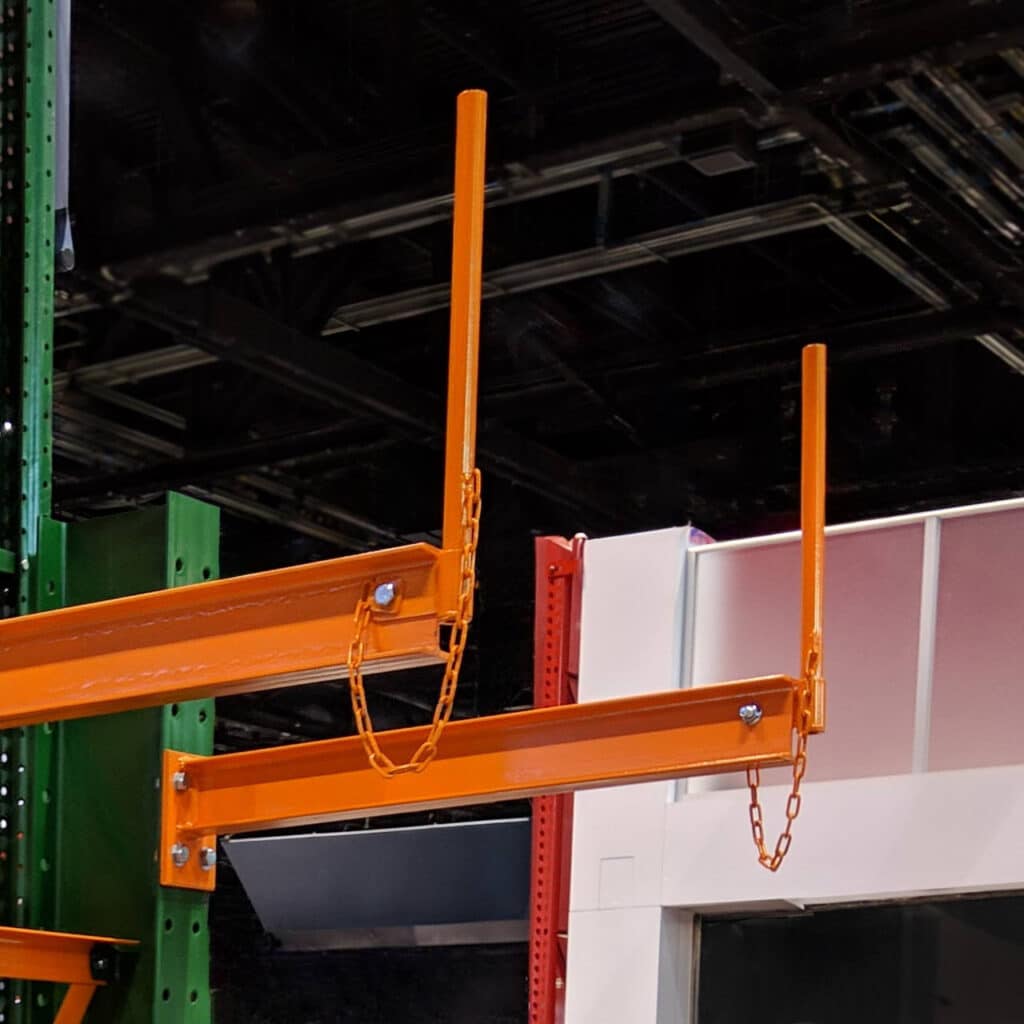
Pipe stops are vertical steel posts that mount at the end of a cantilever rack arm. In most cases, they attach using a field-installable, bolt-on flange, which means you can add them to an existing system without modifying the rack itself.
Once they’re in place, they do one job. They stop material from moving past the end of the arm.
Some people call them pipe stops, others call them arm stops or safety stops. Either way, the goal is the same—keep the product where it’s supposed to be.
Why Material Movement Becomes a Problem
Cantilever racks are built for long materials, but a lot of what gets stored on them isn’t perfectly stable.
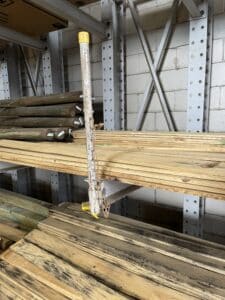
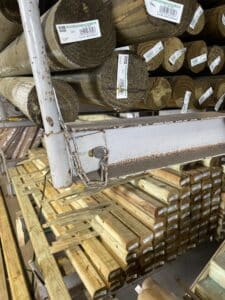
Lumber shifts. Pipe rolls. Bundles settle. Even when everything is loaded correctly, materials don’t just sit there forever. Forklift placement is not always perfect, and over time small movements add up. That’s when you start to see product hanging over the edge of the arm, or worse, ending up on the ground.
Pipe stops are a simple way to get ahead of that instead of reacting to it.
Why You See Them Everywhere in Lumber Storage
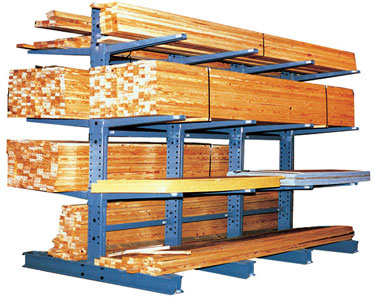
Lumber isn’t always uniform. Lengths vary, stacks aren’t perfect, and things settle over time. Without something stopping it, material naturally works its way outward.
Adding a pipe stop gives you a defined end point. It keeps stacks from creeping, makes loads easier to manage, and reduces the chances of material falling off the rack. It also just makes the whole system feel more controlled. And just as important, it’s not an expensive upgrade. That’s a big reason why so many operations use them.
Field Installable Makes This an Easy Upgrade
This is where pipe stops really stand out. Because they use a field-installable flange, you’re not locked into making this decision upfront when the rack is first installed. You can add them later, exactly where you need them. In many cases, if you know the original manufacturer of your cantilever rack, pipe stops can be added after the fact and matched to your existing system without any issue.
Installation is straightforward. The flange bolts onto the end of the arm and the pipe stop drops into place. There’s no cutting, no welding, and no major disruption to your operation. That flexibility is what makes this such a practical upgrade. You can start with a basic setup and add stops later as your needs change or as you start to see how your material behaves over time.
When Pipe Stops Make Sense
Not every setup needs them, but there are some clear situations where they’re worth adding. If you’re storing round materials like pipe or conduit, loose lumber that isn’t banded tightly, or anything with mixed lengths, you’re already dealing with movement. The same goes for operations where material gets handled frequently throughout the day.
In those cases, pipe stops are less of a nice-to-have and more of a practical improvement.
Keeping It Simple vs. Overthinking It
There are other ways to control material on cantilever racks, but most of them either add cost or require ongoing effort.
You can strap loads, but that takes time every time. You can build more containment into the system, but that can limit flexibility and increase cost. Or you can do nothing and deal with the occasional issue when it happens. Pipe stops sit in a good middle ground. They’re simple, permanent, and they don’t interfere with how the rack is used.
How This Fits Into Your Cantilever Rack Setup
Pipe stops are technically an accessory, but they have a real impact on how your system works day to day.
When you’re looking at a cantilever setup, it’s really part of a larger warehouse racking system, and small upgrades like this can make a big difference. It’s about how the material behaves once it’s on the rack. How it sits, how it shifts, and how easy it is to handle safely. Small additions like this tend to make a bigger difference than people expect.
Need a Second Set of Eyes?
Every operation is a little different. The type of material, how often it moves, and how it’s handled all play a role in what makes sense.
If you’re seeing material creep toward the edge of your rack arms, pipe stops are usually one of the first things to look at. They’re simple, cost-effective, and because they can be added after the fact, they don’t require a major system change.
If you want help thinking through your setup, Midwest Material Handling can walk through it with you and help you figure out what actually makes sense.
FAQ: Pipe Stops for Cantilever Racking
Do they take up usable space?
A little, but most people find the added control is worth it.
Can they be added to existing racks?
Yes. In most cases they are designed for field installation, and if the original manufacturer is known, matching components is usually straightforward.
Do they require welding or modification?
No. Most designs use a bolt-on flange, so installation is simple.
Do you need them on every level?
It depends on what you’re storing. Usually just where material is more likely to move.
Final Thought…
Not every improvement needs to be complicated or expensive.
Pipe stops for cantilever racking are a straightforward solution to a very common problem. They’re easy to install, relatively inexpensive, and flexible enough to be added after the fact when needed.
If you’ve ever seen material slowly work its way toward the edge of an arm, you already know why they’re worth considering.
