

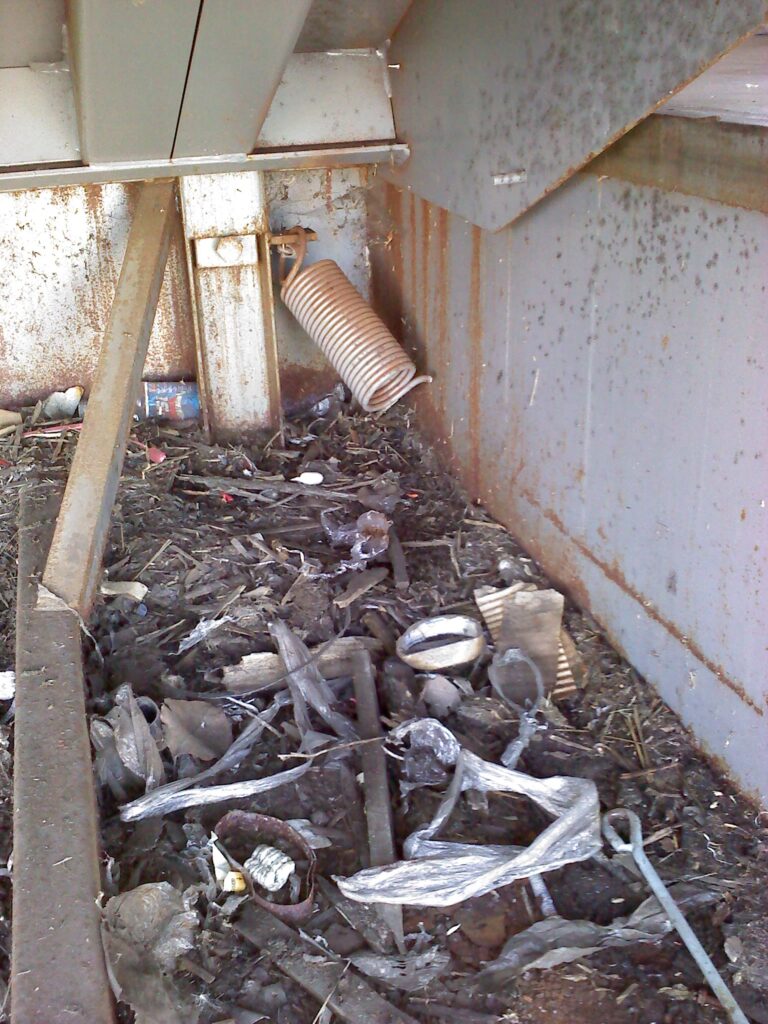
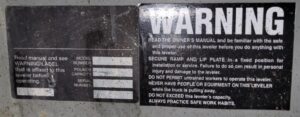
Most companies can identify a dock leveler with a serial number. We can identify them when the serial number is gone.
If you work around older loading docks long enough, you eventually run into the same frustrating situation: a dock leveler breaks down, replacement parts are needed quickly, and the serial plate is either unreadable or completely missing.
More times than not, this is exactly what we see in the field.
At Midwest Material Handling, we help customers identify replacement components through our Wholesale Dock Leveler Parts page every day. While a manufacturer name, model number, capacity, and serial number are always the easiest way to identify dock leveler parts, the reality is that many older dock levelers no longer have usable identification plates.
That is where experience matters.
For more than 30 years, we have worked on and identified old dock levelers throughout warehouses, trucking terminals, manufacturing facilities, and distribution centers across Ohio. After seeing tens of thousands of dock levelers over the years, many older manufacturers, spring configurations, hinge designs, and hydraulic layouts become recognizable even when no serial plate exists.
Identifying dock leveler parts without serial numbers requires experience, not just guessing.
How Do We Do It?
After more than 30 years working around loading dock equipment, many older dock levelers become recognizable even when the serial plate is gone.
We identify older dock levelers by studying the overall construction and component layout. Certain manufacturers used distinctive hinge designs, spring configurations, hydraulic layouts, linkage systems, and structural patterns that become familiar after seeing thousands of dock levelers over the years.
We also maintain a large library of older dock leveler manuals and parts breakdowns covering many legacy manufacturers and model series dating back decades.
When we combine that documentation with real-world field experience, we can often narrow down the manufacturer and identify the correct replacement parts even when little identifying information still exists on the dock leveler itself.
That is the value experience brings to dock leveler parts identification.
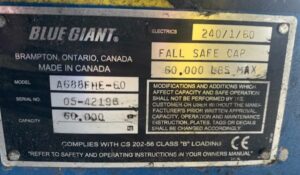
Serial Numbers Are Still the Best Starting Point
When a dock leveler still has a clean and readable serial plate, that is usually the fastest and most accurate way to identify replacement parts. The manufacturer, model number, capacity, and serial number can often narrow things down quickly.
Unfortunately, older dock levelers rarely make things that easy. Over the years, serial plates are commonly rusted beyond recognition, painted over, damaged during repairs, or simply knocked off entirely. Many manufacturers originally attached these plates using small rivets, so after decades of forklift traffic, vibration, maintenance work, and weather exposure, they often disappear completely.
That is when hands-on dock equipment experience becomes extremely valuable.
Before You Can Identify the Part, You Have to Identify the Dock Leveler
One of the biggest misconceptions in the loading dock industry is that replacement parts can simply be matched visually.
In reality, properly identifying dock leveler parts usually starts with identifying the dock leveler itself. That becomes difficult when the manufacturer is unknown, the serial plate is gone, or the dock leveler has been repaired multiple times over the years using non-original parts.
This is where experience makes a major difference.
By studying the overall dock leveler construction, hinge layouts, spring configurations, hydraulic systems, linkage assemblies, and safety components, we can often narrow down the original manufacturer and approximate model series even when no identification plate exists.
Once the dock leveler itself is identified, we can usually identify the correct replacement parts much more accurately.
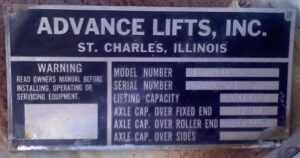
30+ Years of Experience Identifying Old Dock Levelers
Anyone can identify a dock leveler when the serial plate is perfectly readable. The real challenge is identifying older dock equipment that may be 20 to 50 years old with little or no usable information remaining.
At Midwest Material Handling, we have spent decades working around older loading dock equipment throughout Ohio. Over time, many dock leveler designs become recognizable simply through field experience. Certain manufacturers used very distinctive hinge designs, spring layouts, hydraulic arrangements, and structural patterns that become familiar after seeing thousands of units over the years.
This is one of those industries where old-school experience still matters.
A Large Library of Older Dock Leveler Manuals
One of the biggest advantages of working with an experienced dock equipment company is access to older documentation that many companies no longer have.
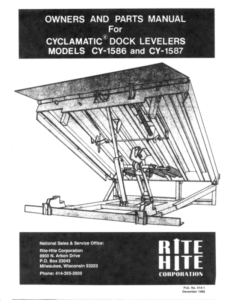
Over the years, we have built a large library of older dock leveler manuals, parts breakdowns, and manufacturer documentation covering many legacy dock leveler brands dating back decades. That information becomes extremely valuable when trying to identify older spring assemblies, hold down mechanisms, hydraulic components, lip hinge systems, and structural repair parts.
In many cases, combining older manuals with real-world field experience allows us to identify dock leveler parts even when the original serial plate no longer exists.
Common Dock Leveler Manufacturers We Help Identify
Over the years, we have worked with and identified replacement parts for many older dock leveler manufacturers and legacy loading dock brands. Even when serial plates are missing, certain hinge designs, spring layouts, hydraulic systems, and structural details often help narrow down the original manufacturer.
Some of the most common dock leveler brands we help identify include:
- Kelley
- Serco
- Rite Hite
- Blue Giant
- McGuire
- Nordock
- Pentalift
- Poweramp
- DLM
- Advance Lifts
- Beacon
- Copperloy
- Chalfant
- Loading Systems
- Vestil
Many of these manufacturers produced multiple dock leveler styles and model series over several decades, which is why hands-on experience and older manuals can become extremely valuable when trying to identify the correct replacement parts.
Even if the dock leveler manufacturer is unknown, good underside photos and measurements often help us narrow things down quickly.
Photos Help Us Identify Older Dock Levelers
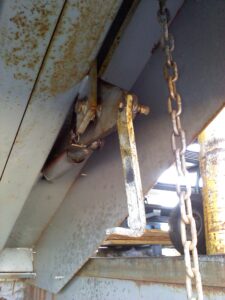
When serial numbers are missing, good photos become one of the most valuable tools in the identification process.
Clear underside photos often tell us far more than people realize. Certain manufacturers used distinctive frame designs, rear hinges, lip hinges, spring arrangements, and hydraulic layouts that help narrow down the original dock leveler manufacturer and approximate model series.
Even heavily modified dock levelers usually leave enough structural clues behind to point us in the right direction.
Sometimes we can identify a dock leveler almost immediately from a few underside photos simply because we have seen similar units so many times over the years.
Measurements Matter More Than Most People Realize
Measurements often play a major role when identifying older dock leveler parts correctly.
For example, when identifying a mechanical dock leveler main spring, the overall spring length and diameter are important, but the coil count is often one of the biggest factors. Two springs may appear almost identical visually, but a different number of coils can completely change the spring tension and how the dock leveler operates.
The same concept applies to hydraulic cylinders, hold down assemblies, hinge spacing, and linkage components. Small dimensional differences can dramatically affect dock leveler performance and safety.
In some cases, previous owners may have installed incorrect replacement parts years earlier, which creates another layer of complexity when trying to identify the proper components today.
That is why identifying dock leveler parts often requires much more than simply matching components by appearance alone.
Mechanical and Hydraulic Dock Levelers Are Identified Differently
Mechanical dock levelers and hydraulic dock levelers often require completely different identification methods.
Mechanical units are commonly identified through spring configurations, hold down assemblies, linkage systems, and release mechanisms. Hydraulic dock levelers are more commonly identified using cylinder dimensions, hydraulic hose layouts, pump assemblies, and power unit styles.
Because many older dock levelers have been repaired multiple times over the years, identifying the original configuration often requires evaluating the entire dock leveler instead of focusing only on the damaged component.
Replacement Parts Keep Older Dock Levelers Operating
Many older dock levelers were heavily built and designed for long service life.
In many situations, replacing worn springs, cylinders, hold downs, hydraulic hoses, or structural components allows facilities to continue operating existing dock equipment safely for years.
The key is correctly identifying the replacement parts needed, especially when serial numbers or model information no longer exist.
That is where experience and documentation become extremely important.
A Broken Dock Leveler Can Create Major Downtime
Many facilities operate with limited dock positions, so even one broken dock leveler can quickly create shipping delays, receiving bottlenecks, forklift safety concerns, and warehouse inefficiencies.
Correctly identifying replacement parts quickly helps minimize downtime and keeps freight moving safely. Many common dock leveler parts are available with overnight or second day shipping depending on availability.
Why Customers Choose Midwest Material Handling for Dock Leveler Parts
The biggest value we provide is not simply selling dock leveler parts.
The value comes from helping customers identify older dock levelers and locate the correct replacement components when no serial number exists, the manufacturer is unknown, or the dock leveler has been modified repeatedly over decades of service.
That combination of 31+ years of field experience, hands-on dock equipment knowledge, a large library of older dock leveler manuals, and real-world repair experience allows us to solve problems that are often difficult to figure out through catalogs or online searches alone.
This is something we do every day.
Dock Leveler Parts Identification Form
To help streamline the identification process, we also offer a Dock Leveler Parts Identification Form where customers can upload photos and provide measurements for older dock levelers.
Even when the serial number is gone or the identification plate is unreadable, we can often narrow down the correct replacement parts using photos, measurements, manuals, and overall dock construction details.
The more information provided, the faster we can usually help identify the correct components.
Need Help Identifying an Old Dock Leveler?
If your dock leveler serial plate is missing or unreadable, send us a few photos of the dock leveler underside, springs, cylinders, hinges, or damaged components and we can usually help identify the replacement parts needed.
While serial numbers are always helpful, the reality is that many older dock levelers no longer have them. Fortunately, identifying older dock equipment is something we have been doing for decades.
Frequently Asked Questions
Can you identify a dock leveler without a serial number?
Yes. Many older dock levelers can still be identified using underside photos, spring configurations, hinge styles, hydraulic layouts, and structural details.
Why are dock leveler serial plates often missing?
Many serial plates were originally attached with small rivets and were eventually knocked off after decades of forklift traffic, vibration, repairs, weather exposure, and repainting.
What photos help identify dock leveler parts?
Photos of the underside, rear hinges, lip hinges, springs, hydraulic cylinders, damaged parts, and power units are usually the most helpful.
What measurements help identify dock leveler springs?
Spring diameter, overall spring length, and especially the coil count are often important when identifying replacement springs for older mechanical dock levelers.
Can older dock levelers still be repaired safely?
In many cases, yes. Older dock levelers were often heavily built and can continue operating safely for years with the proper replacement parts and repairs.
How fast can dock leveler parts ship?
Many common dock leveler parts are available with overnight or second day delivery depending on stock and location.
