

Installing an Edge of Dock Leveler (EOD) on an Old Dock
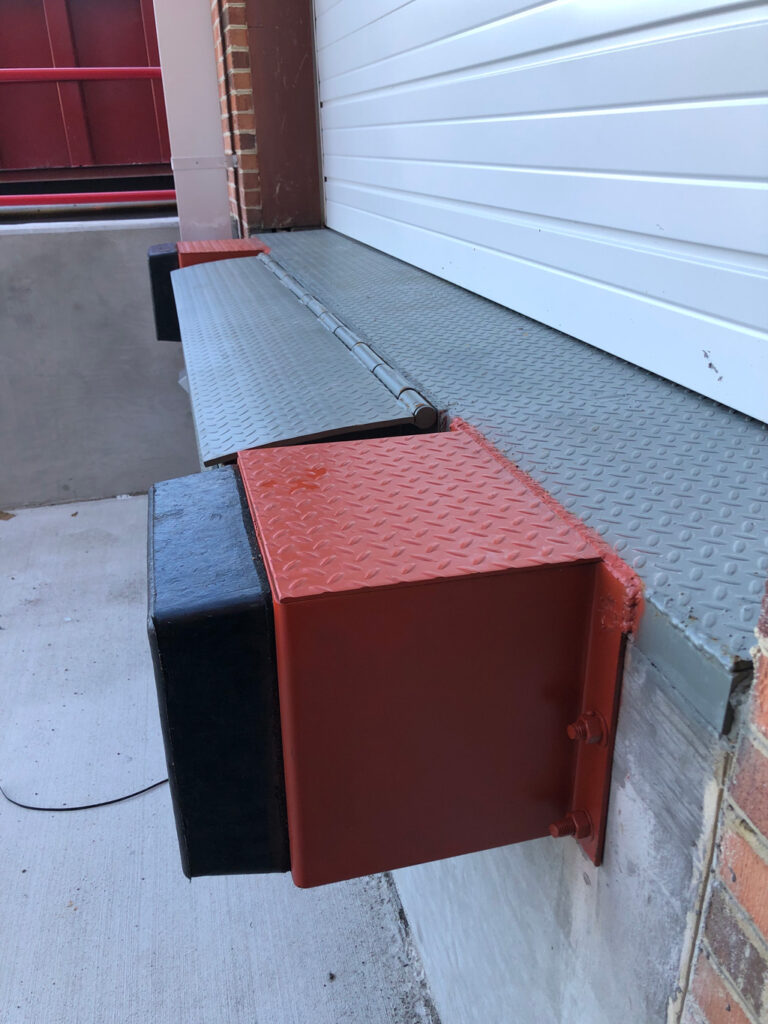
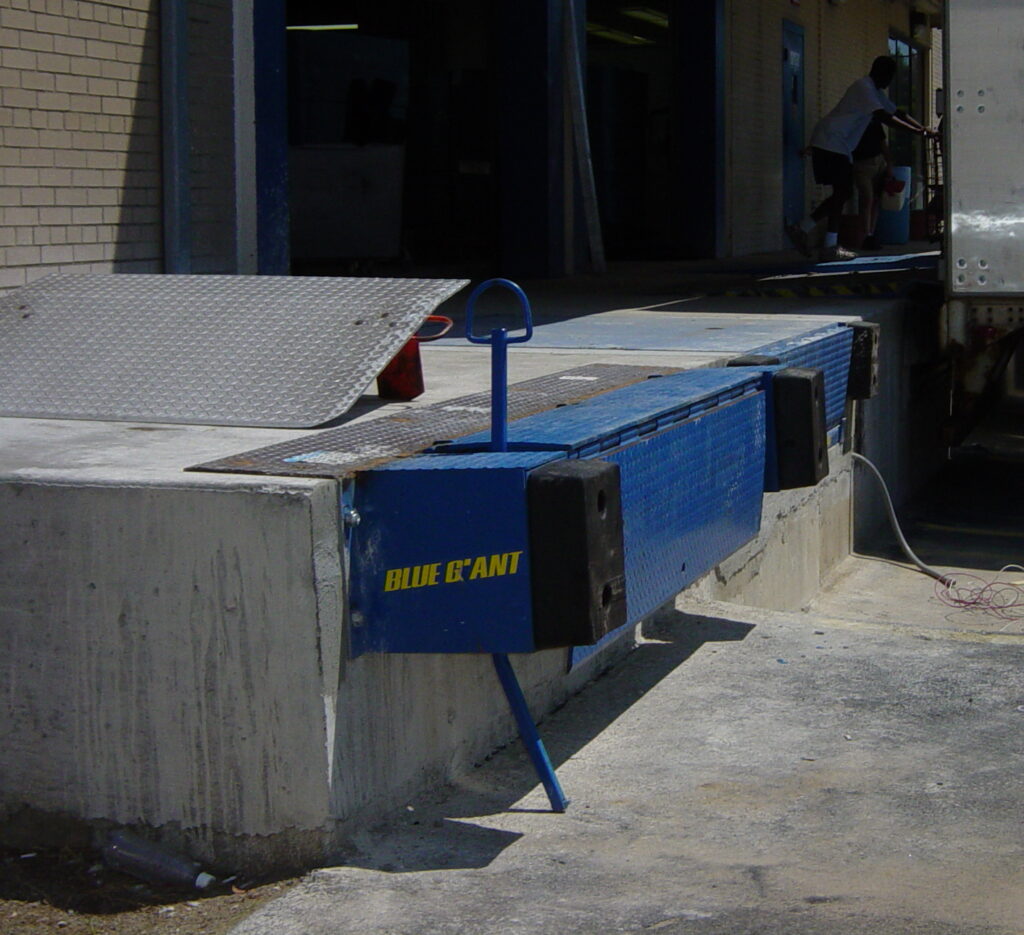
Installing an edge of dock leveler (commonly shortened and referred to as an “EOD”) on an older loading dock can sometimes become a challenge, especially when the dock was never constructed with embedded steel angle coping at the dock edge. Many older warehouse docks simply do not have a proper steel mounting surface where an EOD can be welded securely.
Fortunately, there is a simple retrofit solution that has been used for years: the EOD steel approach plate.
While approach plates are fairly simple in design, they solve an important structural problem. They provide the steel surface needed to properly weld an edge of dock leveler onto older docks that otherwise have nowhere suitable to attach one.
Despite their relatively simple design, edge of dock levelers remain a popular loading dock solution because they can typically service trailers up to 15″ above and 15″ below dock height while avoiding the cost of a full pit-style dock leveler installation.
Over the years, we supplied many of these retrofit approach plates for warehouse and loading dock applications involving older edge of dock levelers. Although we no longer install these systems today, approach plates still remain an effective solution for facilities replacing aging EOD equipment or evaluating difficult dock edge conditions. Steel approach plates are a standard item in our complete replacement wholesale dock leveler parts and components page.
What Is an EOD Approach Plate?
An approach plate is a steel transition plate used when installing an edge of dock leveler on an older loading dock that lacks embedded steel angle coping.
The plate creates a weldable steel mounting surface for the EOD while also providing a smoother transition for forklifts entering the leveler.
In most applications, approach plates are fabricated from 1/4″ thick checkered steel plate and commonly measure around 12″ deep by 10′ wide.
The leading edge of the plate is chamfered or tapered downward so loaded forklifts and pallet jacks can smoothly roll onto the edge of dock leveler without striking a sharp steel edge.
Approach plates are commonly used on older warehouse docks where the original concrete dock edge was never designed to support direct EOD installation.
Why Older Loading Docks Create Problems for EOD Installation
Modern loading docks are commonly constructed with embedded steel angle coping at the dock edge. This coping is typically fabricated from a 3″ x 3″ piece of structural steel angle cast directly into the concrete.
The embedded angle creates a durable steel edge where dock equipment can be welded securely.
To help lock the angle into the concrete structure, mud hooks are welded onto the back side of the steel before the concrete is poured. These mud hooks are usually pieces of rebar bent into hook shapes. Once surrounded by concrete, they help prevent the embedded steel from shifting or pulling loose over time.
Many older docks, however, were built without embedded angle coping altogether. In those situations, installers are left with nothing but a raw concrete dock edge.
That becomes a problem because edge of dock levelers are not designed to simply be bolted down across the top mounting surface.
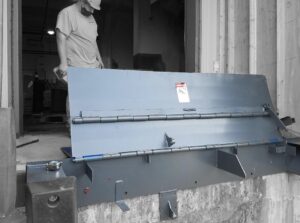
Why Edge of Dock Levelers Must Be Welded!
An edge of dock leveler is designed to be welded along the upper mounting edge. This welded connection is critical for long-term stability.
During normal warehouse operations, loaded forklifts repeatedly travel across the leveler while moving freight in and out of trailers. That constant movement creates vibration, impact and dynamic loading forces at the dock edge.
If an EOD were only secured with anchors across the top surface, the installation would eventually loosen after repeated use.
Instead, the upper section of the EOD is welded directly to structural steel at the dock edge.
The only anchors typically used on an edge of dock leveler installation are located at the lower bumper block assemblies. Those anchors secure the bumper blocks into the face of the concrete dock.
Without a weldable steel surface at the top edge, a proper EOD installation becomes very difficult on older dock structures.
Why Edge of Dock Levelers Are Still Common on Older Docks
One reason edge of dock levelers remain popular on older loading docks is their ability to handle a fairly wide working range while still being more economical than many full-size pit levelers.
Most EODs provide a working range of approximately 15″ above dock height and 15″ below dock height. This allows the leveler to service a variety of trailer heights during normal loading operations.
That operating range is important because older warehouse facilities often deal with varying trailer conditions, changing truck suspension heights and uneven parking areas. An EOD provides enough flexibility for many standard loading applications without requiring a full dock leveler pit installation.
How an Approach Plate Solves the Problem
An approach plate creates the steel mounting surface needed for the EOD installation.
The plate is anchored from the top side of the dock and positioned directly behind the edge of dock leveler. The EOD can then be welded directly to the plate itself.
In most applications, the approach plate is fabricated from 1/4″ thick checkered steel plate and commonly built around 10 feet wide.
While some assume thicker steel is automatically better, that is not always true in this application.
Excessively thick plate can create too steep of a transition angle for forklifts entering the leveler. In many cases, 1/4″ plate provides the best balance between durability and smooth forklift entry.
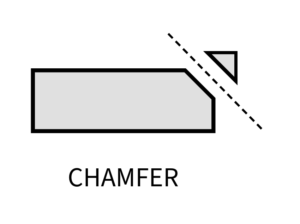
The Chamfered Edge Is An Important Part
Although the plate itself is fairly straightforward, the chamfered leading edge is what makes the system work properly. Without it, the approach plate is really no more than a standard piece of checkered plate steel.
The chamfer creates a gradual transition from the warehouse floor onto the approach plate and edge of dock leveler. Without it, loaded forklifts and pallet jacks can strike a hard steel edge while entering the EOD (or can actually totally prevent the forklift or pallet jack from rolling over the plate, particularly when fully loaded).
By tapering the front edge downward, forklifts can smoothly roll onto the leveler during loading operations.
Ironically, chamfering the plate is often the most difficult and labor-intensive part of the fabrication process.
Aside from the chamfered edge, the plate is essentially a flat piece of 1/4″ checkered steel. But producing a smooth tapered edge across a wide plate requires careful fabrication and finishing.
It is a relatively simple solution to a challenging dock problem.
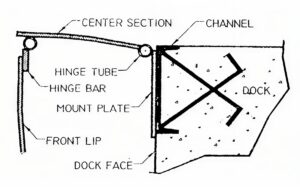
Angle Coping vs. Structural C-Channel
Traditional dock edge coping is commonly fabricated from 3″ x 3″ steel angle embedded into the dock edge.
However, in many applications, structural C-channel actually performs better than standard angle coping.
With C-channel, the steel extends farther down the face of the dock depending on the depth of the channel. This creates a larger and more stable structural surface for dock equipment installation.
Like angle coping, embedded C-channel also uses welded mud hooks to lock the steel securely into the concrete during the pour.
In heavy-use loading dock applications, C-channel often provides a stronger and more durable dock edge than standard angle coping.
A Simple Retrofit Solution That Still Works
Many older warehouse docks throughout the country still lack embedded steel coping. When edge of dock levelers need replacement or retrofit installation, approach plates remain a practical and effective solution.
Despite their simple appearance, these plates solve several important problems at once:
- They create a weldable steel mounting surface
- They improve forklift transition onto the EOD
- They help stabilize the installation long term
- They allow older docks to continue using edge of dock equipment safely
Sometimes the simplest industrial solutions are also the most effective.
Need Replacement Dock Leveler Parts?
Older loading docks often require creative retrofit solutions, especially when replacing aging edge of dock levelers or dock bumpers. Midwest Material Handling supplies a variety of dock leveler parts and loading dock equipment components for warehouse facilities throughout Ohio and beyond.
Whether you are replacing worn dock bumpers, upgrading an older EOD or evaluating a difficult dock edge condition, understanding how the original dock was constructed is an important first step.
Frequently Asked Questions
What is an approach plate for an edge of dock leveler?
An approach plate is a steel plate installed behind an edge of dock leveler to create a weldable mounting surface on older docks that lack embedded steel angle coping.
Why can’t an edge of dock leveler simply be bolted down?
Edge of dock levelers experience constant forklift traffic and impact loading. Without a welded top connection, the installation can loosen over time. The upper portion of the EOD is designed to be welded to structural steel.
What thickness is typically used for an EOD approach plate?
Most approach plates are fabricated from 1/4″ thick checkered steel plate. Thicker steel is not always better because it can create too steep of a transition angle for forklifts.
What is angle coping on a loading dock?
Angle coping is embedded structural steel installed along the edge of a loading dock. It is commonly fabricated from 3″ x 3″ steel angle and provides a durable weldable edge for dock equipment.
What are mud hooks?
Mud hooks are pieces of rebar bent into hook shapes and welded onto embedded steel coping before concrete is poured. They help lock the steel securely into the dock structure.
Why is the chamfered edge important on an approach plate?
The chamfered edge creates a smoother transition for forklifts entering the edge of dock leveler. Without the taper, forklifts and pallet jacks can strike the edge of the steel plate during loading operations.
What is the working range of an edge of dock leveler?
Most edge of dock levelers have an operating range of approximately 15″ above dock height and 15″ below dock height, allowing them to service a variety of trailer heights during normal warehouse loading operations.
