

Dock Leveler Is Down? Easy Repairs You Can Do Yourself
When a mechanical dock leveler stops working properly, many facilities assume they need an expensive service call or a complete replacement. In many cases, neither is necessary. Some of the most common dock leveler problems can be fixed in-house with affordable replacement parts, basic tools, and a skilled maintenance technician. Main springs, hold downs, lip components, hinge pins, and related hardware are all repairable on many units. If you need help identifying the correct components, visit our dedicated Dock Leveler Parts page.
We are experts at identifying dock leveler parts from virtually all manufacturers. If you need help finding the correct replacement part, complete our Part Request Form and send us your information. We can quickly match the proper part number, provide pricing, and offer shipping options, including overnight and second day air service when downtime matters.
There are two basic types of dock levelers: mechanical dock levelers and electric-hydraulic dock levelers. This article covers mechanical dock levelers only. Mechanical units use springs, linkage, and hold down systems to operate. Electric-hydraulic dock levelers use motors, pumps, cylinders, and controls, which require a different repair approach.
Why Many Dock Levelers Can Be Repaired
Mechanical dock levelers are relatively simple in their design. Unlike powered systems with motors and electronics, they rely on springs, linkage, and mechanical components. That means many common failures involve individual parts that can be replaced without replacing the entire unit.
For facilities with an experienced maintenance technician, repairing the dock leveler in-house can reduce downtime, avoid emergency service costs, extend equipment life, and restore operation faster.

How a Mechanical Dock Leveler Works
Mechanical dock levelers operate through two opposite functions.
Main Springs Raise the Deck.
The deck rises through stored energy from the main spring assembly. When the hold down is released, spring tension lifts the leveler deck upward so the lip can extend onto the trailer.
Hold Downs Keep the Deck in the Stored Position.
The hold down performs the opposite job. It keeps the dock leveler safely in the down position until the operator activates the release.
One component lifts. The other restrains.
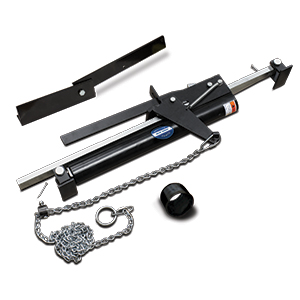
Common Hold Down Styles:
Depending on the manufacturer and age of the leveler, hold down systems may use ratchet arms, cable release systems, or other proprietary mechanical designs. The design may vary, but the function remains the same.
Safety First Before Any Repair!
Before replacing any dock leveler part, the unit must be safely secured. The deck is heavy and can move unexpectedly if it is not properly blocked.
Use the maintenance strut or heavy blocking, confirm the deck cannot shift, mark the dock position out of service, and place safety cones or warning devices above the door. Keep forklifts, trailers, and pedestrians away until repairs are complete.
Properly securing the leveler is the most important step in the entire repair.
Easy Repair #1: Replace a Main Spring
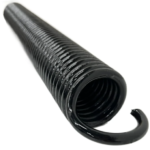
Main springs commonly crack when worn. Even one failed spring can affect operation. For example, if a mechanical dock leveler has four springs and one spring is cracked, the leveler may no longer rise correctly.
Common symptoms include poor lifting, slow movement, uneven operation, excessive effort to operate, or visible cracks in the spring coil.
How to Replace It:
Secure the dock leveler and block the deck safely.
- Relieve spring tension at the paddle by loosening the adjustment nut.
- Remove the old spring from the paddle and mounting points.
- Install the new spring in the same position as the original.
- Re-apply tension and adjust for proper lifting force.
- Cycle the leveler several times and confirm smooth operation.
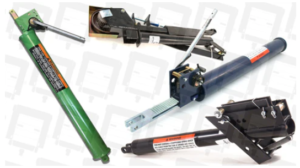
Easy Repair #2: Replace a Hold Down
If the deck will not stay down, will not release properly, or works inconsistently, the hold down may be worn or damaged. This repair is a bit more involved than a main spring replacement, but it can still be completed with care and patience by an experienced maintenance technician.
How to Replace a Ratchet-Style Hold Down
If your dock leveler uses a ratchet bar and pawl system, worn hold down parts can often be replaced without replacing the entire leveler. Proper deck support and alignment are important during this repair.
How to Replace It:
- Secure the deck completely before touching the mechanism.
- Disconnect the pull chain from the release mechanism.
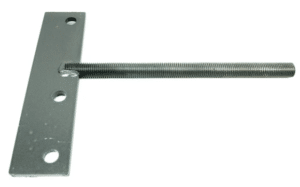
- Remove the clip ring or cotter pin from the top of the ratchet bar.
- Remove the top pin and lower the ratchet bar.
- Remove the lower mounting pin and take out the old hold down assembly.
- Position the new assembly and secure the lower pin.
- Reconnect the ratchet bar to the deck and install the upper pin.
- Reconnect the release chain.
- Test the pawl engagement and release function.
*Important Note:
If the pawl does not engage the ratchet bar correctly or the assembly is not aligned vertically, the dock leveler may fail to hold or may float during use.

How to Replace a Cable-Style Hold Down
Cable-style hold downs use an enclosed box with an internal wound cable system. These units can be replaced, but extra care is required because stored cable tension may be present inside the housing.
How to Replace It:
- Secure the dock leveler and block the deck safely.
- Disconnect the release chain.
- Remove the cable clamp connecting the hold down cable to the float spring.
- Route the cable free from the rollers.
- Remove the lower retaining pin and lift out the old hold down box.
- Install the new hold down box in the same mounting position.
- Route the new cable through the rollers and float spring correctly.
- Apply proper cable tension and tighten the clamp securely.
- Trim excess cable if needed.
- Test the hold down for proper storage and release operation.
*Safety Warning:
Cable-style hold downs may contain significant internal wound cable tension. We generally do not recommend non-professionals open or rebuild the hold down box itself.
Easy Repair #3: Fix Lip Components
The lip assembly is the front plate that rests on the trailer during loading and unloading. It also contains replaceable wear parts that commonly fail over time.
Many mechanical dock levelers use a lip kick out spring to help extend the lip during operation. A small hydraulic cylinder commonly pulls the lip back into its keepers when the leveler returns to the stored position. If either part fails, the lip may not extend correctly or may not store properly.
Common lip repairs include kick out springs, return cylinders, hinge pins, and worn linkage hardware.
What About Lip Hinge Pins?
Lip hinge pins can be one of the more difficult repairs because rust, wear, alignment issues, and limited access can make removal challenging. However, with patience, proper tools, and mechanical skill, they can often be replaced successfully.
We supply lip hinge pins for many major manufacturers. Contact us for pricing and availability.
Replacement Parts Cost Less Than Downtime
Most dock leveler replacement parts are inexpensive compared to the cost of emergency service calls, shipping delays, lost productivity, or replacing the entire dock leveler. Replacing one failed component often restores normal operation quickly and economically.
Need Help Identifying the Right Part?
We help customers identify dock leveler replacement parts every day, including older units with worn tags or missing model information.
Send us the manufacturer name, model number, serial number if available, dock size, and photos of the leveler or damaged part. Complete our Part Request Form and we will help identify the correct replacement part quickly and provide pricing right away.
Fast Shipping Available
When your dock leveler is down, time matters. Overnight and second day air shipping are available and commonly used for urgent dock leveler parts orders.
