
Midwest Material Handling, LLC

Pallet Racking and Warehouse Storage Specialists

Old-Fashioned Service. Honesty. Integrity... Since 1995

Pallet Racking and Warehouse Storage Specialists

Old-Fashioned Service. Honesty. Integrity... Since 1995

Blog

Floor Scale

Floor Scale- A Necessity In A Modern Warehouse

Floor Scale-Low Profile

Floor Scales in Columbus, Ohio

Floor scales in Columbus, Ohio are a critical part of efficient warehouse operations. Midwest Material Handling supplies industrial floor scales designed for accurate freight weighing, inventory control, and bulk material handling across a wide range of industries. As part of our broader industrial material handling equipment offering, we help businesses select reliable weighing solutions that improve accuracy and reduce costly shipping errors.

If you are setting up a new facility or upgrading your current operation, choosing the right floor scale early can help streamline workflows and avoid unnecessary freight charges.


Why Floor Scales Are Essential in Warehouse Operations

Accurate weight matters. Most warehouses rely on floor scales to verify outbound and inbound freight before it leaves the building.

LTL carriers require precise shipment weights on bills of lading. If weights are incorrect, reweigh fees and additional charges are common. These costs are avoidable with a properly calibrated floor scale.

Floor scales are also used for bulk material handling, quality control checks, and inventory management. They provide a dependable way to confirm weights throughout your operation.


Standard Floor Scale Sizes and Capacities

The most common floor scale used in Columbus warehouses is a 48 inch by 48 inch platform with a 5000 pound capacity. This size is ideal for standard pallet weighing and general warehouse use.

These scales are typically calibrated in 1 pound increments. The same unit can also be configured for 10000 pounds with 2 pound increments depending on your application.

A 60 inch by 60 inch platform is another common option for larger or oversized loads.

Custom sizes and higher capacities are available for specialized applications. If your operation involves unique load sizes or heavier materials, we can configure a scale that fits your requirements.


Common Floor Scale Options

Floor scales can be equipped with a range of options to improve usability and safety within your facility.

Common options include:

  • Steel access ramps for easy pallet jack or forklift loading
  • Level off platforms for smooth transitions to the scale surface
  • Digital indicators with clear and accurate readouts
  • Pit mounted installations for flush floor access

These features help improve efficiency and reduce handling time in daily operations.


Specialty Scale Applications

Many operations require floor scales built for specific environments or materials.

Stainless Steel Floor Scales

Designed for washdown and corrosive environments. Commonly used in food processing, chemical facilities, and clean operations.

Drum Scales

Built specifically for weighing 55 gallon steel or poly drums.

Coil Scales

Used for extremely heavy materials such as steel coils, bars, and structural components. Capacities often reach up to 100,000 pounds for high density loads.

Platform Scales

Smaller footprint scales used for lighter capacity applications, packing stations, and general weighing.


Built for Long Term Use Not Disposable Equipment

There is a significant difference between commercial grade floor scales and low cost import models purchased online..

Many cheaper scales are difficult to calibrate, lack replacement parts, and cannot be serviced locally. When they fail, they are often replaced rather than repaired.

We take a different approach.

All of the floor scales we supply are built for long term use, backed by full warranties, and supported with available parts and local service. You are investing in equipment that can be maintained and relied on over time.


Get Help Selecting the Right Floor Scale

Choosing the right floor scale depends on your load sizes, capacity requirements, and how the scale will be used within your operation.

If you are planning a new facility in Columbus or upgrading existing equipment, we can help you select a system that fits your workflow and avoids costly mistakes.

Contact our team today to discuss your application and request a quote.


Why Choose Midwest Material Handling

Midwest Material Handling supplies industrial equipment throughout Ohio with a focus on practical, long lasting solutions.

We work directly with warehouses, distribution centers, and manufacturing facilities to recommend equipment that performs in real world conditions.

From standard floor scales to specialized weighing systems, we help Columbus area businesses operate more efficiently and reduce unnecessary costs.


Frequently Asked Questions

What size floor scale is most common for warehouse use?
Most facilities use a 48 by 48 inch scale with a 5000 pound capacity, but larger platforms may be needed depending on the application.

Can a floor scale be installed flush with the floor?
Yes. Pit mounted installations allow forklifts and pallet jacks to move directly onto the scale without ramps.

How accurate are industrial floor scales?
Most standard models are calibrated to 1 pound increments, with other configurations available depending on capacity.

Do floor scales need regular calibration?
Yes. Routine calibration ensures accurate readings and helps prevent freight billing issues.

Can these scales be serviced locally?
Yes. All scales we supply are supported with available parts and local service options.

Floor Scale- A Necessity In A Modern Warehouse Read More »

Kings Island

Custom Fixed Ladder for King’s Island Marquee!

MASON, OHIO- Today, we thought we would take a little walk down memory lane to one of the more unique projects we have ever completed…

Kings Island Kings Island Marquee


In September, 2003 a severe thunderstorm passed directly over King’s Island Amusement Park in Mason (Cincinnati), Ohio. Though very little major damage was done to the park itself, the iconic King’s Island marquee sign, visible from I-71 literally blew over. That old sign had been welcoming visitors to King’s Island for 30+ years.

A month or two later, we were contacted by an engineering firm designing the new sign for the park. This new sign was going to incorporate a newly refreshed logo and be 4-5 times larger than the old one. We were asked for a ladder solution for workers to SAFELY access the upper levels of the interior of the sign for service or maintenance.

Steel Caged Walk Through Fixed Access Ladder

We along with the Engineering team at Vestil Manufacturing came up with and eventually manufactured and shipped a Steel Caged Walk-Thru Fixed Access Ladder system (very similar to the one pictured above) which started at the bottom of the sign and went nearly to the top. The sign was built with a series of work platforms. The series of ladders were positioned at different sides of each “platform”. These were all custom built. This allowed workers to maintain and repair the sign safely, entirely from the interior of the sign.

Kings Island

The final product… the sign still stands today. While we didn’t install the fixed ladders in the sign (the ladders were shipped to the sign company and they did) the collaborative efforts of our companies made for a very smooth (not to mention interesting) project!

Contact our team of experts for a wide range of OSHA and BOCA approved Steel Rolling Ladders of various designs and styles.

All of our Ladders are proudly manufactured in the United States!

Custom Fixed Ladder for King’s Island Marquee! Read More »

Pallet Truck Stop Rubber

Pallet Truck Stop to Secure Pallet Jacks in Truck Beds

Pallet Truck Stop Pallet Truck Stop

Keeping pallet jacks from rolling during transport can be a challenge in delivery trucks and trailers. When a pallet jack moves freely inside a truck bed, it can damage freight, trailer walls, and loading doors. Midwest Material Handling supplies a wide range of industrial material handling equipment in Ohio, including solutions that help secure pallet jacks during delivery and transport.


How the Pallet Truck Stop Works

The pallet truck stop acts as a wheel cradle that captures the rear load wheels of a pallet jack. Once the wheels are positioned in the molded rubber pocket, the jack remains stationary while the vehicle is moving.

The heavy rubber construction provides excellent grip and durability, allowing the stop to stay in place even during frequent loading and unloading. Because the unit is portable, it can easily be repositioned inside a truck bed or trailer depending on the layout of the load.


Benefits of Using a Pallet Jack Truck Stop

Using a pallet jack stop inside a delivery truck or trailer offers several advantages:

  • Prevents pallet jacks from rolling during transport

  • Helps protect freight and packaged goods

  • Reduces the risk of damage to trailer walls and loading doors

  • Provides a simple, low-cost safety solution for delivery vehicles

  • Requires no installation or permanent mounting

This type of pallet jack wheel stop is commonly used by delivery drivers, warehouse teams, and logistics operations that transport pallet jacks with their shipments.


Pallet Truck Stop Specifications

Manufacturer: Vestil
Construction: Heavy-duty molded rubber
Design: Wheel cradle for pallet jack load wheels
Use: Secures pallet jacks in truck beds and delivery trailers during transport


Industrial Material Handling Equipment in Ohio

Midwest Material Handling supplies a wide range of industrial material handling equipment used in warehouses, distribution centers, and delivery operations. In addition to pallet jack accessories, we provide solutions for moving, storing, and handling materials safely and efficiently.

Pallet Truck Stop to Secure Pallet Jacks in Truck Beds Read More »

Steel Rolling Ladder, 4 step

Steel Rolling Ladder, 4-Step with Larger Top Step

Steel Rolling Ladder, 4 step

Columbus, Ohio– We sell a full range of steel rolling ladders for warehouses, manufacturing facilities, and industrial applications. Our most popular option is the 4-step steel rolling ladder, with the 10-step steel rolling ladder close behind for customers needing access to higher shelving and storage areas.

10-Step Steel Rolling Ladder for Multi-Level Shelving

A customer based in Columbus was looking for a mobile steel ladder that could safely reach multiple shelf levels while improving employee safety. Their must-haves included a larger top platform, wider step treads, and added safety features to reduce the risk of slips or unauthorized use.

They also requested a safety chain to prevent use while the ladder was stored, along with a self-locking bottom step (Saf-T-Lock) for stability during operation. To dial in the right solution, we partnered with Tri-Arc Manufacturing to build a ladder that met all of their requirements.

The ladder was initially provided as a trial unit. After several weeks of daily use, the customer was confident in the design and performance and placed an order for 26 steel rolling ladders, which were shipped to multiple locations across the United States.

Steel Rolling Ladder Options and Features

Our steel rolling industrial ladders are available with two different step styles to match your environment:

  • Grip Strut (expanded metal) steps offer maximum slip resistance and feature a self-cleaning, open design that works well in wet, oily, or slippery conditions.

  • Perforated (Perf Tread) steps provide a high-strength, slip-resistant option that’s also more economical for general warehouse use.

Ladders can be configured with spring-loaded casters that retract under the user’s weight or the Saf-T-Lock foot-pedal locking system for fast, secure positioning.

All of the steel rolling ladders we sell meet OSHA safety requirements and are built for long-term industrial use.

Freight and Shipping for Steel Rolling Ladders

One of the biggest challenges with steel rolling ladders is shipping. While a ladder may weigh as little as 125 lbs, even when shipped knocked down (KD) it takes up considerable space in a freight trailer. Because of this, ladders often ship at freight class 200–300.

To keep shipping costs competitive, we work closely with our 3PL freight partners to secure the lowest possible rates while maintaining fast and reliable delivery times nationwide.

All of the Steel Rolling Ladders we sell are proudly manufactured in the United States!

Steel Rolling Ladder, 4-Step with Larger Top Step Read More »

Jesco Chip and Waste Truck

Trash Hopper for Interior Debris Removal

Contractors, renovation crews, maintenance teams, and demolition professionals across Ohio often need a safe and efficient way to remove debris from inside buildings. Large dumpsters and standard containers are not practical in hallways, upper floors, elevators, and other tight interior spaces. A trash hopper, commonly referred to as a chip and waste truck, is one of the best solutions for indoor debris removal.

Midwest Material Handling supplies durable trash hoppers in Ohio for construction cleanup, renovation debris, scrap collection, and general facility waste handling. These are part of our broader material handling equipment product line. These units are designed for commercial use and built to handle demanding jobs while remaining easy to maneuver in confined areas.

Trash hoppers are built for tight turns, narrow doorways, and limited access areas where larger equipment cannot operate efficiently. Their manual tip design allows operators to dump contents quickly and safely without requiring forklifts or powered equipment. This makes them a practical choice for contractors, maintenance teams, and facility managers.

Important jobsite considerations often include doorway size, elevator openings, weight limits, turning radius, and the type of material being removed. Many customers use a trash hopper inside the building, then empty it into a larger self-dumping hopper outside for final disposal and disposal efficiency.

These Trucks come in three different styles:
    • 5/8 Cubic Yard – 1,500 lbs. capacity – 68″L x 24.5″W x 40″H
    • 3/4 Cubic Yard – 2,000 lbs. capacity – 68″L x 30.5″W x 40″H
    • 1 Cubic Yard – 2,000 lbs. capacity – 68″L x 36.5″W x 40″H

These Chip & Waste Trucks all include 10″ x 2.5″ welded on rigid casters (load wheels) and 8″ x 2″ mold-on rubber swivel casters. All models are leak-proof and are constructed of 14-gauge steel for durability.

These versatile trucks are also great in housekeeping applications!

Jesco Manual Tilt TruckJesco Lo-Profile Tilt Truck

Two other related products to improve removal of debris is the Manual Tilt Truck. This Truck is great for manual handling of light weight, in plant refuse such as cardboard, paper, wood, pallets and trash. It is not watertight though. Also, the Lo-Profile Manual Tilt Truck with an overall height to the top of the push handle at 30″, while the bucket measures 24″ from the floor to the top edge.

Like all of our material handling products, these trash hoppers are built for dependable commercial use and long service life. If you need help selecting the right size for your application, Midwest Material Handling can recommend the best option based on your space, debris type, and capacity requirements.

Frequently Asked Questions

What is a trash hopper?
A trash hopper is a steel rolling container used to collect and manually dump debris, scrap, trash, and waste materials in construction, maintenance, warehouse, and industrial environments.

What is the difference between a trash hopper and a self-dumping hopper?
A trash hopper is pushed manually and tipped by hand, making it ideal for indoor use and tight spaces. A self-dumping hopper is moved and dumped with a forklift for larger loads and outdoor disposal areas.

Are trash hoppers good for demolition debris?
Yes. Trash hoppers are commonly used for drywall scraps, wood, broken materials, packaging waste, and renovation debris.

Can a trash hopper fit through standard doors?
Yes, most (if not all) models are designed to move through standard commercial door openings, but the correct size depends on the unit dimensions and your building access points.

Do you ship trash hoppers in Ohio?
Yes. Midwest Material Handling supplies trash hoppers and related material handling equipment throughout Ohio and surrounding areas.

Trash Hopper for Interior Debris Removal Read More »

Pallet Rack Beam Capacity-Is My Pallet Rack Overloaded?

So many customers spend too much time thinking about Pallet Rack Upright height, depth and Beam lengths. They often overlook Pallet Rack Beam capacity. For many, this is not an issue (as what they will be storing is relatively light) but for certain customers in certain industries it is a major factor that needs to be considered when sourcing Pallet Rack Beams.

Just as Pallet Rack Beams come in different lengths, each Beam length also comes in multiple capacities. The Pallet Rack Beam capacity, is generally calculated as a combination of the Beam length and the Beam height. For example, an Interlake 96″ long Teardrop style Beam that is 2.75″ high has roughly a 2,440 lbs. capacity. The same 96″ long Beam length in a 4.0″H face has a 5,370 lbs. capacity. Quite a difference! It is also important to remember that Beam ratings are calculated as an evenly distributed load.

A mistake we often see is a customer who purchases Beams on cost alone with no regard for related capacities. There are a couple of industries that immediately come to mind who have uniquely heavily concentrated loads… roofing, tile and feed & grain industries.

overloaded pallet rack

Case Study

We recently had the owner of a large feed & grain business in Lancaster, Ohio contact us about some Pallet Rack for one of their retail operations. We expressed our concern for the capacity of the Beams being purchased (due to weight of skids being stored) but in the end they purchased our least expensive 96″L Beam at 4,100 lbs. capacity per pair. Prior to pick-up, we once again mentioned that we did not think that this Beam would be adequate for the application, but they insisted it would.

A week or so after installation, we received a call (and subsequent photo above) with their concern for the way the Beams were deflecting with two, fully loaded skids on them. Note the excessive deflection (or bowing as it is commonly referred as) in the middle pair of Beams. We asked the customer to perform a simple deflection test.

Pallet Rack Beam Deflection

We asked them to run a string from one side of Upright to the other and measure the “deflection gap” at the very center.

So what is an acceptable level of deflection on a pair of Beams?

It is important to note that some deflection is permissible, but not much. The maximum amount of deflection that is allowed in pallet rack beams is governed by the RMI-Rack Manufacturers Institute as well as ANSI Standards. The RMI deflection limit for a normal pair of Pallet Rack Beams is L/180 or the span divided by 180. A 96” Beam will have a deflection limit of 96/180 = 0.533”.

In more simple terms… Divide the length of the beam (from the inside of the columns) by 180. If  the 96″ Beam length is divided by 180 for a result of .533, or about a ½ inch. If the deflection gap is equal to or greater than ½ inch, the beam is considered overloaded and unsafe.

Once they performed this simple test they realized that the Beams that they purchased were considerably under capacity for the loads they were storing.

What was interesting was they went from the lightest Beam we stocked at the time to the heaviest (8,560 lbs. cap. per pair). Unfortunately, we were unable to take back the overloaded Beams they never returned to their original shape.

Pallet Rack Beam Capacity-Is My Pallet Rack Overloaded? Read More »

New style interlake pallet rack beam

Interlake New Style vs Old Style Pallet Rack: How to Identify the Difference

Many warehouse managers eventually run into the question of Interlake “old style” versus “new style” pallet rack systems, especially when expanding existing storage or replacing damaged components. Interlake has been one of the most widely used warehouse pallet racking systems in North America for decades, but the company made several design changes over the years that created differences in how uprights and beams connect. Those changes can make compatibility confusing when working with older rack installations.

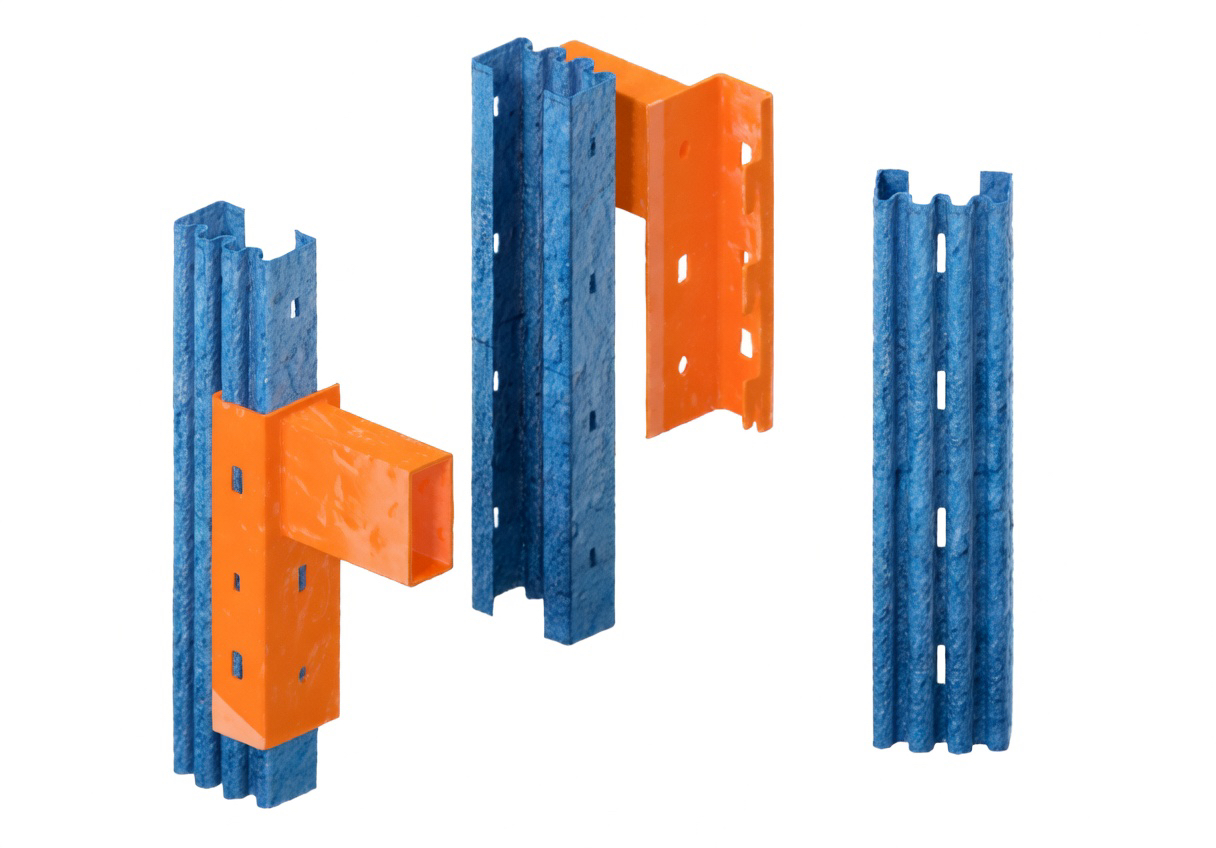
A bit about the original design… The original “OLD STYLE” pin design of standard Teardrop style Beams has remained unchanged for decades. The pins were roundish (if not completely round) in shape and were positioned into the larger opening of the inverted teardrop holes on the Uprights. They were then simply pushed down and locked into the smaller portion of the teardrop hole. This simple design, quick installation and safe operation is what has made Teardrop style Racking so widely popular.

New style pallet rack beam
“NEW” Style Beam

INTERLAKE NEW STYLE RACKING

In the late 1990’s, Interlake Mecalux Pallet Rack Systems introduced a new design they termed “NEW STYLE INTERLAKE”. This new design is not considered Teardrop Racking, instead an Interlake proprietary design. What Interlake did was reinvent the locking pins on the Beams to look less rounded and more like an upside down hook. While these hooks might appear to lack the strength of the traditional rounded design, they carry equal strength. These NEW STYLE components were no longer compatible with existing older Teardrop components. As a result, new (“New Style”) Interlake Beams and Uprights would need to be purchased when adding onto existing or replacing.

Now for the confusing part… NEW STYLE Beams were interchangeable with OLD STYLE Teardrop Uprights but OLD STYLE Beams were not interchangeable with NEW STYLE Uprights.

Shaved Pin Pallet Rack Beam
“OLD” Style Shaved Pin Beam

SHAVED PIN BEAM

Fortunately, what Interlake competitors came up with was what is called a “Shaved Pin Beam”. These Beams are compatible with either new or old style Uprights, eliminating all confusion between the two styles. What they did was simply “shave” the rounded connector pin to allow for universal placement into the NEW STYLE Uprights.

This “Interake new style” of Pallet Rack is no longer being manufactured but a substantial amount of it exists today, primarily on the used market.

If you are not sure what type of Pallet Rack Beam you have, we have created a handy PALLET RACK IDENTIFICATION GUIDE. It is designed to help you identify what brand and style of Racking you have. Most historical styles are listed.

Contact the Pallet Rack professionals at Midwest Material Handling, LLC with any questions or for both new and used Racking options!

Interlake New Style vs Old Style Pallet Rack: How to Identify the Difference Read More »

Pallet Rack Fork Clearance Bar

Fork Entry Bar (Fork Clearance Bar) for Pallet Racking, What Are They Used For?

We were recently contacted by an existing Customer who we had recently sold a Pallet Rack system to and they had a very unique load placement issue. They were sold heavy duty (HD) Pallet Rack with the goal of storing large, heavy sheets of steel plate. The original system included HD Wire Deck Panels, (3,600 lbs. capacity per panel, compared to the standard 2,500 lbs. capacity).

The issue was the “skids” they were getting their steel shipped in on where not standard and were not resting correctly on the shelf. Remember, the goal is to always have the load to be applied to the Beams, when possible!

</p><p>The picture above is an actual photo that was taken on-site. As you will notice, the 3

FORK ENTRY BAR

Though not a common occurrence, fortunately a standard product exists for just this type of unique application. Pallet Rack manufacturers build a Fork Entry Bar (or occasionally referred to as a Fork Clearance Bar). This optional accessory spans from front to back of the Pallet Rack Beams and allows for the forklift operator to safety place the load and remove the forks of the fork truck from the rack. The Fork Entry Bars are TEK screwed into the both front and back beam to secure the load and prevent movement.

These Fork Entry Bars-Fork Clearance Bars are built in many different types, styles and capacities but all serve the same, singular purpose. Additionally, they also have certified  load ratings (capacities) to ensure OSHA compliance. These Fork Entry Bars can be used on both Roll-Formed as well as Structural Pallet Racking.

The photo below illustrates the solution our team of experts came up with. These Fork Entry Bars also work great with loading Wire Mesh Baskets or wood or plate goods, where no skid exists.

"</p

Incidentally, once we installed these, we ordered some for our own use… they work great storing non-skidded bundles of Pallet Rack Beams (we use straps and metal banding to secure our bundles of Beams)!

For more information and a list of other unique Pallet Rack options… CLICK HERE

Fork Entry Bar (Fork Clearance Bar) for Pallet Racking, What Are They Used For? Read More »

Are Diagonal-Horizontal Cross X-Brace Supports on my Pallet Rack replaceable?

Cross Brace Repair

Elyria, OH– We recently got a call from a Customer in Elyria, Ohio asking about Pallet Rack Repair and if damaged diagonal and horizontal cross braces on their Pallet Rack Uprights can be replaced? The cross braces on 15 Uprights were badly bent and damaged. They thought they might need to replace all of the Uprights. We explained that they absolutely can be replaced… inexpensively and and with ease!

While they come in a few different designs, the one that we have found to be the easiest to install and works exceptionally well is an Adjustable Bolt-On X Brace Kit. What is nice about these kits is the lengths are fully adjustable through a simple set screw. These units simply bolt onto the Upright column with 2 bolts. They are sold in either “diagonal” or “horizontal” styles and come in a range of different adjustable lengths to accommodate any depth Upright. They are also available in multiple column sizes (with 3″W and 4″W being the most common).

These kits can be installed in a matter of minutes and are generally less than $90 each. We can also get them shipped out in a few days, not weeks or months like the competition.

Like everything we sell, we also install (locally, regionally and Nationwide)! Click here for details.

Are Diagonal-Horizontal Cross X-Brace Supports on my Pallet Rack replaceable? Read More »

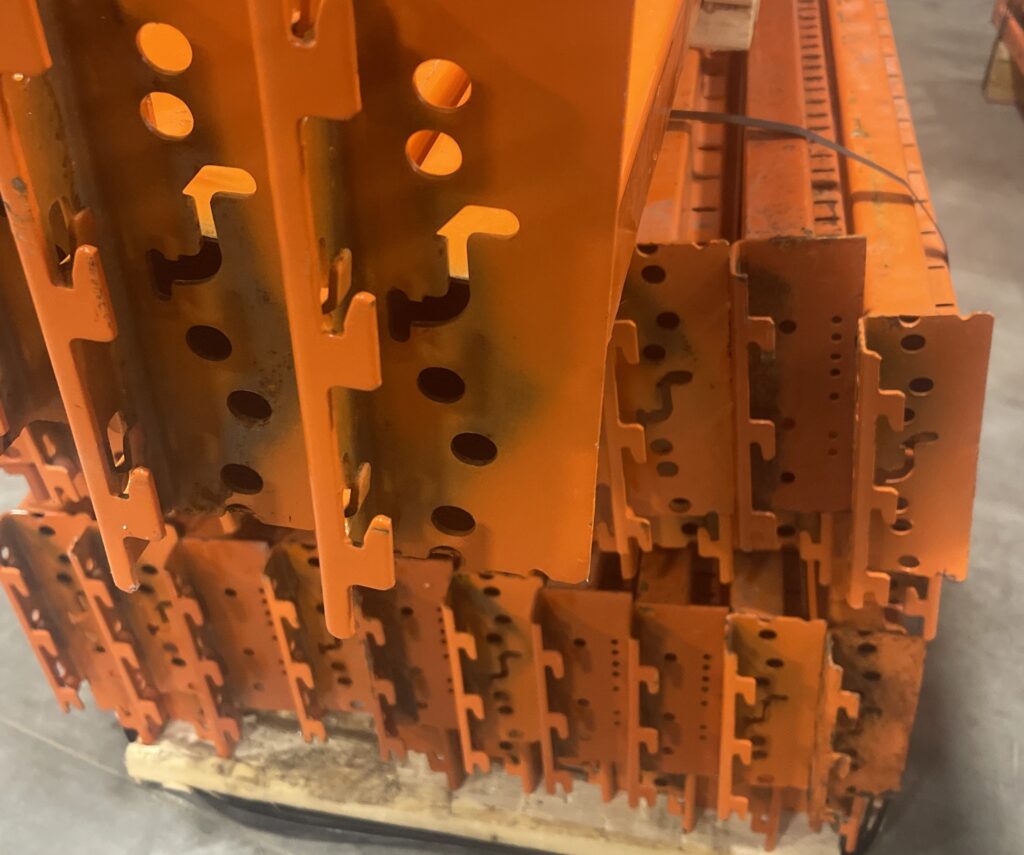
Flatbed truck shipping pallet rack uprights, beams and wire decks

Freight Class-Pallet Rack & Wire Decks… how is freight determined?

How Freight Class Is Determined for Pallet Rack and Wire Decking

If you have ever tried to ship pallet rack, you already know it is not straightforward.

Pallet rack systems and wire decking are some of the most difficult items to move through LTL freight. They are long, heavy, and not easy to handle. That combination drives up freight class, increases cost, and creates more opportunity for damage if things are not done correctly.

If you are planning a project and looking at warehouse racking systems, understanding freight class early can save you time, money, and frustration.


Why Pallet Rack Is So Difficult to Ship

Most products fit neatly on a pallet. Pallet rack does not.

Uprights are tall and awkward. Beams are long and heavy. Wire decking is dense but needs to be stacked correctly or it shifts during transit. None of it is ideal for standard LTL handling.

That is where problems start.

Freight gets moved multiple times between terminals. The more it gets handled, the higher the chance something gets bent, scratched, or worse.

The best way to ship pallet rack is usually on a flatbed or stake truck. It can be loaded from the side, secured properly, and handled less. The downside is cost. It is often more expensive, so many shipments still go LTL.

When that happens, understanding freight class becomes critical.


What Actually Determines Freight Class

Freight class is not random. Carriers look at four things every time.

Density

This is the big one. How much weight is packed into the space. Heavy, compact items are easier to ship and usually cost less.

Handling

How easy is it to move. Long beams and tall uprights are not easy. That increases the class.

Stowability

Can it stack cleanly with other freight. If it cannot, it takes up valuable space in the trailer.

Liability

What is the risk. If something is easy to damage or high value, that gets factored in.

Put all four together and you get your freight class. That number directly affects what you pay.


Understanding NMFC Without Overcomplicating It

Every product that ships LTL is assigned an unique NMFC (National Motor Freight Classification) number.

It is just a standardized way for carriers to say, “this is what this item is, and this is how it should be shipped.”

For pallet racking and wire decking, those classifications are already defined. There is no guessing, but there is a right way and a wrong way to ship them.


Freight Class for Pallet Rack Beams and Uprights

Beams and uprights fall under NMFC 164340.

In simple terms, length drives the classification.

  • Over 8 feet up to 16 feet typically lands at class 125
  • Over 16 feet up to 24 feet moves to class 200
  • Anything longer jumps to class 300

The longer it gets, the harder it is to handle. That is why the class increases.


Freight Class for Wire Decking

Wire decking is a different story.

It falls under NMFC 164150 and typically ships at class 70.

It is still heavy, but it stacks well, stays compact, and is easier to manage. That keeps the freight class lower and shipping more affordable.


Where People Get Burned on Freight Costs

This is where experience matters.

A lot of issues come from:

  • Poor packaging and strapping
  • Incorrect classification
  • Not planning shipment size properly

All of that leads to higher costs or damaged material showing up on site.

Freight class is not just a number. It is something you can work with if you understand it upfront.


We Help Customers Get This Right Every Day

Shipping pallet rack is part of the job, not an afterthought.

Midwest Material Handling has been coordinating these shipments for over 30 years. We know what works, what does not, and where problems usually happen.

Sometimes LTL makes sense, sometimes it does not. Occasionally, even a small change in how the material is bundled saves a significant amount on freight.

If you are planning a project, we can help you think through it before it becomes a problem.


Frequently Asked Questions

What freight class is pallet racking?
It usually falls between class 125 and class 300 depending on length.

Why is wire decking a lower freight class?
It is dense and stackable, which makes it easier to ship.

What is the safest way to ship pallet rack?
Flatbed or stake truck is usually the safest option, but LTL is still common depending on the situation.

Freight Class-Pallet Rack & Wire Decks… how is freight determined? Read More »

Scroll to Top