
Midwest Material Handling, LLC

Pallet Racking and Warehouse Storage Specialists

Old-Fashioned Service. Honesty. Integrity... Since 1995

Pallet Racking and Warehouse Storage Specialists

Old-Fashioned Service. Honesty. Integrity... Since 1995

Author name: Midwest MH

Collapsed Shelving

The Dangers of Overloaded Warehouse Shelving

Warehouse shelving is designed to support significant weight, but every storage system has limits. When shelving is overloaded or when the wrong type of shelving is used for a particular product, the results can be costly and potentially dangerous.

We recently received a call from a customer in the Cincinnati area after a shelving collapse occurred in their facility. Fortunately, no one was injured, but the aftermath was significant. Broken tile samples covered the floor, damaged inventory had to be discarded, and cleanup took hours. What started as a storage issue quickly became an operational disruption.

Situations like this are not common, but they are entirely preventable when storage systems are selected and used correctly.


What Caused the Shelving Collapse?

In this case, the shelving system being used was retail style shelving that was never designed to support the weight of the stored materials. The customer was storing dense floor tile products that created concentrated loads far beyond what the shelving was rated to handle.

Retail shelving systems are typically designed for lighter products such as packaged goods or small items. Dense materials like ceramic tile, paper products, metal components, or hardware require shelving designed specifically for higher load capacities.

As the weight increased over time, the shelves began to deform. Eventually the structural limits of the system were exceeded and the shelving section collapsed under the load.


Why Overloaded Shelving Creates Serious Risks

Overloading shelving can create several problems inside a warehouse or storage area. Excess weight places continuous stress on steel components, which can cause shelves to bend, connections to loosen, and posts to buckle.

Beyond equipment damage, shelving failures can lead to several costly consequences:

damaged or destroyed inventory
• operational downtime and cleanup costs
• potential worker injuries
• disruption to warehouse workflow

In severe situations, a single shelving failure can trigger a chain reaction where adjacent shelving sections collapse as well.


Choosing the Right Shelving System

Every storage application is different. The type of shelving used should be based on several important factors:

product weight
• product size and shape
• how frequently materials are accessed
• overall warehouse layout and workflow

Lighter items may be stored on standard shelving systems, while heavier or dense products require higher capacity storage systems.

Facilities storing heavy materials should consider properly rated steel shelving systems designed for industrial applications. These systems are engineered to support greater loads and provide the durability required for demanding warehouse environments.

In some situations where palletized materials must be stored or forklift access is required, warehouse racking systems may be the more appropriate solution.

Selecting the right storage system from the beginning helps prevent structural failures and keeps operations running smoothly.


Evaluating Used Shelving Before Installation

Used shelving can be an excellent way to expand storage capacity while controlling costs, but it must be evaluated carefully before installation.

Businesses sometimes purchase used shelving without knowing how it was previously used or whether it has been subjected to excessive loads.

Before installing used shelving, it is important to inspect several components:

upright posts for bending or distortion
• shelf connections and clips
• load capacity ratings
• overall structural alignment

Proper evaluation ensures the shelving will perform safely in its new environment.


Preventing Shelving Failures

A few simple steps can dramatically reduce the risk of shelving collapse:

select shelving designed for the weight of stored materials
• follow manufacturer load capacity guidelines
• distribute weight evenly across shelves
• store heavier items on lower shelves
• inspect shelving regularly for damage or bending

These practices help maintain the structural integrity of the shelving system and extend its usable life.


Work With an Experienced Storage System Provider

Storage systems are one of the most important parts of warehouse infrastructure. Choosing the right shelving or racking system requires understanding product weight, handling methods, and long term operational needs.

Midwest Material Handling has more than three decades of experience helping businesses design practical warehouse storage systems that improve efficiency and safety.

If you are unsure whether your current shelving system is properly rated for your inventory, our team can help evaluate your facility and recommend the right storage solution.

Contact Midwest Material Handling to discuss your shelving or warehouse storage project.

The Dangers of Overloaded Warehouse Shelving Read More »

Pallet Rack Beam capacity and load rating chart

Quick Reference Pallet Rack Upright & Beam Capacity Chart

Looking for a full explanation of beam sizing, upright capacities, beam spacing, and certification questions? Visit our complete Pallet Rack Capacity Charts | Beam & Upright Load Ratings resource page for a more detailed guide.

We still receive many requests for a quick-reference chart covering pallet rack beam and upright capacities. This page is intended to serve that purpose. It provides a fast overview and general estimating resource for common pallet rack applications.

For new pallet rack systems, exact load ratings should always come from the manufacturer’s published load tables for the specific beam, upright, and layout being used. Those ratings are based on tested components and approved configurations.

For existing or used pallet racking, exact capacities are often unknown. In those situations, reference charts can be helpful for planning, budgeting, and general comparisons, but they should not be treated as certified engineering data.

How to Use These Charts

Use the charts on this page as a general guide when reviewing common beam lengths, beam heights, upright sizes, and approximate capacities. They are most useful when you need a starting point for warehouse planning or want to compare one configuration to another.

Keep in mind that actual capacities can change based on several factors, including:

  • Beam length
  • Beam height
  • Upright design
  • Beam spacing
  • Steel gauge
  • Manufacturer testing standards
  • Overall rack configuration

Because of those variables, two rack systems that appear similar may carry different published ratings.

Important Note for Existing Rack

Used pallet rack with unknown origin cannot be truly certified for exact load ratings after the fact. If the original manufacturer and model information are missing, any number provided is only an estimate.

That is why many safety managers and facility operators choose to replace critical areas with new rack that includes documented capacities and current load labels.

Need Help Identifying Your Rack?

If you are trying to determine what your existing pallet rack may be, compare beam sizes, review upright styles, or plan a safer replacement layout, Midwest Material Handling can help.

We regularly assist customers with new and used pallet rack systems, replacement components, and practical guidance based on real warehouse applications. Check out our Pallet Rack Identification Guide to assist in the proper identification of your Pallet Racking.


Questions About Your Application?

If you need help selecting beams, uprights, wire decking, or a complete pallet rack system, contact Midwest Material Handling for experienced assistance.

Quick Reference Pallet Rack Upright & Beam Capacity Chart Read More »

Wire Partition

How do online retailers like ULINE and GLOBAL sell their items so cheap?

Rolling Ladder 3 step

Ever wonder how large industrial suppliers like ULINE, Grainger and Global Equipment can list their products so cheaply online? It all comes down to a clever marketing tactic—freight charges.

Here’s the catch: when you buy from these retailers, you’re not allowed to arrange your own shipping. You’re required to use their freight service, often at significantly inflated rates. This is where they make their real profit—not on the product itself, but on the back-end shipping costs. In many cases, you’ll find the freight costs more than the item you’re purchasing!

While this strategy isn’t necessarily dishonest, we believe it borders on being deceptive—and most customers don’t even realize it’s happening.

At Midwest Material Handling, LLC, we do things differently…

  • We’re completely transparent with our pricing—what you see is what you pay.

  • Unlike ULINE, Grainger and Global, freight is a non-income-generating component of our business, we encourage you to choose your own shipping method to save money. Or, work with our 3PL’s to ensure the least expensive and shortest transit times available.

  • We provide full part numbers, model details, and manufacturer names with every quote—information many competitors withhold to keep you in the dark.

With over 30 years of experience, our business is built on honest pricing, transparency, and good old-fashioned customer service.

Ready to work with a team that puts YOUR needs first?
Contact the professionals at Midwest Material Handling, LLC today!

How do online retailers like ULINE and GLOBAL sell their items so cheap? Read More »

Galvanized Structural Pallet Racking

Structural Galvanized Pallet Racking & Wire Decks

Galvanized Structural Pallet Racking

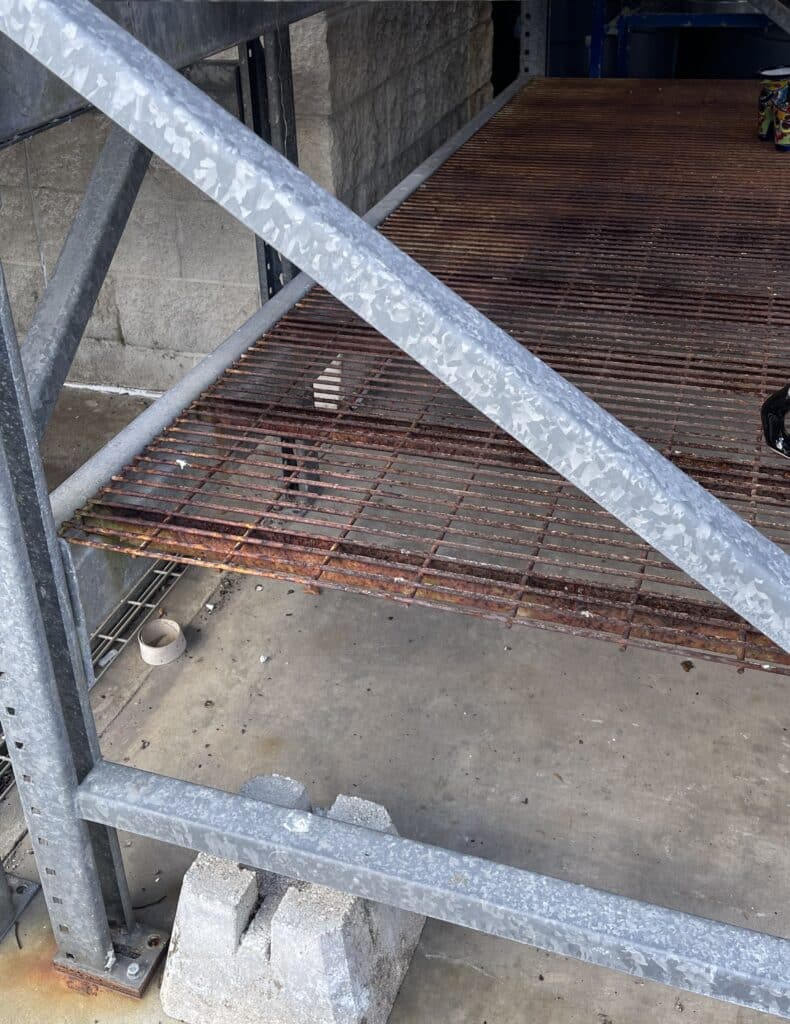
Dayton, Ohio- We recently completed a somewhat unique job… Galvanized Structural Pallet Racking. Galvanizing Pallet Rack is not something we do every day. The City of Dayton Ohio requested a storage system to be installed an an area that has high humidity and moisture. The right side of this picture was open to the outside weather. These Racks were to be designed to have a weight capacity of 10,000 lbs. per shelf. As a result of the extreme weight capacity requirements and the 108″L Beam length, Structural Pallet Rack was the best option. This Racking system was custom manufactured by Bulldog Rack in nearby Weirton, WV.

Wire Mesh Deck Panels

As you will note in the photo, we were also asked for a Wire Mesh Deck Panel instead of the the usual bolt-on Steel Cross Bars which are most often used in Structural Pallet Rack. We had the Engineers at ITC Manufacturing design and build a 5-channel “Waterfall” Wire Deck with a 5,500 lbs. capacity per panel (10,000 lbs. total weight capacity) compatible with Structural Pallet Rack. In addition, they galvanized the panels to ensure a totally galvanized end product.

Post Protectors

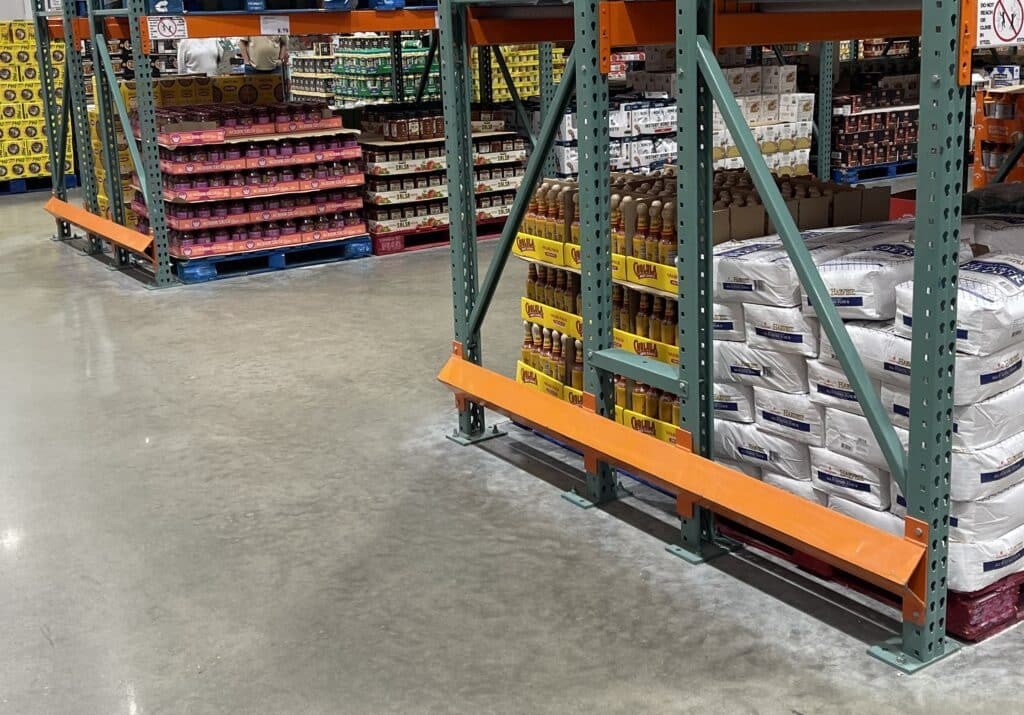
As you will also note, every Upright column was protected by an 18″H Steel Post Protector. Post Protectors are the most simple and most cost effective protective equipment to protect Pallet Rack Uprights from being damaged by skids or forklift operator error. Incidentally, the lower left part of the photo shows 1 of 20 Pipe Bollards we furnished and installed throughout the facility.

Structural Galvanized Pallet Racking & Wire Decks Read More »

Shipping Container Ramp

Shipping Container Ramp-How to unload Container on the ground?

Ramp to off load shipping containers by bluff manufacturingBluff Container Ramp

Willoughby, Ohio– Occasionally, we get a call from a Customer who has a shipping container (or a few!) that need to be offloaded by a forklift but are resting directly on the ground. In this unique application, the top of container deck is ~6″-8″ off the ground. If the container were still on the trailer (at 48″H), this would be a relatively straightforward Yard Ramp application but the container on the ground presents a unique challenge to unload safely with the use of a forklift.

Shipping Container Ramps

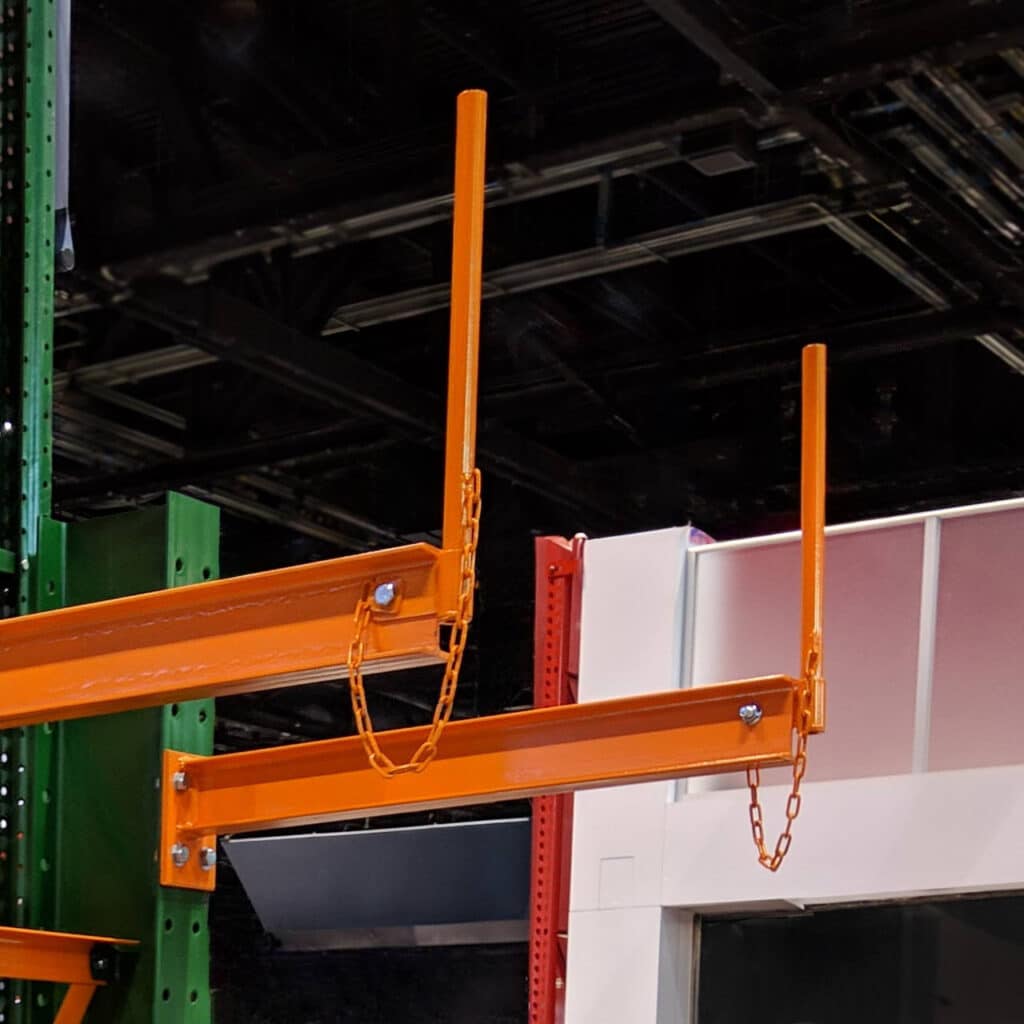
Allows the user to safely navigate the transition from ground to the bed of the shipping container. These Shipping Container Ramps, which are a part of our broader material handling equipment line, feature a full width stiffener to provide strength and to bump up against the container.

Locking chains with a specially designed keeper allow you to easily lock it into the holes in the container. After the keepers are in place, taking up the slack in the chain is simple and quick with the sturdy grab notch bracket welded to the sides of the Container Ramp. The result is a safe, sturdy loading ramp locked firmly to the shipping container.

You can now load and unload your container safely! Standard shipping Container Ramps are available in 15K, 20K, 25K and 30K capacities. These Container Ramps also come in a range of different sizes (60″W is the most common though 72″W is also available).

An option exists for refrigerated containers which are slightly taller in height. An optional 14” Lip is available.

OPTIONS

  • All-steel welded construction
  • Standard capacities from 15,000 to 40,000 pounds
  • Fold down lift loops
  • Full width stiffener bumps up against the container for stability
  • Locking chains included to lock ramp into place
  • 4″ tall curbs on each side serve as runoff protection
  • Widths starting at 60″

Call the professionals at Midwest Material Handling, LLC and allow us to use our 30+ years in business to design the correct piece of equipment for any unique application!

Shipping Container Ramp-How to unload Container on the ground? Read More »

Pallet Rack Systems

How Steel Tariffs Affect Pallet Rack and Wire Deck Prices

Pallet Racking Wire Decks

Many customers ask why pallet rack prices sometimes increase even when demand seems steady. One major factor that can influence rack pricing is the cost of steel.

Pallet rack systems and wire deck panels are manufactured primarily from steel. When steel prices increase due to tariffs or other market pressures, manufacturers often have little choice but to adjust pallet rack prices to reflect those higher material costs.

Steel tariffs can affect both domestic and imported steel, which means the impact can be felt throughout the warehouse storage equipment industry.


Why Steel Prices Matter for Warehouse Racking

Pallet racking is a structural product designed to support heavy loads in warehouse environments. Because of this, rack components such as uprights, beams, and wire deck panels are manufactured using significant amounts of structural steel.

When tariffs increase the cost of imported steel or change the balance of global supply, steel mills often raise pricing. These increases eventually work their way through the supply chain and influence the price of finished products like pallet rack systems and wire decking.

As steel costs rise, manufacturers typically adjust their pricing to keep up with the higher cost of raw materials.


How Tariffs Influence Pallet Rack Prices

Tariffs placed on imported steel can reduce the amount of foreign steel entering the United States. While the intention is often to support domestic steel producers, the result can be higher steel pricing overall.

For companies that manufacture pallet rack systems, higher steel costs can lead directly to increases in pallet rack prices and wire deck prices.

Because rack manufacturers rely heavily on steel, even moderate changes in steel pricing can affect the final cost of warehouse racking systems.


What Warehouse Buyers Should Expect

When steel markets experience volatility due to tariffs, trade policy, or global supply changes, pricing adjustments in the pallet rack industry often follow.

Warehouse operators planning expansions or new storage installations should be aware that pallet rack prices can fluctuate with steel costs. In some cases, purchasing rack equipment before a major steel price increase can help control project costs.

Working with an experienced distributor can also help buyers evaluate both new and used pallet rack options when steel prices rise.


Planning for Rack Price Changes

Steel pricing has always played a role in the cost of warehouse storage equipment. Tariffs, global supply shifts, and manufacturing costs can all influence pallet rack prices and wire deck prices over time.

Understanding how these factors affect the rack market can help warehouse managers plan projects more effectively and avoid surprises when pricing changes occur.

For companies planning new storage installations, monitoring steel pricing trends and working with knowledgeable rack suppliers can make a significant difference when evaluating long term warehouse storage investments.

How Steel Tariffs Affect Pallet Rack and Wire Deck Prices Read More »

Standard Teardrop Style Shim

Pallet Rack Shims: When You Need Them and Why They Matter

Standard Teardrop Style Shim             Pallet Rack Steel Shim for Interlake Bolted Uprights

Pallet Rack Shims: When You Need Them, Uses & Safety Guidelines

If you’re installing pallet racking on an uneven warehouse floor, steel shims may be used to create a safe and level base. While shims are rarely needed, they become important in certain situations, especially in older buildings where concrete has settled, cracked, or worn over time.

Pallet racking needs to sit on a flat, stable surface to perform properly. Even small gaps under a base plate can create stress points that affect load capacity and long-term stability. That’s why proper pallet racking installation matters from the start.


Pallet rack shim diagram showing gap under base plate on uneven floor and how steel shim creates full support

When Are Pallet Rack Shims Needed?

Shims come into play when the floor prevents full contact between the upright base plate and the concrete.

This usually shows up in older or worn slabs where you’ll see dips, cracks, or slight elevation changes. Instead of forcing the rack to sit unevenly, shims fill those gaps and create a level bearing surface so the load transfers properly into the floor.


Are Pallet Rack Shims Always Required?

No… pallet rack steel shims are not a standard part of most installations and in reality, are rarely needed.

In over 31 years of selling and installing pallet racking, we’ve only used shims in a small percentage of projects. Most warehouse floors are poured well enough to support racking without any additional adjustment.

Where steel shims do become necessary is in older buildings. Concrete that has settled, chipped, or deteriorated can prevent the base plate from sitting flush. In those cases, shims provide a simple way to correct the issue without tearing up the floor.


What Are Pallet Rack Shims Made Of?

Pallet rack shims are typically steel plates designed to handle the same load as the racking system. They come in different thicknesses so installers can make small adjustments at each base plate. If needed, they can be combined to eliminate gaps and bring the upright into proper alignment.

Generally speaking, they are 4.5″ x 3.5″ x .25″ (10 gauge) material. Of course, shims used in seismic areas, for use with larger seismic footplates are much larger.

Because they’re steel, they won’t compress or break down over time, which is key for maintaining a stable system.


Where Do Shims Get Installed?

Steel shims are installed directly under the upright base plate, between the footplate and the concrete.

Their job is to eliminate any gap so the entire base sits firmly on the floor. If part of the base plate is unsupported, it can create uneven pressure that affects anchors and overall rack alignment.


Husky Rack & Wire Steel pallet rack shim

How Installers Determine Shim Thickness

During installation, each upright location is checked to make sure it sits flat and plumb. If a gap is present, shims are added until full contact is achieved. This is usually done by checking level across the row and making small adjustments as needed.

Shims are also quick and easy to install, which makes them a practical solution when minor floor inconsistencies are found.


How Do You Know if a Warehouse Floor Is Level?

Before installation begins, the floor is evaluated to identify uneven areas. Installers typically use laser levels or long levels to check consistency across the slab. As the layout is marked, each base plate location is checked. If the upright doesn’t sit flush, that’s a clear sign that shimming may be needed.

It’s also important to separate a floor that is slightly out of level from one that is uneven or damaged. A consistent slope can often be worked with, but dips, cracks, or surface damage usually require correction.


How Many Shims Can You Stack?

Sometimes more than one shim is needed, but there are limits.

The total steel shim stack should not exceed six times the diameter of the anchor bolt. Smaller stacks don’t require additional securing, but once you get into larger stacks, they need to be stabilized to prevent movement.


How to Secure Shim Stacks

When required, shim stacks are secured by welding them together or by adding a second anchor bolt.

If they aren’t properly secured, they can shift over time, which can affect the stability of the rack.


Anchor Bolt Considerations

As shim height increases, anchor bolt length becomes more important.

Longer anchors may be needed to maintain proper embedment in the concrete. It’s a small detail, but it plays a big role in keeping the system secure.


Can You Use Washers Instead of Pallet Rack Shims?

No, washers are not a substitute for pallet rack shims.

They don’t provide full support under the base plate and can create point pressure, which may lead to instability or damage over time. Proper shim plates are designed to distribute the load correctly and should always be used.


Why Proper Shimming Matters

Shimming might seem minor, but it directly affects how pallet racking performs.

When it’s done right, it helps keep uprights aligned, reduces stress on anchors, and ensures loads are distributed properly. It becomes part of the overall stability of the system.


Common Questions About Pallet Rack Shims

Do pallet rack shims require inspection approval?
In some cases, yes. Requirements can vary depending on local codes or the authority having jurisdiction, especially if permits are involved.

Can pallet racking be installed on cracked concrete?
It depends on the severity. Minor surface issues can often be corrected with shimming, but structural damage may need to be addressed first.

How do you know if racking isn’t level after installation?
You might notice gaps under base plates, uneven beam levels, or slight leaning in the uprights. These are all signs the base may not be fully supported.

Are shims a long-term solution?
Yes, when installed correctly, steel shims are a permanent part of a safe and stable pallet racking system.


Get Help with Pallet Racking Installation

If you’re installing pallet racking and aren’t sure whether your floor needs to be corrected, it’s worth having it looked at before the project starts.

Most installations won’t require shims, but when they do, it’s important to get it right. A properly installed system starts with a solid base.

If you need help with pallet racking or installation, Midwest Material Handling can walk the site, evaluate your floor, and make sure everything is installed safely and correctly.

Pallet Rack Shims: When You Need Them and Why They Matter Read More »

Large Volume Steel hopper for Mines

Large-Volume Self-Dumping Forklift Hopper Used in Western WV Mining Operation

Charleston, WV- We were contacted by a long time Customer in the Charleston, WV area inquiring about large volume Steel Hopper that they wanted to replace. This particular Hopper was damaged beyond repair and needed to be replaced. These large volume Hoppers are commonly used in the mining industry. It was located in a large coal mine in Western West Virginia.

Steel Dumping Hopper large volume

What was unusual about this existing hopper (which was primarily used for waste removal within the mine) was its large size and heavy capacity. What we replaced it with was a Jesco Industries Large Volume, Low Profile, Super Heavy Duty Structural Base Hopper constructed of 7 GAUGE STEEL. This HD Hopper had a 10 cubic yard capacity and 10,000 lbs. weight capacity. The Hopper measured 91″L x 135″W x 70″H…135″ wide and 91″ long-WOW!

We also added an optional lid (steel piano hinged split lid). This was the largest Steel Dumping Hopper we have ever sold… the Hopper with Lid weighed well over 3,600 lbs.!

We serve a wide range of Customers in a wide range of industries with often times really unique applications. Every project is uniquely different. Contact the experts at Midwest Material Handling, LLC with any Steel Dumping Hopper application from large to small-common to unusual!

Large-Volume Self-Dumping Forklift Hopper Used in Western WV Mining Operation Read More »

Pallet Rack End of Aisle Protector

Pallet Rack End-of-Column Protector for AGV, Handle-IT

AGV End of Aisle Protector

WORTHINGTON, OHIO– We recently got a call from a large Ohio based Manufacturer of industrial products with a bit of a unique Pallet Rack protection application. This customer recently purchased an AGV (Automated Guided Vehicle) and requested Post and End-of-Aisle Protectors for their Pallet Rack. The big issue was these Column Protectors could not extend into the open shelf space as every inch was needed for the AGV to operate there.

We supplied them with Handle-It 12″H Steel Column Protector with optional HD steel Rack Protector Extender, which was custom cut to 28″L. Not sure if it is clear in the photos but these Column Protectors only extend into the shelf space by an inch, at best, allowing the AGV to operate in and out of the Rack sections as designed. Like all of the Pallet Rack protection products we sell, we also furnished concrete anchors (1/2″ x 3.75″ and 3/4″ x 4.25″) for installation. The finished product came out great and has been incredibly effective. These were furnished and installed throughout the entire distribution center facility.

These Corner Protectors are also effective for use at building wall corners and guard doorways.

Pallet Rack End-of-Column Protector for AGV, Handle-IT Read More »

broken dock leveler parts needing replacement

Dock Leveler Replacement Parts and Identification Help

We get pictures like this sent to us all the time… “Our Leveler is down and we need this part ASAP”!

One of the more unique services we provide is the sale of Wholesale Dock Leveler, Dock Seal and Dock Shelter parts including Vehicle Restraint Parts. At the end of the day, Dock Levelers really are relatively simple devices. Like all mechanical equipment and in addition to the harsh way these devices are used, parts wear out and need to be replaced. So many Dock repair companies will come out, charge you a small fortune to evaluate a repair and say the entire Leveler has to be replaced. This is RARELY the case when just a few simple parts will put the Leveler back in service in a relatively short period of time! With a little time and willingness to repair the Leveler yourself, time and money can be greatly saved.

We supply dock leveler replacement parts for most major manufacturers including: Blue Giant, Serco, DLM, Overhead Door, Rite-Hite, Kelley (Kelley-Atlantic for older units), Poweramp, McGuire, Penta-Lift, Pioneer and Vestil Manufacturing.

OUR SPECIALTY… allow us to put our 31+ years of experience to work to help you identify those hard to find parts! As an Authorized Blue Giant Distributor, contact us with any Blue Giant Loading Dock Equipment part application!

Vehicle Restraint

Common Dock Leveler Replacement Parts

  • Main springs

  • Lip kick out springs

  • Snubber springs

  • Hold down boxes

  • Dock bumpers

  • Hydraulic pumps

  • Hydraulic cylinders

Dock Leveler Hydraulic Pump

More times than not, Dock Levelers have no Manufacturer serial plate on them which makes identifying what you have and who made it a challenge. Call us and let us put our 30+ years of experience to work to provide complimentary advice and help identify what you have as well as provide part numbers and parts costs. Additionally, most parts can be shipped in overnight air for the more time sensitive repairs.

Need Help Identifying a Dock Leveler Part?

Many dock levelers lose their manufacturer serial plate over time, making it difficult to determine the correct replacement parts. If you are unsure what component has failed, send us a photo of the dock leveler and we can often help identify the correct replacement part.

With more than 30 years of experience working with loading dock equipment, we regularly help customers identify springs, hydraulic components, hold down boxes and other worn parts so the leveler can be repaired quickly.

Submit a dock leveler parts request and our team will help identify the correct replacement components.

Dock Leveler Replacement Parts and Identification Help Read More »

Scroll to Top