
Midwest Material Handling, LLC

Pallet Racking and Warehouse Storage Specialists

Old-Fashioned Service. Honesty. Integrity... Since 1995

Pallet Racking and Warehouse Storage Specialists

Old-Fashioned Service. Honesty. Integrity... Since 1995

Author name: Midwest MH

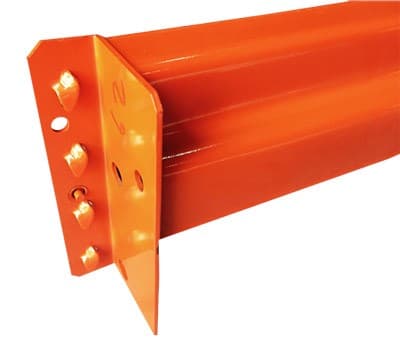
New style interlake pallet rack beam

Interlake New Style vs Old Style Pallet Rack: How to Identify the Difference

Many warehouse managers eventually run into the question of Interlake “old style” versus “new style” pallet rack systems, especially when expanding existing storage or replacing damaged components. Interlake has been one of the most widely used warehouse pallet racking systems in North America for decades, but the company made several design changes over the years that created differences in how uprights and beams connect. Those changes can make compatibility confusing when working with older rack installations.

A bit about the original design… The original “OLD STYLE” pin design of standard Teardrop style Beams has remained unchanged for decades. The pins were roundish (if not completely round) in shape and were positioned into the larger opening of the inverted teardrop holes on the Uprights. They were then simply pushed down and locked into the smaller portion of the teardrop hole. This simple design, quick installation and safe operation is what has made Teardrop style Racking so widely popular.
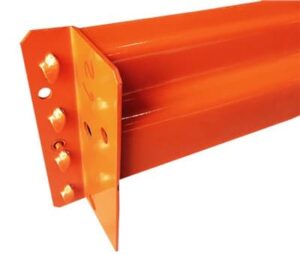
New style pallet rack beam
“NEW” Style Beam

INTERLAKE NEW STYLE RACKING

In the late 1990’s, Interlake Mecalux Pallet Rack Systems introduced a new design they termed “NEW STYLE INTERLAKE”. This new design is not considered Teardrop Racking, instead an Interlake proprietary design. What Interlake did was reinvent the locking pins on the Beams to look less rounded and more like an upside down hook. While these hooks might appear to lack the strength of the traditional rounded design, they carry equal strength. These NEW STYLE components were no longer compatible with existing older Teardrop components. As a result, new (“New Style”) Interlake Beams and Uprights would need to be purchased when adding onto existing or replacing.

Now for the confusing part… NEW STYLE Beams were interchangeable with OLD STYLE Teardrop Uprights but OLD STYLE Beams were not interchangeable with NEW STYLE Uprights.
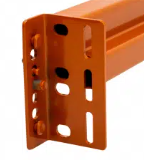
Shaved Pin Pallet Rack Beam
“OLD” Style Shaved Pin Beam

SHAVED PIN BEAM

Fortunately, what Interlake competitors came up with was what is called a “Shaved Pin Beam”. These Beams are compatible with either new or old style Uprights, eliminating all confusion between the two styles. What they did was simply “shave” the rounded connector pin to allow for universal placement into the NEW STYLE Uprights.

This “Interake new style” of Pallet Rack is no longer being manufactured but a substantial amount of it exists today, primarily on the used market.

If you are not sure what type of Pallet Rack Beam you have, we have created a handy PALLET RACK IDENTIFICATION GUIDE. It is designed to help you identify what brand and style of Racking you have. Most historical styles are listed.

Contact the Pallet Rack professionals at Midwest Material Handling, LLC with any questions or for both new and used Racking options!

Interlake New Style vs Old Style Pallet Rack: How to Identify the Difference Read More »
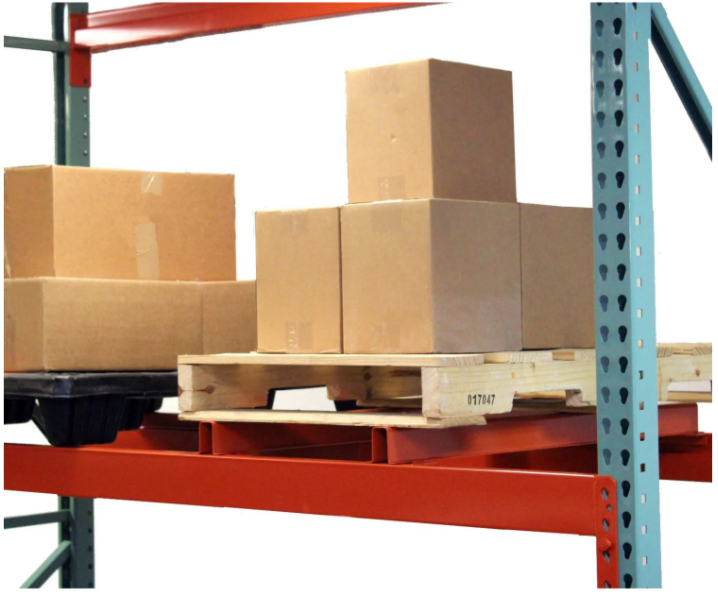
Pallet Rack Fork Clearance Bar

Fork Entry Bar (Fork Clearance Bar) for Pallet Racking, What Are They Used For?

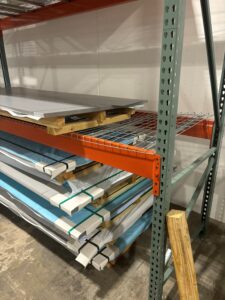
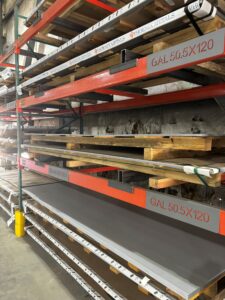
We were recently contacted by an existing Customer who we had recently sold a Pallet Rack system to and they had a very unique load placement issue. They were sold heavy duty (HD) Pallet Rack with the goal of storing large, heavy sheets of steel plate. The original system included HD Wire Deck Panels, (3,600 lbs. capacity per panel, compared to the standard 2,500 lbs. capacity).

The issue was the “skids” they were getting their steel shipped in on where not standard and were not resting correctly on the shelf. Remember, the goal is to always have the load to be applied to the Beams, when possible!

</p><p>The picture above is an actual photo that was taken on-site. As you will notice, the 3

FORK ENTRY BAR

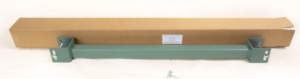
Though not a common occurrence, fortunately a standard product exists for just this type of unique application. Pallet Rack manufacturers build a Fork Entry Bar (or occasionally referred to as a Fork Clearance Bar). This optional accessory spans from front to back of the Pallet Rack Beams and allows for the forklift operator to safety place the load and remove the forks of the fork truck from the rack. The Fork Entry Bars are TEK screwed into the both front and back beam to secure the load and prevent movement.

These Fork Entry Bars-Fork Clearance Bars are built in many different types, styles and capacities but all serve the same, singular purpose. Additionally, they also have certified  load ratings (capacities) to ensure OSHA compliance. These Fork Entry Bars can be used on both Roll-Formed as well as Structural Pallet Racking.

The photo below illustrates the solution our team of experts came up with. These Fork Entry Bars also work great with loading Wire Mesh Baskets or wood or plate goods, where no skid exists.

"</p

Incidentally, once we installed these, we ordered some for our own use… they work great storing non-skidded bundles of Pallet Rack Beams (we use straps and metal banding to secure our bundles of Beams)!

For more information and a list of other unique Pallet Rack options… CLICK HERE

Fork Entry Bar (Fork Clearance Bar) for Pallet Racking, What Are They Used For? Read More »

Are Diagonal-Horizontal Cross X-Brace Supports on my Pallet Rack replaceable?

Cross Brace Repair

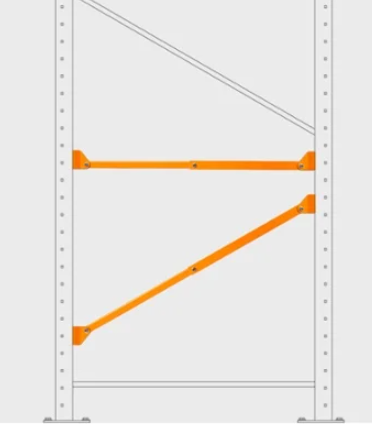
Elyria, OH– We recently got a call from a Customer in Elyria, Ohio asking about Pallet Rack Repair and if damaged diagonal and horizontal cross braces on their Pallet Rack Uprights can be replaced? The cross braces on 15 Uprights were badly bent and damaged. They thought they might need to replace all of the Uprights. We explained that they absolutely can be replaced… inexpensively and and with ease!

While they come in a few different designs, the one that we have found to be the easiest to install and works exceptionally well is an Adjustable Bolt-On X Brace Kit. What is nice about these kits is the lengths are fully adjustable through a simple set screw. These units simply bolt onto the Upright column with 2 bolts. They are sold in either “diagonal” or “horizontal” styles and come in a range of different adjustable lengths to accommodate any depth Upright. They are also available in multiple column sizes (with 3″W and 4″W being the most common).

These kits can be installed in a matter of minutes and are generally less than $90 each. We can also get them shipped out in a few days, not weeks or months like the competition.

Like everything we sell, we also install (locally, regionally and Nationwide)! Click here for details.

Are Diagonal-Horizontal Cross X-Brace Supports on my Pallet Rack replaceable? Read More »

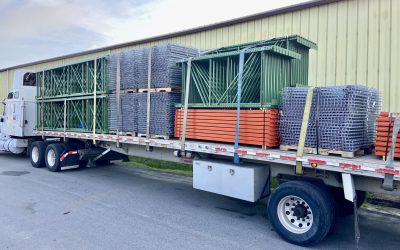
Flatbed truck shipping pallet rack uprights, beams and wire decks

Freight Class-Pallet Rack & Wire Decks… how is freight determined?

How Freight Class Is Determined for Pallet Rack and Wire Decking

If you have ever tried to ship pallet rack, you already know it is not straightforward.

Pallet rack systems and wire decking are some of the most difficult items to move through LTL freight. They are long, heavy, and not easy to handle. That combination drives up freight class, increases cost, and creates more opportunity for damage if things are not done correctly.

If you are planning a project and looking at warehouse racking systems, understanding freight class early can save you time, money, and frustration.


Why Pallet Rack Is So Difficult to Ship

Most products fit neatly on a pallet. Pallet rack does not.

Uprights are tall and awkward. Beams are long and heavy. Wire decking is dense but needs to be stacked correctly or it shifts during transit. None of it is ideal for standard LTL handling.

That is where problems start.

Freight gets moved multiple times between terminals. The more it gets handled, the higher the chance something gets bent, scratched, or worse.

The best way to ship pallet rack is usually on a flatbed or stake truck. It can be loaded from the side, secured properly, and handled less. The downside is cost. It is often more expensive, so many shipments still go LTL.

When that happens, understanding freight class becomes critical.


What Actually Determines Freight Class

Freight class is not random. Carriers look at four things every time.

Density

This is the big one. How much weight is packed into the space. Heavy, compact items are easier to ship and usually cost less.

Handling

How easy is it to move. Long beams and tall uprights are not easy. That increases the class.

Stowability

Can it stack cleanly with other freight. If it cannot, it takes up valuable space in the trailer.

Liability

What is the risk. If something is easy to damage or high value, that gets factored in.

Put all four together and you get your freight class. That number directly affects what you pay.


Understanding NMFC Without Overcomplicating It

Every product that ships LTL is assigned an unique NMFC (National Motor Freight Classification) number.

It is just a standardized way for carriers to say, “this is what this item is, and this is how it should be shipped.”

For pallet rack and wire decking, those classifications are already defined. There is no guessing, but there is a right way and a wrong way to ship them.


Freight Class for Pallet Rack Beams and Uprights

Beams and uprights fall under NMFC 164340.

In simple terms, length drives the classification.

  • Over 8 feet up to 16 feet typically lands at class 125
  • Over 16 feet up to 24 feet moves to class 200
  • Anything longer jumps to class 300

The longer it gets, the harder it is to handle. That is why the class increases.


Freight Class for Wire Decking

Wire decking is a different story.

It falls under NMFC 164150 and typically ships at class 70.

It is still heavy, but it stacks well, stays compact, and is easier to manage. That keeps the freight class lower and shipping more affordable.


Where People Get Burned on Freight Costs

This is where experience matters.

A lot of issues come from:

  • Poor packaging and strapping
  • Incorrect classification
  • Not planning shipment size properly

All of that leads to higher costs or damaged material showing up on site.

Freight class is not just a number. It is something you can work with if you understand it upfront.


We Help Customers Get This Right Every Day

Shipping pallet rack is part of the job, not an afterthought.

Midwest Material Handling has been coordinating these shipments for over 30 years. We know what works, what does not, and where problems usually happen.

Sometimes LTL makes sense. Sometimes it does not. Sometimes a small change in how the material is bundled saves a significant amount on freight.

If you are planning a project, we can help you think through it before it becomes a problem.


Frequently Asked Questions

What freight class is pallet racking?
It usually falls between class 125 and class 300 depending on length.

Why is wire decking a lower freight class?
It is dense and stackable, which makes it easier to ship.

What is the safest way to ship pallet rack?
Flatbed or stake truck is usually the safest option, but LTL is still common depending on the situation.

Freight Class-Pallet Rack & Wire Decks… how is freight determined? Read More »

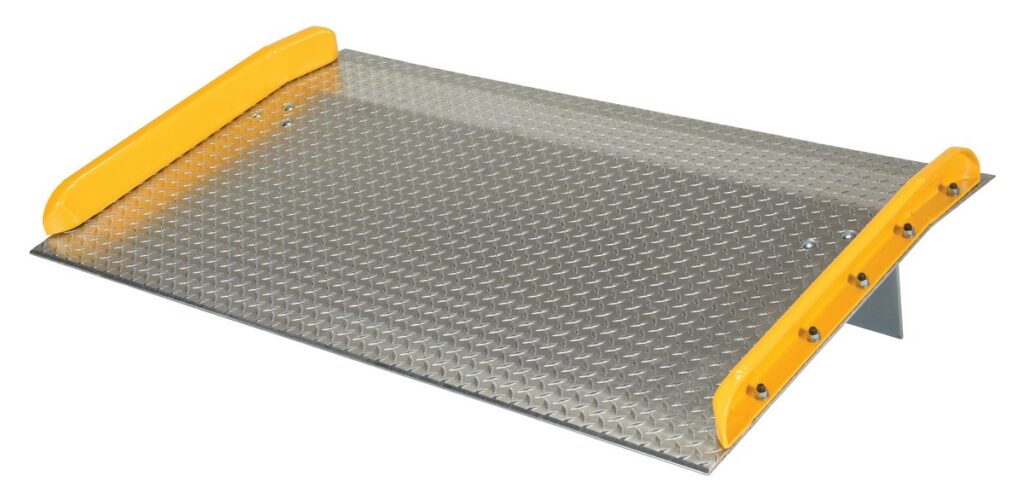
Aluminum Dock Plate

Dock Plate vs Dock Board: What’s the Difference?

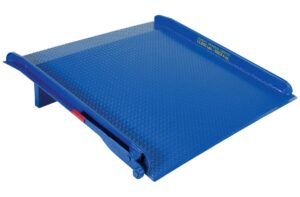
Dock Plate Dock Board

Dock Plate vs Dock Board: What’s the Difference?

We regularly hear from customers who need to safely bridge the gap between a loading dock and a semi trailer. At first glance, it seems simple. Some assume a thick steel plate placed between the dock and trailer will solve the problem.

That assumption can create serious safety risks.

Choosing between a dock plate and a dock board depends on how the equipment will be used, what type of traffic will cross it, and how much weight it must support. While the two products look similar, they are built for very different applications.


The Main Difference Comes Down to Capacity

The biggest difference between a dock plate and a dock board is load capacity and equipment type.

Dock plates are typically aluminum and designed for lighter duty use. Dock boards are engineered for forklift traffic and heavy loads.

Using the wrong one is not just inefficient. It can be unsafe.


When to Use an Aluminum Dock Plate

Aluminum dock plates are best suited for non powered loading equipment such as:

  • Hand carts

  • Manual pallet jacks

  • Light material movement

They are lighter in weight, easier to position, and often include hand holes for portability.

Most aluminum dock plates include bolt on steel safety legs that sit between the dock and trailer to help secure the plate during use. They also feature diamond tread surfaces for traction and beveled edges for smoother transitions.

Typical sizes range from 30 to 84 inches wide and 24 to 84 inches long.

If forklifts are not crossing the gap and loads are moderate, a dock plate is often the appropriate solution.


When a Steel Dock Board Is Required

Dock boards are designed for powered equipment and significantly higher capacities.

If a forklift will cross the dock gap, a dock board is generally required.

Steel dock boards are constructed using welded steel and reinforced designs that support concentrated wheel loads. Many models offer capacities ranging from 15,000 to 40,000 pounds.

They are available in wider and longer sizes than most dock plates and can be used in standard, refrigerated, container, and even below dock applications.

Unlike dock plates, dock boards are built to handle the stresses created by forklifts and heavy palletized loads.


Why Safety Legs and Height Differential Matter

Both dock plates and dock boards use safety legs to help secure the equipment between the dock and trailer.

However, the correct leg height and positioning depend on the height differential between the dock and the trailer deck. This measurement plays a critical role in determining the proper size and capacity needed.

Selecting the correct equipment involves more than matching width and length. Capacity and dock conditions must also be considered.


A Simple Way to Decide

Ask yourself three questions:

  1. Will a forklift cross the gap?

  2. What is the maximum combined weight of equipment and load?

  3. How large is the height difference between dock and trailer?

If forklifts are involved, choose a dock board.
If loading is done manually or with pallet jacks only, an aluminum dock plate may be sufficient.


Understanding the difference between a dock plate and a dock board helps prevent costly mistakes and improves dock safety. If you would like more detailed specifications, capacity guidance, or product options, you can explore our full dock equipment section for additional information.

Dock Plate vs Dock Board: What’s the Difference? Read More »

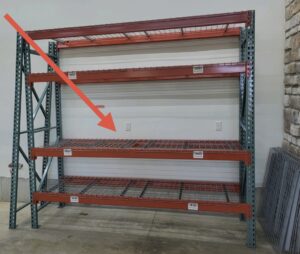
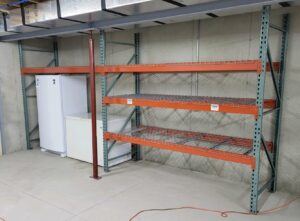
Pallet Rack for Basement

Pallet Rack Storage for Garages and Basements

Millersburg, Ohio- We are often asked if we sell Pallet Rack components to individuals or homeowners for garage, basement, shed or pole barn use… ABSOLUTELY, WE DO! Though we primarily sell to industrial type businesses (both locally as well as nationally), we very much cater to local small business or homeowners looking a for a small quantity, perhaps a section or two of Pallet Rack. Many of these customers seek a better quality or heavier weight capacity of Racking than found at the big box home centers or wholesale retailers. This is exactly why we stock standard sized Pallet Rack at our Plain City, Ohio office, all available for same day pick-up!

While we sell Pallet Rack Uprights in multiple depths, we find the most common for personal storage is 24″D and 36″D. Combined with a 96″L Beam, we also stock 24″D x 46″W Wire Decks to complete the system!

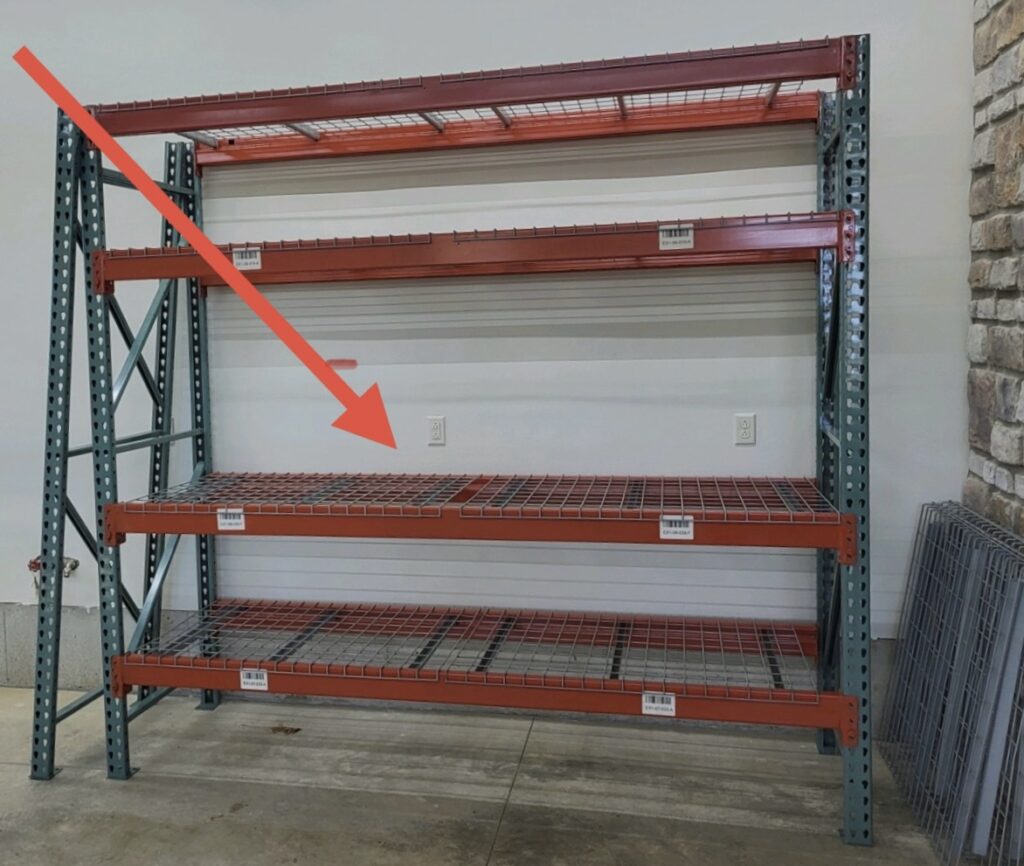
Pallet Rack for Basement Pallet Rack for Garage

Here is a neat example… we recently had a customer visit us from Holmes County, Ohio. He had just built a high end country home and wanted premium a Pallet Rack system both for his garage and basement. He also wanted to build a versatile shop desk for building custom furniture, a hobby of his. We furnished him with a new-used combination (as we often do).. NEW Uprights, USED 96″L Beams and USED Wire Deck Panels.

As you can see in the photos, he is creating a shop desk (where the red arrow is pointing) and is going to install plywood on top of the Wire Decks as well as shop lights hung from the section above. He also needed certain height Uprights to fit under his HVAC system in his basement. We were able to accomodate his unique list of requirements. He was so pleased with the way it turned out, he sent us these photos… which we always appreciate!

One thing that we pride ourselves on is we try to treat every customer equally. Whether you are looking for one or two sections of garage Pallet Racking or a full warehouse storage system, we have built our business treating every customer the same. When we say, “no project is too small”, WE MEAN IT!

Pallet Rack Storage for Garages and Basements Read More »

Galvanized Pallet Rack Upright

Galvanized Pallet Rack vs. Powder Coated… is it worth it?

Rusty Pallet Rack  Galvanized Pallet Rack Upright

Pallet Rack-Galvanized vs. Standard Powder Coated… is it worth it?

We are often asked for recommendations on Pallet Rack or Cantilever Rack for outdoor use. The options are relatively simple… we sell full, hot dipped Galvanized Pallet Rack Uprights, Beams and Wire Decks. We also carry Cantilever Racking and all related accessories, fully suitable for outdoor use.

What is Galvanizing? Galvanizing is a proceed that takes raw, unpantied metal and is “hot dipped” into a molten zinc chemical bath mixture.  This process, when dry makes the metal resistant to corrosion and rust. There are several different methods to galvanize (like electro-galvanizing) but hot dipping is, by far the most common. You likely see galvanizing in products designed for prolonged time spent outside or in hot/cold exterior climates. While not totally permanent, with care, a galvanized Pallet Rack Upright, Beam or Wire Deck can be rust and corrosion free for decades.

But is the additional cost worth it? That is difficult to answer. The average cost for galvanized Pallet Rack is generally 3-4 times the cost for standard Racking.

Why is it so expensive? Industrial Rack manufacturers do not galvanize themselves, they have to ship the Racking to a local galvanizer, where the process is performed. Once complete, the Racking is then shipped back to the manufacturer, where it is prepped for shipment. All of these “steps” contribute to the overall added cost.

Due primarily to cost, we do not sell a lot of galvanized Pallet Racking. We sell to several large, big box home improvement retailers. They purchase it primarily for their outdoor products and landscape items. We often say that you could purchase standard, powder coated Rack, which you know, in time will rust (if left outdoors) 3 to 4 times over for the same cost of one order of galvanized Pallet Rack. Remember, this chemically treated Racking gets damaged just as easily as standard Rack, the galvanizing does nothing to improve that! Additionally, the galvanizing process adds weeks onto lead times.

Galvanized Pallet Rack vs. Powder Coated… is it worth it? Read More »

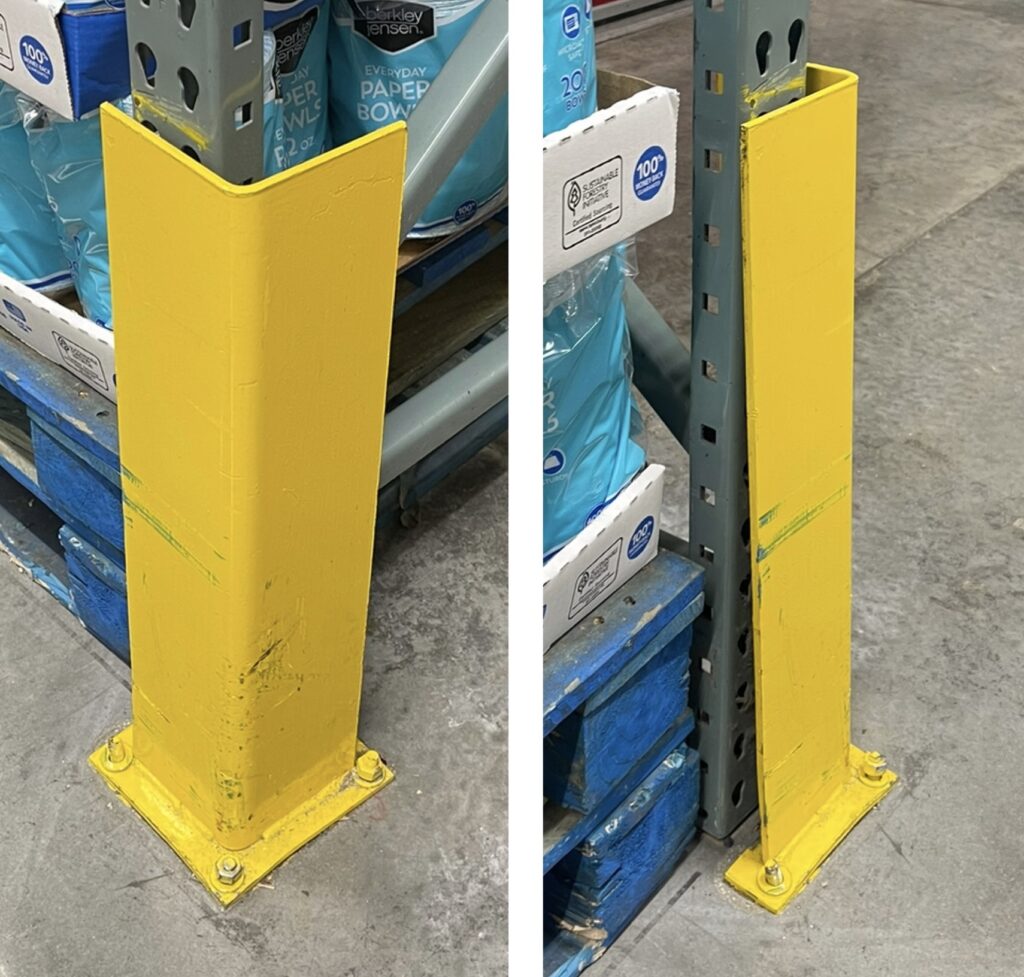
Pallet Rack Post Protectors

Post Protectors-They Work!

Pallet Rack Post Protectors

We visited a Customer facility last week as they wanted to add additional Pallet Racking sections to their current layout. This customer is a large national wholesale retailer and a longtime customer of ours. As we toured the facility, we noticed Steel Post Protectors that we installed several years ago absolutely doing their job! The whole concept behind the Post Protector is to protect the Upright columns from forklift or fork truck damage. We want the Post Protector to absorb the contact, protecting the Upright columns from structural damage. As you can see here, this is exactly what is occurring.

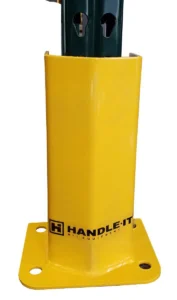
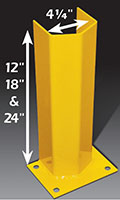
We are often asked… “what is the best method to protect my Pallet Rack Upright columns from damage”? Fortunately, the answer is also the least expensive method, the $50 Post Protectors. These simple protective devices simply require 4-5 concrete wedge anchors to install. These units come in a range of different heights, 12″H, 18″H and 24″H.

Post Protector Steel Post Protector

For additional information on a wide range of Pallet Rack and Building protection products, check out… https://mmhonline.com/building-pallet-rack-and-equipment-protection-guardrail-machinery/

Or, click for more information on Pallet Rack Post Protectors, End-of Aisle Rack Protectors and Steel Flue Guards from Savety Yellow Products

Post Protectors-They Work! Read More »

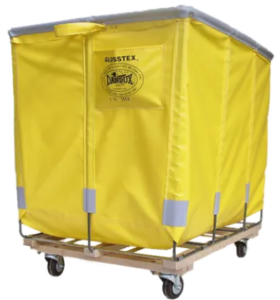
Dandux Laundry Cart

Canvas Laundry Cart, Fabric Baskets and Totes by Dandux

Dandux Laundry Cart

Contact the experts at Midwest Material Handling, LLC for information on a range of high-quality containers are used in laundries, hospitals, textile mills, garment plants, and through out the hospitality industry. Founded in 1913, Dandux is THE leading manufacturer of quality canvas and fabric carts, baskets, hampers and trucks designed to increase your productivity and make your operation more efficient.

Styles include extra duty (sewn on liner), frame trucks (lace on liner), net and bag holder storing system, wood top shipping hampers, extra heavy postal specification trucks, and a variety of shapes and sizes to meet your needs. Available in plain white canvas or yellow glosstex, lace on liners available in six optional colors.  ​

The quality of workmanship of our fabric hand truck starts without frame construction. We use high tensile spring steel electroweld to give additional strength and rigidity.  Selected kiln-dried hardwood runners are attached to the steel frame. Heavy duty canvas or GLOSSTEX​ fabric ( in six standard stock colors ) is added to complete the rugged, cost effective basket or truck you demand.

Canvas Baskets & Trucks

We offer an extensive line of carvas basket, hampers and trucks. Styles include Extra Duty (sewn on liner), Frame Trucks (lace on liner), Net & Bag Holder sorting system, Wood Top Shipping Hampers, Extra Heavy Postal Specification Trucks and a variety of shapes and sizes to meet specific needs.

Skid Boxes

Skid Boxes feature interlocking legs for secure stacking. Available in a many sizes and styles (double or single wall). Easily fork truck liftable for transporting.

Poly Box Trucks

Box Trucks are the strongest unit of its type available. The unique Double Wall Flange provides superior strength when handling heavy loads. (Available in 12, 16, 18, 19 & 24 bu.)

Refuse Carts

Mobil Refuse Carts safely and conveniently transport materials to collection areas. Choose from three sizes 24, 32 and 64 gallon and three colors (gray, blue, green, gray standard colors).

Dividable Tote Boxes

Dividable Tote Boxes are the largest selection available. Choose from over 100 sizes for the one that best meets your needs. Selection consists of stackable or nestable styles.

Stack and Nest Totes

Stack & Nest Totes are available in an extensive selection of sizes. The 180 degree stacking feature allows for stacking when in use or nesting when stored.

Tilt Trucks

Tilt Trucks are ideal for collecting, moving and dumping materials. Available in six optional colors. Available sizes: 1/2, 1, 1 1/2, & 2 cubic yard capacities.

Palletubs

Palletubs are ideal for in plant or over the road transport. Features are: fork truck liftable, stackable on lids and nestable for return trip.

Poly Bulk Trucks

Poly Bulk Trucks are ideal for handling large loads. They are designed to handle large loads while maximizing space. Available in six colors (blue standard) and many different sizes.

Nesting Totes

Nesting Totes provide an efficient means for carrying an assortment of items. Choose from over 100 sizes and shapes to meet your needs. (Some sizes available with lids).

All of these items are proudly manufactured in the USA and are available for quick ship! Call us today.

Canvas Laundry Cart, Fabric Baskets and Totes by Dandux Read More »

Brewdog Brewing

A Look Behind the Scenes: Our Multi-Stage Pallet Rack Project for BrewDog Brewing in Canal Winchester, Ohio

Every so often, a project comes along that’s not only rewarding, but also a lot of fun to be part of. A few years back, a unique project with BrewDog Brewing in Canal Winchester, Ohio definitely fits that description! What started as a single, small Pallet Rack order turned into a large, multi-stage pallet racking installation that supported both their production needs and their customer-facing space.

Before the project even began, we initially coordinated with BrewDog’s team headquartered in Scotland, which added another unique layer of communication and planning. Their team was fantastic to work with and helped set the foundation for the early stages of the installation before everything shifted to the Canal Winchester location.

If you’ve ever been inside BrewDog’s facility, you know it’s a busy place… constantly moving product, constantly growing, and always looking for ways to operate more efficiently. That meant they needed storage solutions that could keep up with their pace, but also give them the flexibility to expand as their needs changed. Instead of ordering everything at once, BrewDog purchased their pallet rack in stages, adding on as new areas were built out and as the brewery continued to scale.

A Project That Grew Alongside the Brewery

The first phase focused on back-of-house storage. We installed heavy-duty pallet racking to help them organize incoming ingredients, packaged beer and brewery equipment. With the amount of product they move in and out each week, improving the flow of materials was a high priority. The new racking immediately made a difference by giving them more vertical storage and reducing clutter on the warehouse floor.

As the project continued, BrewDog expanded their front-of-house retail space. They wanted racking solutions that looked clean and professional but were sturdy enough to hold cases, merch, and seasonal items. We matched the design to their existing layout so everything looked intentional, not just functional.

Each new stage added another layer to the overall footprint, and before long, the job evolved into a very large installation. By the final phase, the system we had built together supported a wide range of operational needs, from production to retail.

Teamwork, Flexibility and a Great Partner

One of the most enjoyable parts of this project was the collaboration. BrewDog knew what they needed, and we helped them figure out the safest and most efficient way to achieve it. Timing was important, and since they were purchasing racking as needed, we made sure each phase was scheduled and installed in a way that didn’t slow down their daily operations.

It’s always rewarding to step back at the end of a project like this and see how much the space has transformed, especially knowing the system will support BrewDog’s growth for years to come.

A Look Ahead…

Whether it’s a small add-on or a large multi-stage installation like this one, we take pride in helping businesses build storage systems that actually work for the way they operate. BrewDog was a great partner throughout the process, and we’re proud to have played a small role in their continued success in Canal Winchester.

If your business is expanding or you’re considering updating your storage layout, allow the team of experts at Midwest Material Handling, LLC to help you explore the options!

A Look Behind the Scenes: Our Multi-Stage Pallet Rack Project for BrewDog Brewing in Canal Winchester, Ohio Read More »

Scroll to Top