Many customers ask why pallet rack prices sometimes increase even when demand seems steady. One major factor that can influence rack pricing is the cost of steel.
Pallet rack systems and wire deck panels are manufactured primarily from steel. When steel prices increase due to tariffs or other market pressures, manufacturers often have little choice but to adjust pallet rack prices to reflect those higher material costs.
Steel tariffs can affect both domestic and imported steel, which means the impact can be felt throughout the warehouse storage equipment industry.
Why Steel Prices Matter for Warehouse Racking
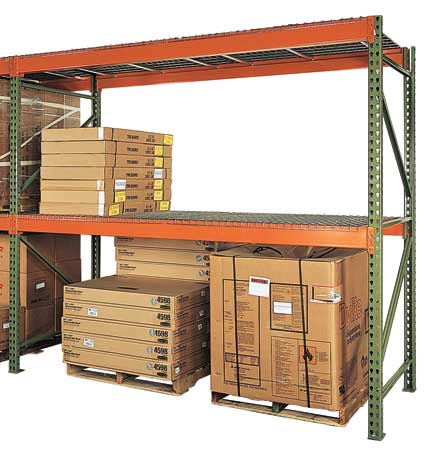
Pallet racking is a structural product designed to support heavy loads in warehouse environments. Because of this, rack components such as uprights, beams, and wire deck panels are manufactured using significant amounts of structural steel.
When tariffs increase the cost of imported steel or change the balance of global supply, steel mills often raise pricing. These increases eventually work their way through the supply chain and influence the price of finished products like pallet rack systems and wire decking.
As steel costs rise, manufacturers typically adjust their pricing to keep up with the higher cost of raw materials.
How Tariffs Influence Pallet Rack Prices
Tariffs placed on imported steel can reduce the amount of foreign steel entering the United States. While the intention is often to support domestic steel producers, the result can be higher steel pricing overall.
For companies that manufacture pallet rack systems, higher steel costs can lead directly to increases in pallet rack prices and wire deck prices.
Because rack manufacturers rely heavily on steel, even moderate changes in steel pricing can affect the final cost of warehouse racking systems.
What Warehouse Buyers Should Expect
When steel markets experience volatility due to tariffs, trade policy, or global supply changes, pricing adjustments in the pallet rack industry often follow.
Warehouse operators planning expansions or new storage installations should be aware that pallet rack prices can fluctuate with steel costs. In some cases, purchasing rack equipment before a major steel price increase can help control project costs.
Working with an experienced distributor can also help buyers evaluate both new and used pallet rack options when steel prices rise.
Planning for Rack Price Changes
Steel pricing has always played a role in the cost of warehouse storage equipment. Tariffs, global supply shifts, and manufacturing costs can all influence pallet rack prices and wire deck prices over time.
Understanding how these factors affect the rack market can help warehouse managers plan projects more effectively and avoid surprises when pricing changes occur.
For companies planning new storage installations, monitoring steel pricing trends and working with knowledgeable rack suppliers can make a significant difference when evaluating long term warehouse storage investments.
Pallet Rack Shims: When You Need Them, Uses & Safety Guidelines
If you’re installing pallet racking on an uneven warehouse floor, steel shims may be used to create a safe and level base. While shims are rarely needed, they become important in certain situations, especially in older buildings where concrete has settled, cracked, or worn over time.
Pallet racking needs to sit on a flat, stable surface to perform properly. Even small gaps under a base plate can create stress points that affect load capacity and long-term stability. That’s why proper pallet racking installation matters from the start.
When Are Pallet Rack Shims Needed?
Shims come into play when the floor prevents full contact between the upright base plate and the concrete.
This usually shows up in older or worn slabs where you’ll see dips, cracks, or slight elevation changes. Instead of forcing the rack to sit unevenly, shims fill those gaps and create a level bearing surface so the load transfers properly into the floor.
Are Pallet Rack Shims Always Required?
No… pallet rack steel shims are not a standard part of most installations and in reality, are rarely needed.
In over 31 years of selling and installing pallet racking, we’ve only used shims in a small percentage of projects. Most warehouse floors are poured well enough to support racking without any additional adjustment.
Where steel shims do become necessary is in older buildings. Concrete that has settled, chipped, or deteriorated can prevent the base plate from sitting flush. In those cases, shims provide a simple way to correct the issue without tearing up the floor.
What Are Pallet Rack Shims Made Of?
Pallet rack shims are typically steel plates designed to handle the same load as the racking system. They come in different thicknesses so installers can make small adjustments at each base plate. If needed, they can be combined to eliminate gaps and bring the upright into proper alignment.
Generally speaking, they are 4.5″ x 3.5″ x .25″ (10 gauge) material. Of course, shims used in seismic areas, for use with larger seismic footplates are much larger.
Because they’re steel, they won’t compress or break down over time, which is key for maintaining a stable system.
Where Do Shims Get Installed?
Steel shims are installed directly under the upright base plate, between the footplate and the concrete.
Their job is to eliminate any gap so the entire base sits firmly on the floor. If part of the base plate is unsupported, it can create uneven pressure that affects anchors and overall rack alignment.
How Installers Determine Shim Thickness
During installation, each upright location is checked to make sure it sits flat and plumb. If a gap is present, shims are added until full contact is achieved. This is usually done by checking level across the row and making small adjustments as needed.
Shims are also quick and easy to install, which makes them a practical solution when minor floor inconsistencies are found.
How Do You Know if a Warehouse Floor Is Level?
Before installation begins, the floor is evaluated to identify uneven areas. Installers typically use laser levels or long levels to check consistency across the slab. As the layout is marked, each base plate location is checked. If the upright doesn’t sit flush, that’s a clear sign that shimming may be needed.
It’s also important to separate a floor that is slightly out of level from one that is uneven or damaged. A consistent slope can often be worked with, but dips, cracks, or surface damage usually require correction.
How Many Shims Can You Stack?
Sometimes more than one shim is needed, but there are limits.
The total steel shim stack should not exceed six times the diameter of the anchor bolt. Smaller stacks don’t require additional securing, but once you get into larger stacks, they need to be stabilized to prevent movement.
How to Secure Shim Stacks
When required, shim stacks are secured by welding them together or by adding a second anchor bolt.
If they aren’t properly secured, they can shift over time, which can affect the stability of the rack.
Anchor Bolt Considerations
As shim height increases, anchor bolt length becomes more important.
Longer anchors may be needed to maintain proper embedment in the concrete. It’s a small detail, but it plays a big role in keeping the system secure.
Can You Use Washers Instead of Pallet Rack Shims?
No, washers are not a substitute for pallet rack shims.
They don’t provide full support under the base plate and can create point pressure, which may lead to instability or damage over time. Proper shim plates are designed to distribute the load correctly and should always be used.
Why Proper Shimming Matters
Shimming might seem minor, but it directly affects how pallet racking performs.
When it’s done right, it helps keep uprights aligned, reduces stress on anchors, and ensures loads are distributed properly. It becomes part of the overall stability of the system.
Common Questions About Pallet Rack Shims
Do pallet rack shims require inspection approval? In some cases, yes. Requirements can vary depending on local codes or the authority having jurisdiction, especially if permits are involved.
Can pallet racking be installed on cracked concrete? It depends on the severity. Minor surface issues can often be corrected with shimming, but structural damage may need to be addressed first.
How do you know if racking isn’t level after installation? You might notice gaps under base plates, uneven beam levels, or slight leaning in the uprights. These are all signs the base may not be fully supported.
Are shims a long-term solution? Yes, when installed correctly, steel shims are a permanent part of a safe and stable pallet racking system.
Get Help with Pallet Racking Installation
If you’re installing pallet racking and aren’t sure whether your floor needs to be corrected, it’s worth having it looked at before the project starts.
Most installations won’t require shims, but when they do, it’s important to get it right. A properly installed system starts with a solid base.
If you need help with pallet racking or installation, Midwest Material Handling can walk the site, evaluate your floor, and make sure everything is installed safely and correctly.
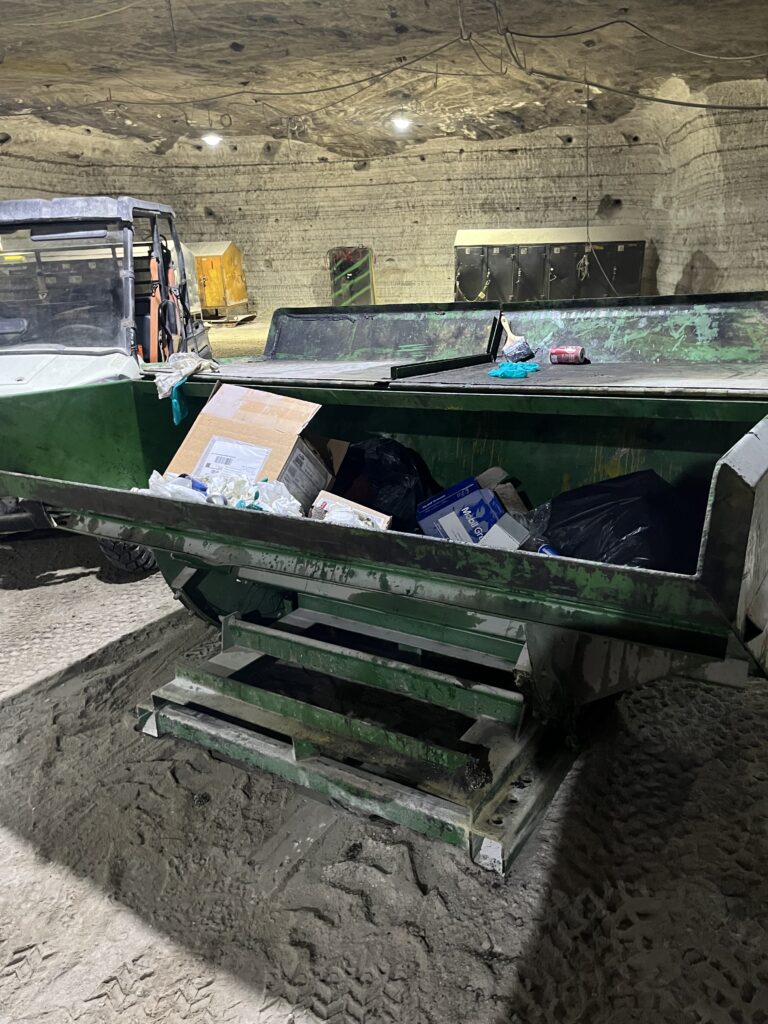
Charleston, WV- We were contacted by a long time Customer in the Charleston, WV area inquiring about large volume Steel Hopper that they wanted to replace. This particular Hopper was damaged beyond repair and needed to be replaced. These large volume Hoppers are commonly used in the mining industry. It was located in a large coal mine in Western West Virginia.
What was unusual about this existing hopper (which was primarily used for waste removal within the mine) was its large size and heavy capacity. What we replaced it with was a Jesco Industries Large Volume, Low Profile, Super Heavy Duty Structural Base Hopper constructed of 7 GAUGE STEEL. This HD Hopper had a 10 cubic yard capacity and 10,000 lbs. weight capacity. The Hopper measured 91″L x 135″W x 70″H…135″ wide and 91″ long-WOW!
We also added an optional lid (steel piano hinged split lid). This was the largest Steel Dumping Hopper we have ever sold… the Hopper with Lid weighed well over 3,600 lbs.!
We serve a wide range of Customers in a wide range of industries with often times really unique applications. Every project is uniquely different. Contact the experts at Midwest Material Handling, LLC with any Steel Dumping Hopper application from large to small-common to unusual!
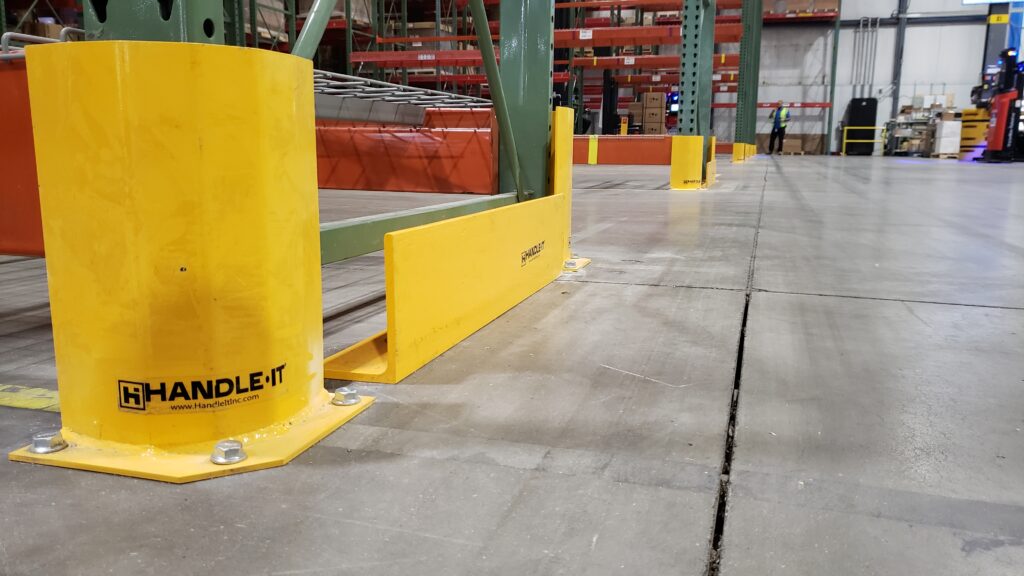
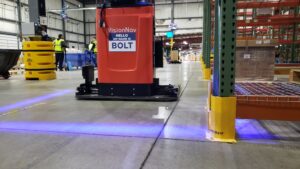
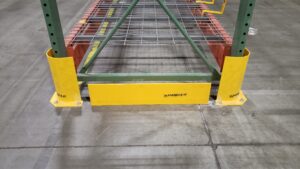
WORTHINGTON, OHIO– We recently got a call from a large Ohio based Manufacturer of industrial products with a bit of a unique Pallet Rack protection application. This customer recently purchased an AGV (Automated Guided Vehicle) and requested Post and End-of-Aisle Protectors for their Pallet Rack. The big issue was these Column Protectors could not extend into the open shelf space as every inch was needed for the AGV to operate there.
We supplied them with Handle-It 12″H Steel Column Protector with optional HD steel Rack Protector Extender, which was custom cut to 28″L. Not sure if it is clear in the photos but these Column Protectors only extend into the shelf space by an inch, at best, allowing the AGV to operate in and out of the Rack sections as designed. Like all of the Pallet Rack protection products we sell, we also furnished concrete anchors (1/2″ x 3.75″ and 3/4″ x 4.25″) for installation. The finished product came out great and has been incredibly effective. These were furnished and installed throughout the entire distribution center facility.
These Corner Protectors are also effective for use at building wall corners and guard doorways.
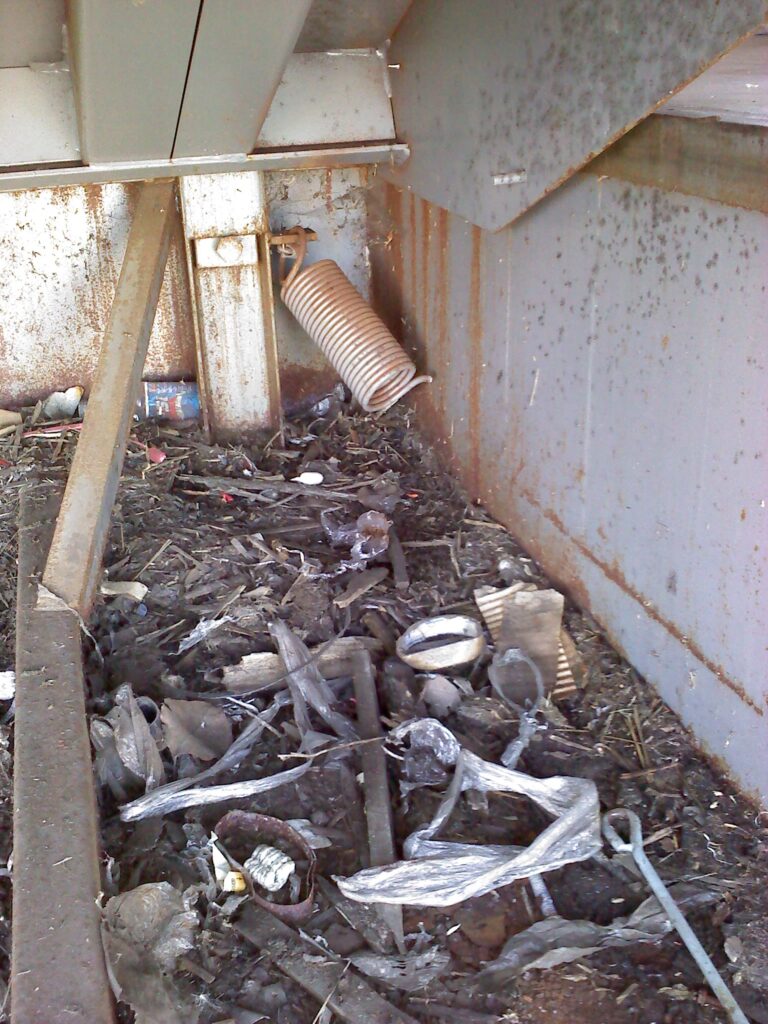
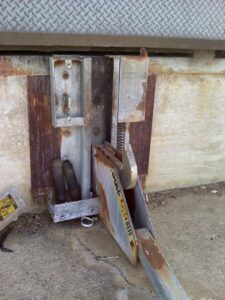
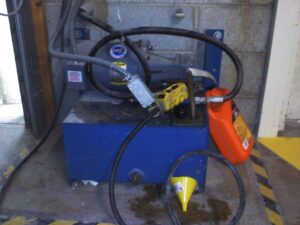
We get pictures like this sent to us all the time… “Our Leveler is down and we need this part ASAP”!
One of the more unique services we provide is the sale of Wholesale Dock Leveler, Dock Seal and Dock Shelter parts including Vehicle Restraint Parts. At the end of the day, Dock Levelers really are relatively simple devices. Like all mechanical equipment and in addition to the harsh way these devices are used, parts wear out and need to be replaced. So many Dock repair companies will come out, charge you a small fortune to evaluate a repair and say the entire Leveler has to be replaced. This is RARELY the case when just a few simple parts will put the Leveler back in service in a relatively short period of time! With a little time and willingness to repair the Leveler yourself, time and money can be greatly saved.
We supply dock leveler replacement parts for most major manufacturers including: Blue Giant, Serco, DLM, Overhead Door, Rite-Hite, Kelley (Kelley-Atlantic for older units), Poweramp, McGuire, Penta-Lift, Pioneer and Vestil Manufacturing.
OUR SPECIALTY… allow us to put our 31+ years of experience to work to help you identify those hard to find parts! As an Authorized Blue Giant Distributor, contact us with any Blue Giant Loading Dock Equipment part application!
Common Dock Leveler Replacement Parts
Main springs
Lip kick out springs
Snubber springs
Hold down boxes
Dock bumpers
Hydraulic pumps
Hydraulic cylinders
More times than not, Dock Levelers have no Manufacturer serial plate on them which makes identifying what you have and who made it a challenge. Call us and let us put our 30+ years of experience to work to provide complimentary advice and help identify what you have as well as provide part numbers and parts costs. Additionally, most parts can be shipped in overnight air for the more time sensitive repairs.
Need Help Identifying a Dock Leveler Part?
Many dock levelers lose their manufacturer serial plate over time, making it difficult to determine the correct replacement parts. If you are unsure what component has failed, send us a photo of the dock leveler and we can often help identify the correct replacement part.
With more than 30 years of experience working with loading dock equipment, we regularly help customers identify springs, hydraulic components, hold down boxes and other worn parts so the leveler can be repaired quickly.
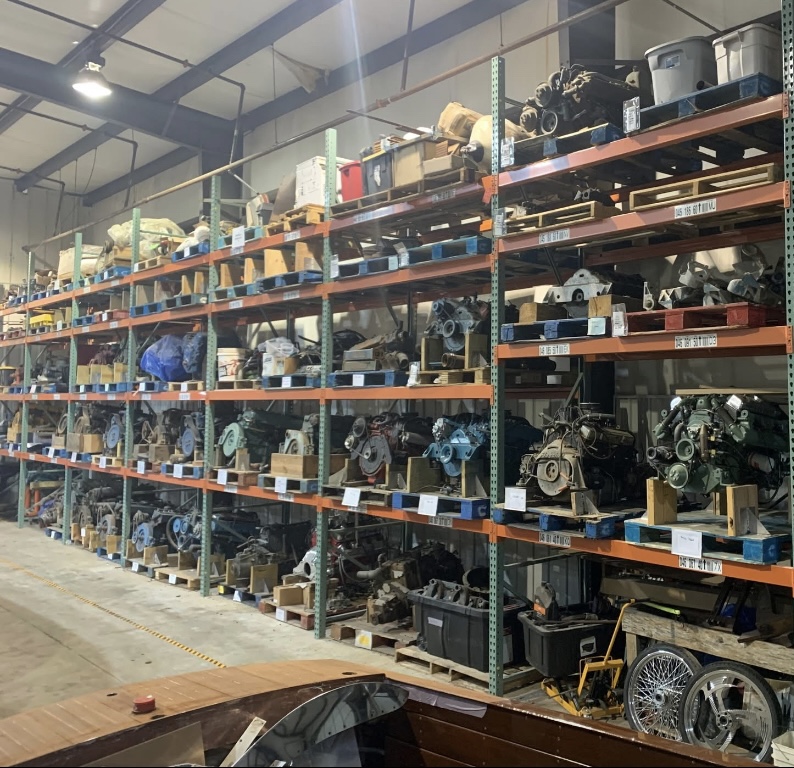
NORTHERN MICHIGAN- The uses for Storage and Pallet Racking systems are endless! We thought we would highlight a customer of ours, located in Northern Michigan, who is a vintage and classic wooden boat restorer. They have been one of the most experienced and respected wooden boat dealers, parts suppliers and vintage boat restorers for decades. They have been a customer of ours for well over 25 years.
There are so many different and unique uses for Pallet Rack and Storage Shelving! This customer uses standard Teardrop style Pallet rack for boat motor and parts storage. The picture you see here is just a small portion of their extensive parts warehouse. Look at all of those Chris-Craft, Hacker Craft, Garwood and Lyman motors! We dont believe they have ever bought anything NEW… it’s all been USED.
“OLD PALLET RACK FOR OLD PARTS” our customer always says. We always reply… “old pallet rack for old guys”, they always chuckle.
As you might imagine, our USED inventory changes weekly (if not daily). Contact us and allow our team of professionals to assist you with any USED Pallet Rack project.
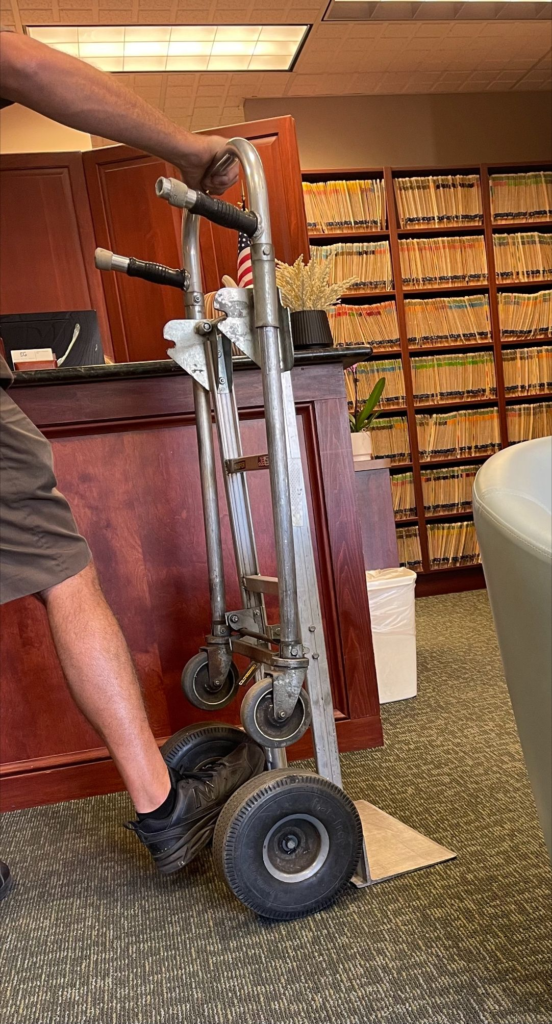
Pretty cool… Randomly ran into this UPS driver with an OLD Aluminum Convertible Hand Truck we sold them roughly 24 years ago (our “worn” company sticker was on the other side). We have sold these Hand Trucks to UPS facilities throughout the years. This Hand Truck was manufactured by Harper Hand Trucks out of Wichita, KS. Back then, Harper was a small regional fabricator but they have grown into the largest Hand Truck manufacturer in the world! We have been both a Magliner and a Harper Dealer for nearly 30 years.
We sell a wide range of Hand and Platform Trucks from quality Manufacturers like Harper Trucks, Magliner Hand Trucks, Vestil Manufacturing, Wesco Manufacturing, Fairbanks, Milwaukee Trucks, Little Giant, New Age Industrial, Safco and B&P.
Look at the worn handles, think about how many times this hand truck has been taken out and put back in his truck. This truck definitely has had some wear and tear, but he tells me it works great… UNBELIEVABLE!
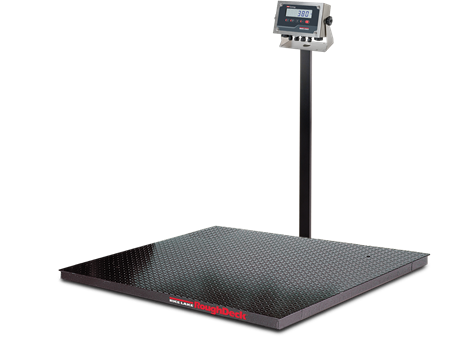
Floor scales in Columbus, Ohio are a critical part of efficient warehouse operations. Midwest Material Handling supplies industrial floor scales designed for accurate freight weighing, inventory control, and bulk material handling across a wide range of industries. As part of our broader industrial material handling equipment offering, we help businesses select reliable weighing solutions that improve accuracy and reduce costly shipping errors.
If you are setting up a new facility or upgrading your current operation, choosing the right floor scale early can help streamline workflows and avoid unnecessary freight charges.
Why Floor Scales Are Essential in Warehouse Operations
Accurate weight matters. Most warehouses rely on floor scales to verify outbound and inbound freight before it leaves the building.
LTL carriers require precise shipment weights on bills of lading. If weights are incorrect, reweigh fees and additional charges are common. These costs are avoidable with a properly calibrated floor scale.
Floor scales are also used for bulk material handling, quality control checks, and inventory management. They provide a dependable way to confirm weights throughout your operation.
Standard Floor Scale Sizes and Capacities
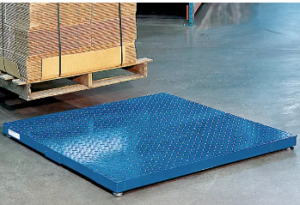
The most common floor scale used in Columbus warehouses is a 48 inch by 48 inch platform with a 5000 pound capacity. This size is ideal for standard pallet weighing and general warehouse use.
These scales are typically calibrated in 1 pound increments. The same unit can also be configured for 10000 pounds with 2 pound increments depending on your application.
A 60 inch by 60 inch platform is another common option for larger or oversized loads.
Custom sizes and higher capacities are available for specialized applications. If your operation involves unique load sizes or heavier materials, we can configure a scale that fits your requirements.
Common Floor Scale Options
Floor scales can be equipped with a range of options to improve usability and safety within your facility.
Common options include:
Steel access ramps for easy pallet jack or forklift loading
Level off platforms for smooth transitions to the scale surface
Digital indicators with clear and accurate readouts
Pit mounted installations for flush floor access
These features help improve efficiency and reduce handling time in daily operations.
Specialty Scale Applications
Many operations require floor scales built for specific environments or materials.
Stainless Steel Floor Scales
Designed for washdown and corrosive environments. Commonly used in food processing, chemical facilities, and clean operations.
Drum Scales
Built specifically for weighing 55 gallon steel or poly drums.
Coil Scales
Used for extremely heavy materials such as steel coils, bars, and structural components. Capacities often reach up to 100,000 pounds for high density loads.
Platform Scales
Smaller footprint scales used for lighter capacity applications, packing stations, and general weighing.
Built for Long Term Use Not Disposable Equipment
There is a significant difference between commercial grade floor scales and low cost import models purchased online..
Many cheaper scales are difficult to calibrate, lack replacement parts, and cannot be serviced locally. When they fail, they are often replaced rather than repaired.
We take a different approach.
All of the floor scales we supply are built for long term use, backed by full warranties, and supported with available parts and local service. You are investing in equipment that can be maintained and relied on over time.
Get Help Selecting the Right Floor Scale
Choosing the right floor scale depends on your load sizes, capacity requirements, and how the scale will be used within your operation.
If you are planning a new facility in Columbus or upgrading existing equipment, we can help you select a system that fits your workflow and avoids costly mistakes.
Contact our team today to discuss your application and request a quote.
Why Choose Midwest Material Handling
Midwest Material Handling supplies industrial equipment throughout Ohio with a focus on practical, long lasting solutions.
We work directly with warehouses, distribution centers, and manufacturing facilities to recommend equipment that performs in real world conditions.
From standard floor scales to specialized weighing systems, we help Columbus area businesses operate more efficiently and reduce unnecessary costs.
Frequently Asked Questions
What size floor scale is most common for warehouse use? Most facilities use a 48 by 48 inch scale with a 5000 pound capacity, but larger platforms may be needed depending on the application.
Can a floor scale be installed flush with the floor? Yes. Pit mounted installations allow forklifts and pallet jacks to move directly onto the scale without ramps.
How accurate are industrial floor scales? Most standard models are calibrated to 1 pound increments, with other configurations available depending on capacity.
Do floor scales need regular calibration? Yes. Routine calibration ensures accurate readings and helps prevent freight billing issues.
Can these scales be serviced locally? Yes. All scales we supply are supported with available parts and local service options.
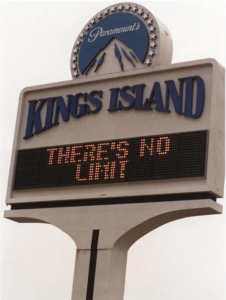
MASON, OHIO- Today, we thought we would take a little walk down memory lane to one of the more unique projects we have ever completed…
In September, 2003 a severe thunderstorm passed directly over King’s Island Amusement Park in Mason (Cincinnati), Ohio. Though very little major damage was done to the park itself, the iconic King’s Island marquee sign, visible from I-71 literally blew over. That old sign had been welcoming visitors to King’s Island for 30+ years.
A month or two later, we were contacted by an engineering firm designing the new sign for the park. This new sign was going to incorporate a newly refreshed logo and be 4-5 times larger than the old one. We were asked for a ladder solution for workers to SAFELY access the upper levels of the interior of the sign for service or maintenance.
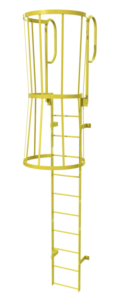
We along with the Engineering team at Vestil Manufacturing came up with and eventually manufactured and shipped a Steel Caged Walk-Thru Fixed Access Ladder system (very similar to the one pictured above) which started at the bottom of the sign and went nearly to the top. The sign was built with a series of work platforms. The series of ladders were positioned at different sides of each “platform”. These were all custom built. This allowed workers to maintain and repair the sign safely, entirely from the interior of the sign.
The final product… the sign still stands today. While we didn’t install the fixed ladders in the sign (the ladders were shipped to the sign company and they did) the collaborative efforts of our companies made for a very smooth (not to mention interesting) project!
Contact our team of experts for a wide range of OSHA and BOCA approved Steel Rolling Ladders of various designs and styles.
All of our Ladders are proudly manufactured in the United States!
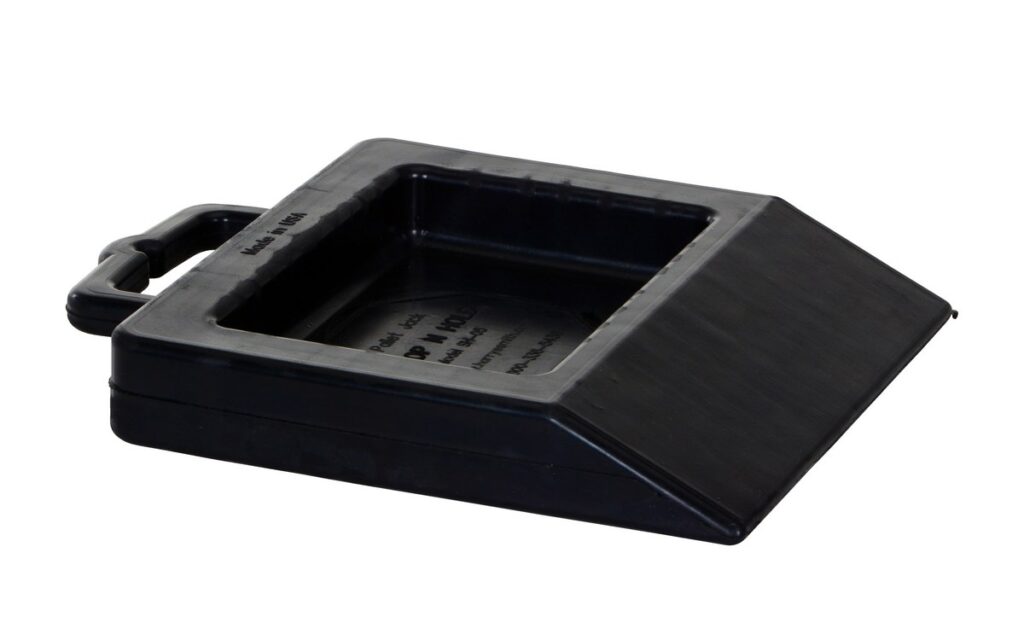
Keeping pallet jacks from rolling during transport can be a challenge in delivery trucks and trailers. When a pallet jack moves freely inside a truck bed, it can damage freight, trailer walls, and loading doors. Midwest Material Handling supplies a wide range of industrial material handling equipment in Ohio, including solutions that help secure pallet jacks during delivery and transport.
How the Pallet Truck Stop Works
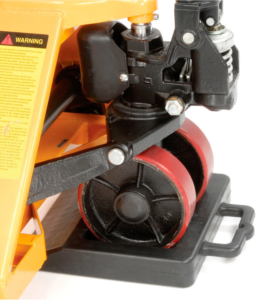
The pallet truck stop acts as a wheel cradle that captures the rear load wheels of a pallet jack. Once the wheels are positioned in the molded rubber pocket, the jack remains stationary while the vehicle is moving.
The heavy rubber construction provides excellent grip and durability, allowing the stop to stay in place even during frequent loading and unloading. Because the unit is portable, it can easily be repositioned inside a truck bed or trailer depending on the layout of the load.
Benefits of Using a Pallet Jack Truck Stop
Using a pallet jack stop inside a delivery truck or trailer offers several advantages:
Prevents pallet jacks from rolling during transport
Helps protect freight and packaged goods
Reduces the risk of damage to trailer walls and loading doors
Provides a simple, low-cost safety solution for delivery vehicles
Requires no installation or permanent mounting
This type of pallet jack wheel stop is commonly used by delivery drivers, warehouse teams, and logistics operations that transport pallet jacks with their shipments.
Pallet Truck Stop Specifications
Manufacturer: Vestil Construction: Heavy-duty molded rubber Design: Wheel cradle for pallet jack load wheels Use: Secures pallet jacks in truck beds and delivery trailers during transport
Industrial Material Handling Equipment in Ohio
Midwest Material Handling supplies a wide range of industrial material handling equipment used in warehouses, distribution centers, and delivery operations. In addition to pallet jack accessories, we provide solutions for moving, storing, and handling materials safely and efficiently.