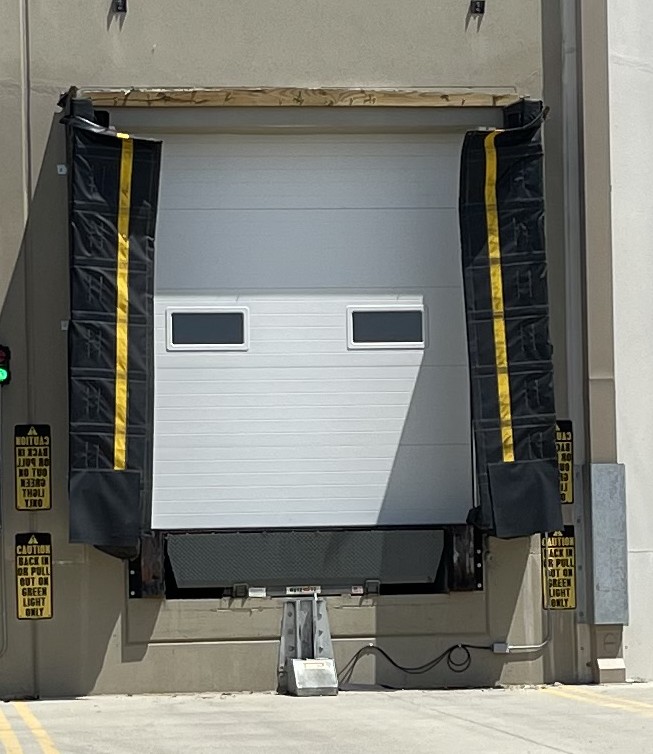
Loading dock seals and truck shelters take a beating every day. Constant trailer traffic, accidental impacts and years of exposure to the weather eventually cause components to wear out or become damaged. Fortunately, a damaged dock seal or truck shelter doesn’t always mean you need to replace the entire unit.
At Midwest Material Handling, we supply custom replacement components for compression dock seals and truck shelters, allowing you to restore your existing equipment without the expense of replacing the complete assembly.
Replace Only the Components You Need
Most dock seals and truck shelters are built with replaceable components. If one section becomes damaged, there’s usually no reason to replace the entire unit.
Whether you’re dealing with torn vinyl, crushed foam, damaged fiberglass panels or worn wear strips, we can supply replacement components manufactured to fit your existing equipment.
Many of our customers have their own maintenance departments install these replacement parts, making repairs both practical and cost effective.
Replacement Components We Offer
We supply replacement components for most major brands of compression dock seals and truck shelters, including:
Vertical dock seal pads
Head pads
Wear strips
Wear pleats
Vinyl Covered Nylon (VCN) covers
Foam inserts
Fiberglass side panels
Fiberglass top panels
Draft shields
Replacement bumper guards
Mounting hardware and other custom components
Whether you need a single replacement part or several components after accidental damage, we can help.
Replacement Components for Most Major Brands
Midwest Material Handling supplies replacement components compatible with many of the industry’s leading dock seal and truck shelter manufacturers, including:
Even if your manufacturer isn’t listed, we can often custom manufacture replacement components using your existing dimensions or a few photographs of the damaged equipment. Reach out via our easy to use Dock Leveler Parts Pricing worksheet.
What Is Vinyl Covered Nylon (VCN)?
One of the most common questions we get is what type of fabric are the verticals and the horizontals made out of? It is Vinyl Covered Nylon, commonly referred to as VCN.
This heavy duty material covers the foam components of dock seals and many truck shelter components. It is designed to withstand repeated trailer contact while protecting the foam core from moisture and weather. It comes in a range of different thicknesses designed to accommodate most any application.
Over time, VCN can become torn or worn through, making replacement an economical way to extend the life of your dock seal or shelter.
Don’t Forget the Draft Shields
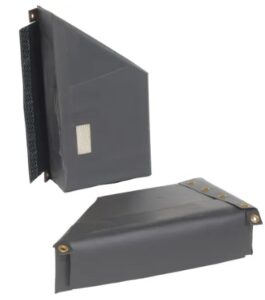
Truck shelters contain several components that are often overlooked, including the draft shields located beneath the vertical side curtains.
These square foam pads, covered with VCN, help reduce wind, rain, dust and debris from entering the building while helping maintain a tighter seal around the trailer.
Like any wear item, draft shields can be replaced individually without replacing the complete truck shelter.
Custom Manufactured in Columbus, Ohio
Our replacement dock seal components are custom manufactured right here in Columbus, Ohio. For customers throughout Ohio, this means shorter lead times, lower freight costs and components built specifically for your dock opening.
Although manufactured locally, we proudly ship dock seal and truck shelter replacement components nationwide.
Not Sure What You Need?
Whether you have a Rite-Hite, Blue Giant, Kelley, McGuire or another major brand, we can often supply replacement pads, VCN covers, fiberglass panels and other custom components.
If you’re unsure which components need to be replaced, simply send us a few photos of your dock seal or truck shelter. If available, include the manufacturer, model information and the approximate dock opening dimensions. Our experienced team can help identify the replacement components and provide a quotation for the parts you need.
Whether you’re replacing a worn head pad, damaged fiberglass panel or complete set of dock seal pads, Midwest Material Handling is your source for quality replacement dock seal and truck shelter components.
A Common Installation Mistake That Leads to Loose Dock Bumpers and Costly Repairs
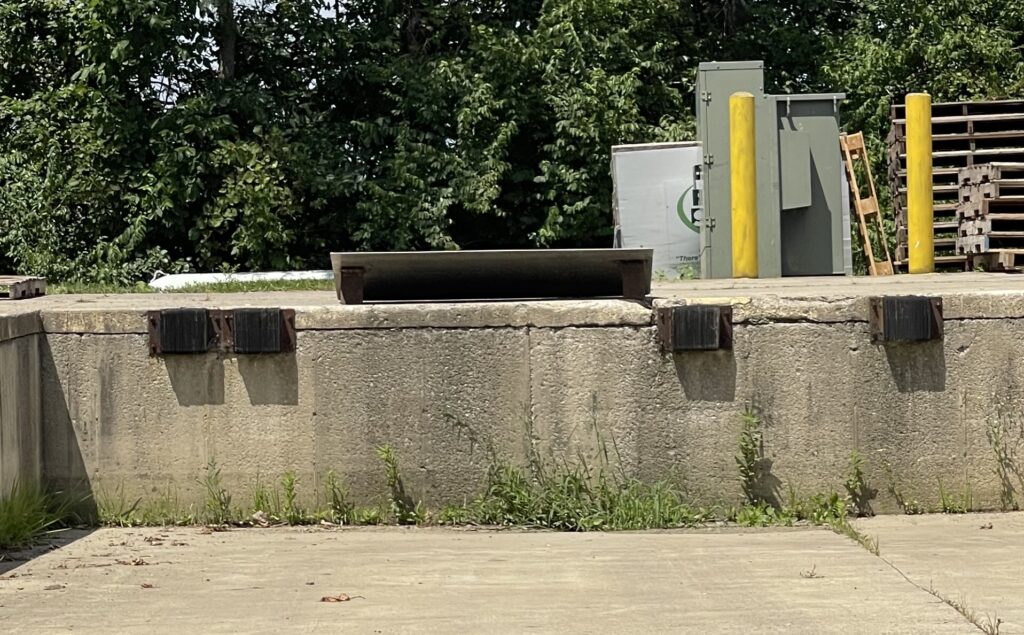
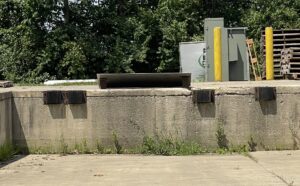
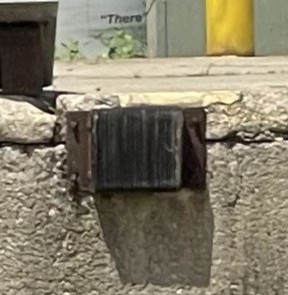
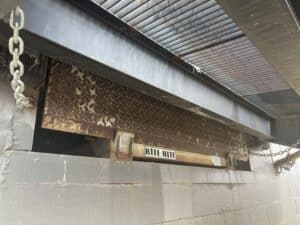
Sometimes a single photograph tells the whole story. When we looked at the loading dock pictured above, one problem immediately stood out. The laminated dock bumpers had been mounted directly to the concrete using expansion anchors. No welded connection. No attachment to structural steel. Just concrete anchors.
Unfortunately, this is more common than you might think!
At first, this type of installation may appear perfectly acceptable. The bumpers are straight, tight against the dock and seem secure. The problem isn’t apparent on the day they’re installed. The problem develops after hundreds or even thousands of trailers back into the loading dock.
Every trailer impact creates vibration and shock loading. Over time, those repeated impacts begin to loosen the concrete anchors. Once the bumper starts moving, every impact makes the problem worse until the bumper eventually pulls away from the dock. For traditional steel faced laminated dock bumpers, this is simply not the correct installation method.
Why Dock Bumpers Should Never Rely Solely on Concrete Anchors
Unlike many products mounted to concrete, dock bumpers don’t support a static load. They absorb repeated impact loads every day. Every trailer that backs into the dock transfers thousands of pounds of force into the bumper. Those impacts occur over and over again throughout the life of the loading dock.
When a dock bumper is attached only with concrete anchors, the repeated vibration gradually works those anchors loose. Once even a small amount of movement develops, the process accelerates. Eventually, the bumper becomes loose or completely separates from the dock. Not only does the bumper fail, but the concrete around the anchors is often damaged as well.
Loading Docks Were Designed for Welded Dock Bumpers
Many people don’t realize that most loading docks were originally designed with this application in mind. Before the concrete dock is poured, a heavy steel angle, commonly called an angle coping, is embedded along the front edge of the dock. That exposed steel serves two important purposes.
First, it protects the concrete edge from chipping and deterioration caused by forklifts and trailer traffic. Second, it provides a structural steel mounting surface for loading dock equipment, including dock bumpers.
When traditional dock bumpers are installed correctly, the upper mounting plate is welded directly to this embedded steel angle. The lower mounting hole may also be secured with a concrete anchor, but the welded connection carries the repeated impact loads while the lower anchor helps stabilize the bumper. That welded connection is what prevents movement and vibration.
What If the Original Angle Coping Is Missing?
Not every loading dock still has usable angle coping. Older facilities may have damaged steel, previous concrete repairs or modifications that eliminated the original welding surface. That doesn’t mean the answer is to simply drill more holes into the concrete. A common solution is to install a heavy steel approach plate.
An approach plate is typically about 12 inches deep and 8 feet long and is securely anchored to the loading dock. We recommend using steel thicker than 1/4 inch because it provides a larger, stronger welding surface that stands up to years of repeated trailer impacts. Once the approach plate is installed, the upper mounting plate of the dock bumper is welded directly to the steel plate. A single concrete anchor is then installed through the lower mounting plate to stabilize the bumper.
The theory is simple. The welded connection keeps the bumper rigid and prevents vibration. The bottom anchor provides additional stability, but it is no longer carrying the repeated impact loads by itself. The result is a much stronger installation that will significantly outlast a bumper mounted only with concrete anchors.
A Single Flange Dock Bumper Makes Installation Easier
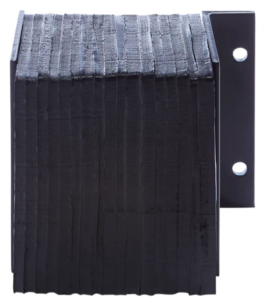
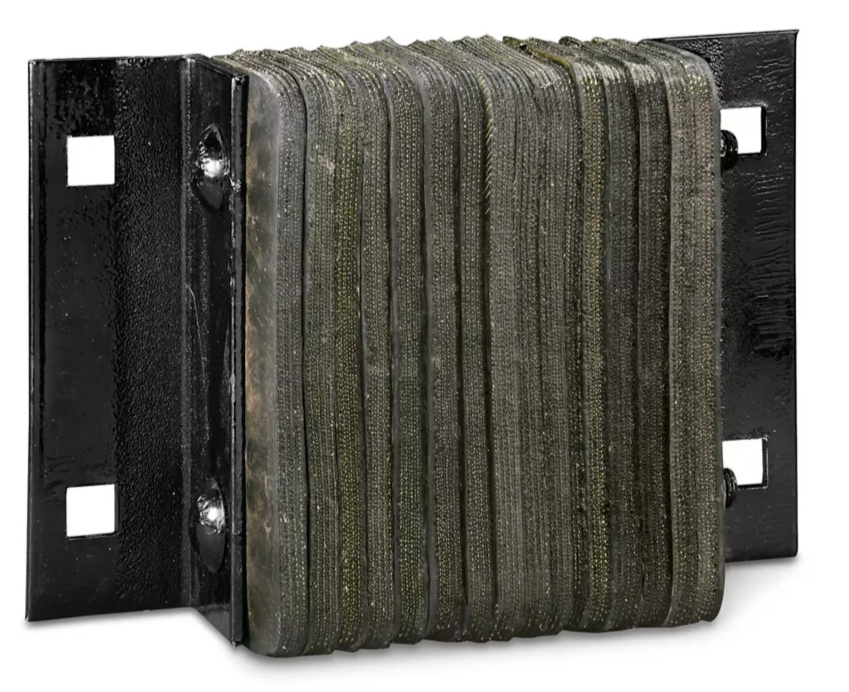
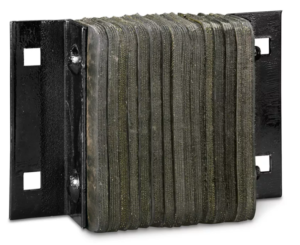
Not all dock bumpers are designed the same. Many traditional laminated dock bumpers have mounting angles on both sides. While these work well in many applications, they don’t always provide the best solution when a steel approach plate is required. For this type of installation, we recommend a single flange dock bumper.
A single flange design provides one continuous steel mounting surface that can be welded directly to the angle coping or steel approach plate. Instead of trying to weld around multiple mounting angles, the installer has a full steel flange that creates a stronger, cleaner weld. When combined with a properly installed steel approach plate, the single flange design produces a rigid connection that helps eliminate movement and vibration. A single concrete anchor at the bottom of the bumper can then be used to stabilize the installation, while the welded flange carries the repeated impact loads from backing trailers.
It’s a simple design, but one that makes installation easier and provides a stronger, longer-lasting mounting method.
The Same Principle Applies to Edge of Dock Levelers
This concept isn’t limited to dock bumpers. The same philosophy is commonly used when installing an edge of dock leveler on a loading dock that no longer has exposed angle coping. Rather than depending entirely on concrete anchors, a steel approach plate provides a structural mounting surface that allows the leveler to be welded securely to steel.
Whether it’s a dock bumper or an edge of dock leveler, the goal is the same. Create a rigid steel to steel connection that minimizes movement and prevents vibration from loosening the mounting hardware over time.
The Photo Says It All
The loading dock shown above is an excellent example of how not to install traditional dock bumpers. The bumpers have been fastened directly to the concrete with expansion anchors and have no welded connection to structural steel. Unfortunately, this type of installation is more common than many facility managers realize.
While it may seem like a quicker installation, it often leads to loose bumpers, damaged concrete and premature failure. Taking the time to mount the bumper to structural steel, whether that’s the original embedded angle coping or a properly installed steel approach plate, results in a much stronger and longer lasting installation.
Looking for Replacement Dock Bumpers?
Midwest Material Handling supplies high quality laminated dock bumpers, steel faced dock bumpers and a variety of loading dock safety products for facilities throughout Ohio.
While we no longer install them, we’re happy to help you select the correct dock bumper for your application and answer questions about proper installation methods so your investment provides years of reliable protection.
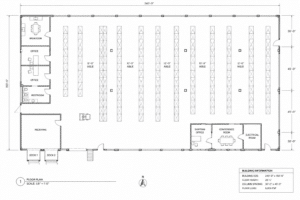
If you’ve been researching warehouse storage companies, you’ve probably noticed that many of them, including us (Midwest Material Handling) advertise warehouse layout and design services. While that’s an accurate description of what we offer, the word “layout” doesn’t always mean what customers expect it to mean.
One of the most common misunderstandings in our industry is that a material handling company will visit your facility, study your operation and completely redesign your warehouse during the quoting process. In reality, that’s not how most warehouse storage projects work.
The purpose of this article is to explain what you should realistically expect from our warehouse layout services, where our expertise lies and how we work with customers to develop the best storage solution for their operation.
What We Mean by “Warehouse Layout”
When we talk about warehouse layouts, we’re referring to the process of selecting the appropriate storage system and arranging it within your available space. Our job is to help determine which type of storage system best fits your application and how it can be configured to maximize your storage capacity while remaining safe and efficient.
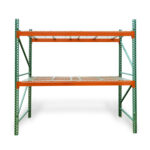
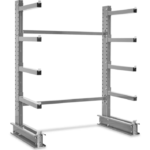
Depending on your needs, that solution may involve selective pallet rack, drive in and pushback rack, structural rack, cantilever racking or, in some cases, floor stacking. Each system has its own advantages and limitations. Our role is to explain those differences and recommend the system that best fits your products, your building and your budget. That’s very different from redesigning an entire warehouse operation.
You Know Your Business Better Than We Do
One of the things we often tell customers is simple… You know your business better than we do.
No one understands your products, inventory, customers, production schedule or daily operations better than the people who work with them every day. While we have decades of experience designing warehouse storage systems, we can’t fully understand every aspect of your business during a brief site visit.
That’s one of the reasons warehouse design is a collaborative process. You bring the knowledge of your operation. We bring the knowledge of warehouse storage equipment. When those two areas of expertise come together, the result is usually the most efficient storage solution.
Warehouse Design Is More Than Drawing Rack on a Floor Plan
Some customers assume that a warehouse layout simply involves placing rows of pallet rack on a drawing. In reality, effective layouts begin with understanding the application.
We discuss the products being stored, pallet sizes, pallet weights, ceiling height, forklift type, future growth plans and many other factors before making recommendations. Those details determine which storage system is appropriate and how it should be configured.
Our experience allows us to recommend practical solutions based on proven storage methods. The goal isn’t to invent a new type of racking system. The goal is to recommend the system that has already proven to be the best fit for your application. In many cases, the simplest solution is also the best solution.
When an Industrial Engineer May Be Needed
Occasionally, customers expect a material handling company to redesign the way their warehouse operates. While there are professionals who specialize in that type of work, it’s important to understand that their role is very different from ours.
An industrial engineer or warehouse design consultant may spend days or even weeks studying a company’s operation. They learn how products move through the facility, how inventory is managed, how orders are picked, how shipping and receiving functions and what the company’s long term goals are. They become familiar with the operation before making recommendations that affect workflow and productivity.
That level of analysis simply cannot be accomplished during a one hour visit. Our expertise is warehouse storage equipment. We help customers select the right storage system and make the best use of their available warehouse space. Redesigning an entire warehouse operation is a separate discipline.
When Do We Provide Layout Drawings?
One of the most common questions we receive is, “When will I receive a layout drawing?” In most cases, detailed CAD layout drawings are created after an order has been placed, not during the quoting process. While this may seem counterintuitive, there is a good reason for it.
A common misconception is that a detailed warehouse layout should be included with every quote. In reality, that’s similar to asking an architect to produce a complete set of house plans before deciding whether to build the home. The design work itself has significant value and is typically developed as the project moves forward, not during the initial budgeting or proposal stage.
Professional CAD drawings require both time and expense to produce. Rather than creating preliminary drawings that may need to be revised multiple times, we prefer to wait until the project details have been finalized. This allows us to create an accurate layout based on the actual equipment being purchased and the final project requirements.
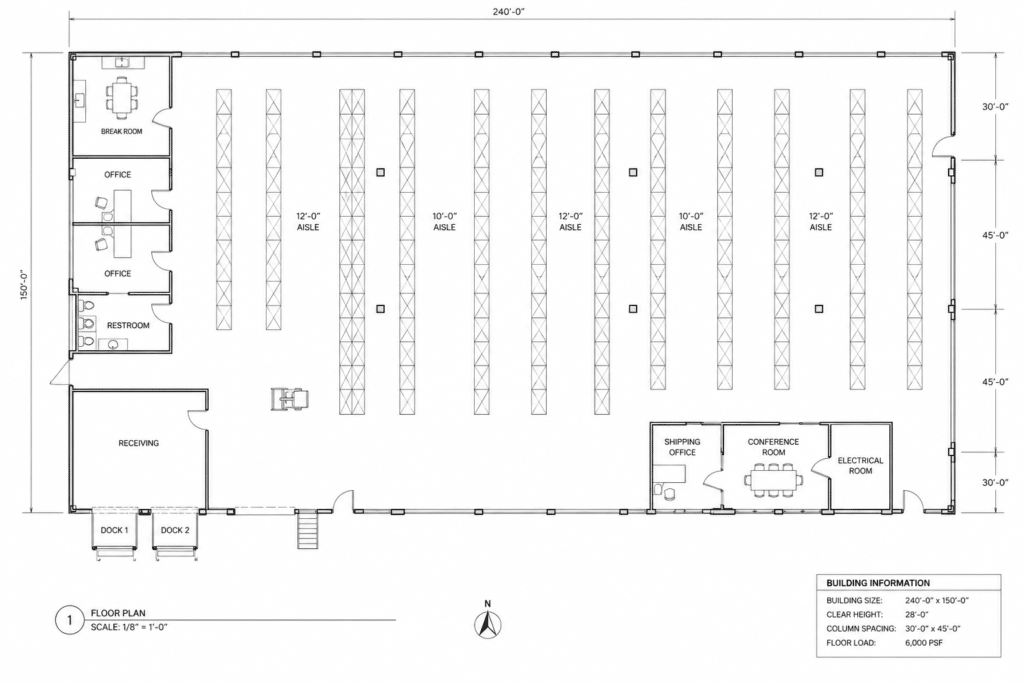
To prepare an accurate drawing, we typically request a copy of your building’s CAD floor plan in DWG format. These files are often available from your architect, general contractor, landlord or the company that designed your facility. A DWG file provides the precise building dimensions, column locations, dock doors, offices, restrooms and other permanent building features that affect the final rack layout.
The result is a layout that is accurate, practical and ready for installation rather than a preliminary drawing that may require significant revisions later.
Setting Realistic Expectations
At Midwest Material Handling, we believe that setting realistic expectations is one of the best ways to serve our customers.
We won’t pretend that we can fully understand your business after a brief walkthrough, nor will we claim to have a magical storage solution that no one has ever seen before. Warehouse storage systems have evolved over decades because they work. The challenge isn’t inventing something new. It’s selecting the right system for your application and configuring it correctly.
Our goal is to listen, ask the right questions and recommend a storage solution that makes the best use of your available space. We believe the best warehouse layouts are the result of collaboration. You bring the knowledge of your business. We bring the knowledge of warehouse storage systems. Together, we can develop a solution that is safe, efficient and built to support your operation for years to come.
Walk around almost any warehouse, manufacturing plant or distribution center and you’ll see them everywhere. They’re protecting electrical transformers, loading docks, gas meters, overhead doors and expensive equipment. Most people never notice them until something goes wrong. A forklift operator turns a little too sharply. A delivery truck backs up a little too far. Instead of thousands of dollars in damage, the vehicle hits a steel pipe bollard. Problem solved.
Steel pipe bollards are one of the most widely used facility protection products because they’re durable, relatively inexpensive and capable of preventing costly damage caused by forklifts, trucks and other industrial vehicles.
Pipe bollards are one of the simplest and most cost-effective forms of facility protection available. For a relatively small investment, they help protect buildings, equipment and employees from accidental impacts every day. At Midwest Material Handling, we supply and install steel pipe bollards throughout Ohio for warehouses, manufacturing facilities, distribution centers and commercial buildings.
What Is a Steel Pipe Bollard?
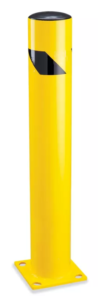
A pipe bollard is a heavy-duty steel post designed to absorb impacts from forklifts, trucks, trailers and other industrial vehicles before they can strike something more valuable. Think of them as inexpensive insurance.
Replacing an electrical transformer, repairing a damaged gas meter or rebuilding a building corner can cost thousands of dollars. Installing pipe bollards costs a fraction of that and helps prevent those accidents from happening in the first place.
Where Are Steel Pipe Bollards Used?
One of the reasons steel pipe bollards are so popular is their versatility. They can be installed almost anywhere vehicles operate around buildings or equipment.
Warehouses often use bollards to protect pallet racking, loading docks and overhead doors. Manufacturing facilities install them around machinery, electrical service equipment, gas meters, transformers and HVAC units. They are also commonly found protecting building corners, structural columns, fire department connections, pedestrian walkways and utility equipment.
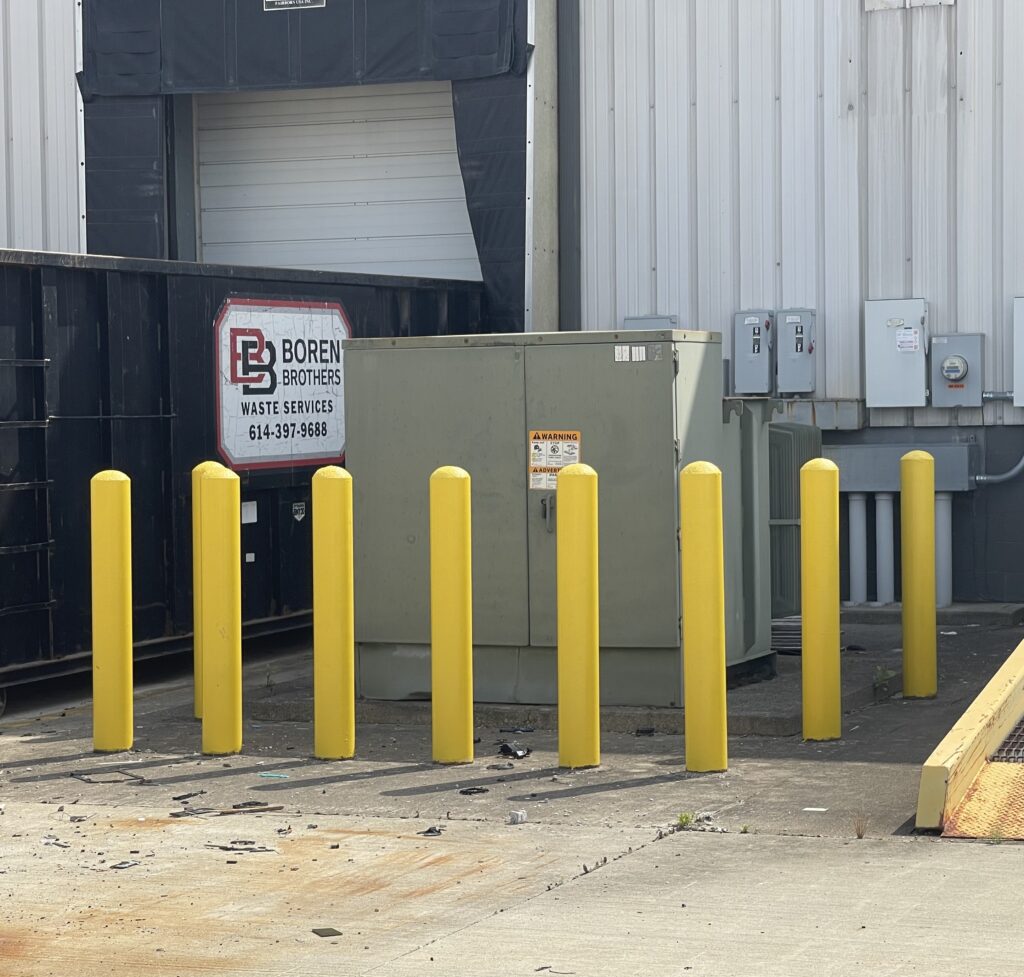
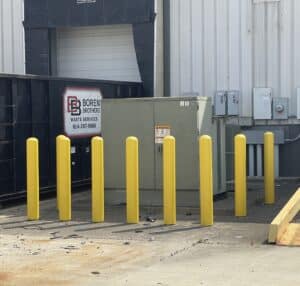
The installation shown in the photos is a perfect example. Midwest Material Handling recently installed surface-mounted steel pipe bollards around an electrical transformer located between two busy loading docks. With trucks backing into dock doors and forklifts constantly moving through the area, the transformer was vulnerable to accidental impacts. The new bollards now provide a durable protective barrier without limiting access for maintenance personnel.
Surface Mounted Steel Pipe Bollards
Surface-mounted steel pipe bollards are the most common choice for existing facilities. Instead of requiring excavation, they are welded to a heavy-duty steel base plate and securely anchored to an existing concrete slab using industrial wedge anchors. Installation is typically quick, economical and causes very little disruption to normal operations, making them ideal for retrofit projects.
Surface-mounted bollards are available in both round and square designs and come in standard diameters of 4.5 inches, 5.5 inches and 6.5 inches. Standard heights range from 24 inches to 60 inches, allowing the bollard to be matched to the equipment being protected.
Most 4.5-inch and 5.5-inch models feature an 8-inch × 8-inch × 1/4-inch steel base plate, while larger 6.5-inch bollards utilize a heavier 9-inch × 9-inch × 1/2-inch base plate for additional strength. Decorative base covers are also available to conceal the anchor bolts and provide a cleaner finished appearance.
Pour-In-Place (Direct Bury) Steel Bollards
When maximum impact resistance is required, pour-in-place bollards, also called direct bury bollards, are often the preferred solution.
Rather than being anchored to the surface, these bollards are embedded directly into concrete below grade, creating an exceptionally strong foundation capable of withstanding repeated impacts from heavy industrial vehicles. Although installation requires excavation and concrete work, direct bury bollards provide the highest level of protection for critical infrastructure such as transformers, utility equipment and building corners.
Standard direct bury bollards are commonly available in 5.5-inch, 6.5-inch and 8.5-inch diameters with an overall length of approximately 84 inches. This allows a significant portion of the bollard to be installed below grade while maintaining the proper height above the finished surface. Some models also feature a removable cap, allowing the steel pipe to be filled with concrete after installation. This additional weight and rigidity provide even greater impact resistance in demanding industrial applications.
Surface-Mounted vs. Direct Bury Bollards
Choosing the right bollard depends on your facility, the level of protection required and whether you’re installing into an existing slab or new construction.
Feature
Surface Mounted
Direct Bury (Pour-In-Place)
Installation
Anchored to an existing concrete slab
Embedded below grade in concrete
Best For
Existing facilities and retrofit projects
New construction and maximum protection
Installation Time
Faster with minimal disruption
Longer due to excavation and concrete work
Installation Cost
More economical
Higher due to labor and concrete work
Available Shapes
Round and square
Typically round
Impact Protection
Excellent for most applications
Maximum impact resistance
Removable Models
Available
Permanent installation
For most existing facilities, surface-mounted bollards are the preferred choice because they install quickly, are relatively inexpensive and provide excellent protection for the majority of warehouse and industrial applications. Direct bury bollards are often selected when new concrete is being installed or when engineers specify the highest level of impact resistance.
Types of Steel Pipe Bollards
Pipe bollards are available in far more configurations than most people realize. In addition to traditional fixed steel bollards, removable bollards allow occasional vehicle access while maintaining security the rest of the time. Welded eyelets can be added for safety chains to create temporary barriers for pedestrians or vehicles.
For applications where appearance is important, stainless steel bollards provide an attractive, corrosion-resistant alternative that’s commonly used at hospitals, schools, office buildings and retail centers. Existing steel bollards can also be upgraded with durable polyethylene bollard covers, sometimes called bollard sleeves. These covers slide over existing bollards, instantly improving appearance while eliminating the need for repeated sanding and repainting. They’re available in several diameters, heights and colors to match virtually any facility.
A Small Investment That Pays for Itself
Pipe bollards may never be the most noticeable product in your facility, but they are often one of the smartest investments you’ll make.
For a relatively low cost, they help prevent expensive repairs, reduce downtime and improve workplace safety. Whether they’re protecting a transformer between two loading docks or guarding an overhead door from forklift traffic, steel pipe bollards quietly do their job every day.
It’s one of those products you hope never gets used. But when it does, you’ll be glad it’s there.
Midwest Material Handling Supplies and Installs Pipe Bollards Throughout Ohio
Whether you need to protect an electrical transformer, loading dock, warehouse entrance or valuable equipment, Midwest Material Handling can help.
We supply and install surface-mounted bollards, direct bury bollards, removable bollards, stainless steel bollards, bollard covers and other facility protection products throughout Ohio. If you’re looking for additional warehouse safety or material handling solutions, visit our Products & Services page to explore our complete line of industrial equipment and facility solutions.
Pipe bollards protect buildings, equipment and pedestrians from impacts caused by forklifts, trucks and other industrial vehicles.
What is the difference between surface-mounted and direct bury bollards?
Surface-mounted bollards are anchored to an existing concrete slab and are ideal for retrofit projects. Direct bury bollards are embedded below grade in concrete and provide the highest level of impact protection.
Are pipe bollards available in different sizes?
Yes. Surface-mounted bollards are commonly available in 4.5-inch, 5.5-inch and 6.5-inch diameters with heights ranging from 24 to 60 inches. Direct bury bollards are typically available in 5.5-inch, 6.5-inch and 8.5-inch diameters.
Do you offer removable and stainless steel bollards?
Yes. Midwest Material Handling offers fixed, removable and stainless steel bollards, along with bollard covers, sleeves and other facility protection products.
Do you install pipe bollards throughout Ohio?
Yes. We supply and professionally install steel pipe bollards and facility protection products for warehouses, manufacturing facilities and commercial buildings throughout Ohio.
Every so often, we have the opportunity to revisit a project we completed years ago. It’s always interesting to see how the equipment has held up over time.
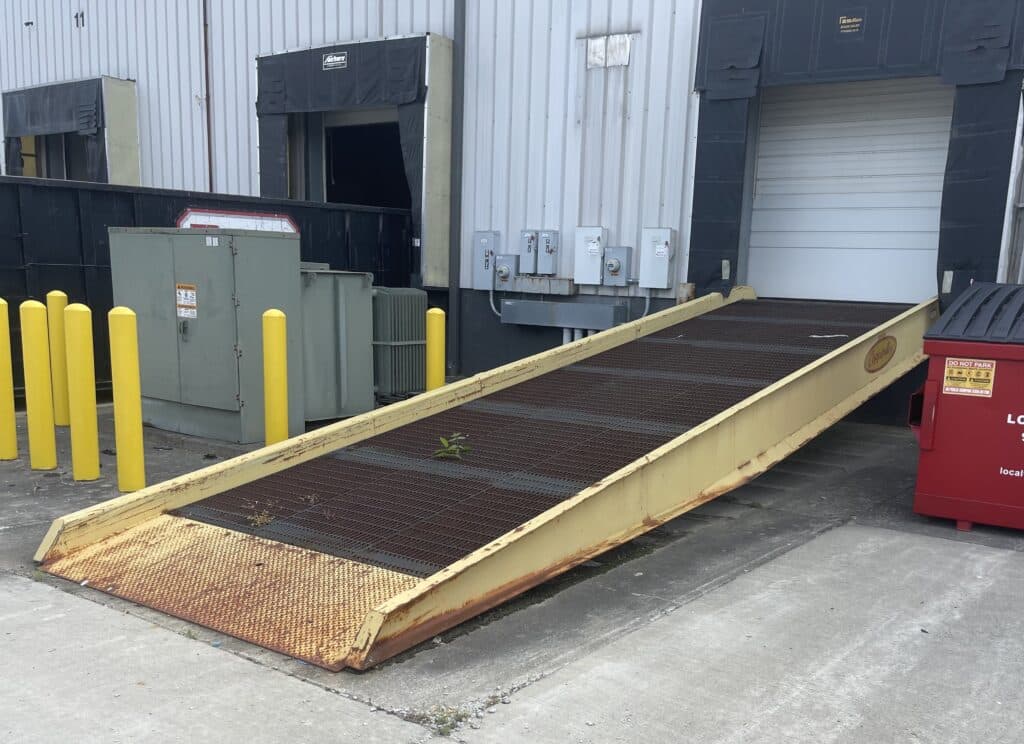
Recently, we stopped by one of our long-time customers to take another look at a Copperloy-JH Industries dock-to-ground ramp that Midwest Material Handling installed approximately 20 years ago. While the yellow paint has faded from years of Ohio weather, the ramp itself remains structurally sound and continues to provide safe, dependable forklift access every day.
Projects like this are a reminder that quality equipment, combined with a thoughtful installation, can provide decades of reliable service.
A Unique Installation
This wasn’t a typical installation. The building originally had an older Rite-Hite mechanical dock leveler that had deteriorated beyond practical use. Rather than removing the entire dock leveler and rebuilding the dock opening, we installed the Copperloy dock-to-ground ramp directly over the existing structure.
The result was a permanent transition from ground level to the loading dock without the expense and disruption of major demolition. More than two decades later, that solution continues to perform exactly as intended.
Built for Everyday Forklift Traffic
This dock-to-ground ramp is approximately 30 feet long with a 20,000-pound capacity, making it well suited for most forklifts used in warehouse and industrial applications.
While this installation is a permanent dock-to-ground ramp, many businesses choose portable yard ramps when flexibility or temporary loading access is needed. Midwest Material Handling supplies both permanent and portable yard ramps throughout Ohio, helping customers find the right solution for their facility.
Simple Design. Proven Performance.
Sometimes the simplest design features make the biggest difference.
One of the most noticeable features of this Copperloy ramp is the serrated open steel grating. Unlike solid steel decking, the open grating allows rain, snow and debris to pass through instead of collecting on the surface. The serrated edges also provide excellent traction for forklifts in wet or snowy conditions.
The heavy steel side curbs help guide forklifts safely up and down the ramp while adding strength to the overall structure. Looking at the ramp today, it’s easy to see that these design features have contributed to its longevity.
Looking Beyond the Paint
After spending more than 20 years outdoors, it’s perfectly normal to see faded paint and a little surface rust. What impressed us wasn’t the cosmetics. The heavy steel frame remains straight and solid. The side curbs show very little impact damage, and the serrated grating continues to provide a secure driving surface for daily forklift traffic.
It’s easy to focus on appearance, but structural integrity is what really matters. This ramp continues to do the job it was built to do.
Approximate Specifications
Manufacturer: Copperloy
Manufactured in Ohio
Approximate Length: 30 feet
Capacity: 20,000 pounds
Heavy structural steel construction
Serrated open steel grating for excellent traction and drainage
Heavy steel side curbs
Permanent dock-to-ground installation
We Sell and Rent Yard Ramps
Not every operation requires a permanent installation. In addition to selling new and used yard ramps, Midwest Material Handling also offers yard ramp rentals throughout Ohio. Renting is an excellent option for seasonal demand, temporary warehouse expansions, equipment breakdowns or short-term projects where purchasing a ramp doesn’t make sense.
Whether you need a portable yard ramp for a few weeks or a permanent dock-to-ground ramp for decades of service, we’re happy to help you choose the right solution.
Need a Yard Ramp for Your Facility?
Whether you’re looking for a permanent dock-to-ground ramp, a portable yard ramp or a short-term rental, Midwest Material Handling can help. We sell new and used yard ramps, offer rental options throughout Ohio and can recommend the best solution based on your loading dock, forklift capacity and application.
Need a quote or have questions? Contact Midwest Material Handling today. We’ll help you find the right ramp for your operation. In addition to yard ramps, Midwest Material Handling supplies a full line of material handling equipment for warehouses and distribution centers throughout Ohio.
Frequently Asked Questions
How long do yard ramps typically last?
A quality steel yard ramp can provide decades of reliable service when properly maintained. The Copperloy ramp featured in this article has been in service for more than 20 years and remains structurally sound and is used regularly.
What is the difference between a dock-to-ground ramp and a portable yard ramp?
A dock-to-ground ramp is a permanent installation that provides forklift access between ground level and a loading dock. A portable yard ramp can be moved to different loading locations, making it ideal for facilities without a permanent dock or businesses that need flexibility.
Do you rent yard ramps?
Yes. Midwest Material Handling rents yard ramps throughout Ohio for temporary projects, seasonal demand, warehouse expansions and emergency loading situations.
What yard ramp capacity do I need?
That depends on the combined weight of your forklift and its load. We can help determine the appropriate ramp capacity based on your equipment and application.
Do you install dock-to-ground ramps?
Yes. We provide installation services for permanent dock-to-ground ramps as well as sales, rentals and service throughout Ohio.
Loading dock bumpers are one of the most important components of any loading dock system, yet they are often overlooked until damage occurs. The right loading dock bumper protects your building, dock equipment, dock seals, and loading dock infrastructure from costly trailer impacts that occur during daily loading operations.
Many facility managers assume all dock bumpers are the same. In reality, selecting the proper loading dock bumper requires evaluating trailer traffic, loading dock conditions, trailer movement, dock equipment, and the amount of protection required. A bumper that works well for a small warehouse may be completely inadequate for a busy distribution center operating multiple shifts and handling dozens of trailers each day.
This dock bumper selection guide explains how to choose the proper loading dock bumper for your application and avoid common mistakes that can lead to expensive repairs, excessive maintenance, and premature equipment failure.
Why Loading Dock Bumpers Matter
Every time a trailer backs into a loading dock, impact forces are transferred to the building. Without proper protection, these repeated impacts can damage concrete dock walls, dock levelers, dock seals, trailer restraints, and other loading dock equipment.
Contrary to popular belief, dock bumpers are not designed to stop a trailer. Their primary purpose is to absorb impact and maintain the proper stand off distance between the trailer and the building. This cushioning effect helps protect the loading dock while reducing wear on equipment and building structures.
Even low-speed trailer impacts create substantial force. Over time, repeated contact can lead to cracked concrete, damaged dock equipment, torn dock seals, and costly repairs that far exceed the cost of properly selected dock bumpers.
Step 1: Evaluate Your Loading Dock Traffic
The first step in selecting a loading dock bumper is understanding how frequently trailers use the dock. Traffic volume has a direct impact on bumper wear and the level of protection required.
A small warehouse receiving a few deliveries per day has very different needs than a high-volume distribution center operating around the clock. Facilities with light traffic may perform well with molded dock bumpers or standard laminated dock bumpers. Manufacturing facilities, regional warehouses, and food processing plants generally benefit from laminated dock bumpers due to their superior durability and impact absorption.
At the high end of the spectrum are distribution centers, e-commerce fulfillment facilities, and cross-dock operations. These facilities often experience constant trailer movement and typically require more robust protection, including steel face dock bumpers and other heavy-duty impact protection systems. As a general rule, the more trailer traffic a facility experiences, the more durable the dock bumper system should be.
Step 2: Understand the Difference Between Laminated and Molded Dock Bumpers
Most loading dock bumpers fall into one of two categories: laminated dock bumpers and molded dock bumpers.
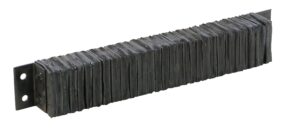
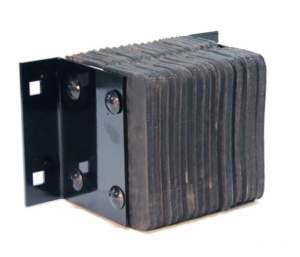
Laminated dock bumpers are manufactured from layers of recycled truck and bus tire rubber compressed on heavy-duty steel rods. This construction creates a highly durable bumper capable of absorbing repeated impacts over many years of service. Because of their strength and longevity, laminated dock bumpers are the most common choice for warehouses, manufacturing facilities, and distribution centers.
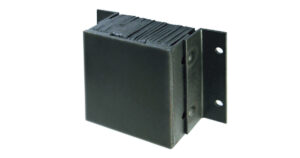
Molded dock bumpers are manufactured from fiber-reinforced rubber compounds molded into a single solid piece. They are commonly used in lighter-duty applications and are often selected as replacement bumpers for dock levelers. While molded dock bumpers provide effective protection in lower-traffic environments, they generally do not offer the same level of durability as laminated bumpers in demanding industrial applications.
For most industrial facilities, laminated dock bumpers are considered the preferred choice due to their proven performance and long service life.
Step 3: Determine the Proper Dock Bumper Projection
Dock bumper projection refers to how far the bumper extends from the dock face. It is one of the most important factors to consider when selecting a dock bumper.
For most loading docks with level approaches, a 4-inch projection is considered the industry standard. This size provides adequate stand off distance for most trailers while protecting dock equipment and building structures from impact.
However, not every loading dock can use a standard 4-inch bumper. Facilities with dock seals, canopies, recessed dock positions, or unusual trailer conditions may require additional projection. If a bumper does not extend far enough from the dock face, trailers may contact dock seals, shelters, dock levelers, or even portions of the building itself.
Selecting the proper projection is critical because an undersized bumper often creates more problems than it solves.
Step 4: Evaluate Dock Approach Conditions
The approach leading to a loading dock has a significant impact on bumper selection.
A dock with a level approach generally allows standard dock bumpers to perform as intended. However, facilities with declined approaches often require additional protection because trailers back downhill toward the building. As the grade increases, the trailer moves closer to the dock face, increasing the likelihood of impact damage.
In these situations, extra thick dock bumpers or increased projection may be required to maintain the proper stand off distance. Facilities with steep declines frequently need specialized bumper configurations to prevent damage to dock equipment and building structures.
Although inclined approaches typically create fewer issues, they should still be evaluated when selecting dock bumpers. Understanding how trailers actually position themselves at the dock is one of the best ways to determine whether additional protection is needed.
Step 5: Consider Trailer Movement During Loading
Many facility managers focus on trailer impact when a truck backs into the dock. In reality, some of the most damaging wear occurs after the trailer is already parked.
Forklifts entering and exiting trailers cause trailers to move up and down throughout the loading process. Air ride suspension systems can also contribute to vertical movement as trailer weights change during loading and unloading.
This movement creates friction between the trailer and the dock bumper. Over time, constant rubbing can wear away bumper material and shorten service life. If dock bumpers are wearing out faster than expected, trailer movement is often a contributing factor that should be investigated.
Step 6: When Should You Use Steel Face Dock Bumpers?
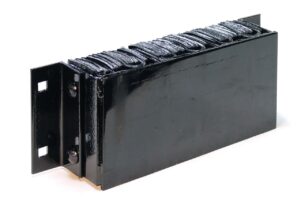
Steel face dock bumpers are designed specifically for applications where excessive friction occurs due to trailer movement. These bumpers feature a heavy-duty steel plate mounted to the face of a laminated dock bumper. The steel plate protects the rubber from abrasion while still allowing the bumper to absorb impact energy.
Steel face dock bumpers are commonly found in distribution centers, cross-dock facilities, high-volume warehouses, and operations utilizing air ride trailers. They are also frequently recommended for facilities that use yard jockeys to move trailers throughout the day.
If standard laminated dock bumpers are wearing out prematurely, upgrading to steel face dock bumpers may dramatically extend service life and reduce replacement costs.
Step 7: Understand the Impact of Yard Jockey Operations
Facilities utilizing yard jockeys or shunt trucks often experience more severe dock bumper wear than facilities relying exclusively on over-the-road drivers.
Yard jockeys move trailers repeatedly throughout the day and often back trailers into position more aggressively. This creates additional impact forces and increases friction between the trailer and the dock bumper.
As a result, many large distribution centers use steel face dock bumpers, heavy-duty laminated bumpers, or increased bumper projection to better withstand these demanding operating conditions. When evaluating a dock bumper application, understanding who is moving the trailers can be just as important as understanding how many trailers visit the dock each day.
Step 8: Consider Trailer Impact Height
Not all trailers contact the dock at the same height. Trailer suspension, trailer design, refrigerated trailers, container chassis, and loading conditions can all affect impact points.
Facilities serving a wide variety of trailers may require additional vertical protection to prevent damage above or below the primary impact zone. This is one reason extra length dock bumpers are commonly used at facilities with dock seals or varying trailer heights.
When trailer impact points vary significantly, vertical dock bumpers or extended-height bumpers may provide better protection than standard bumper configurations. Evaluating trailer impact height is often overlooked, but it can play a major role in selecting the proper dock bumper system.
Step 9: Consider the Rest of the Loading Dock System
Dock bumpers should never be selected independently of the rest of the loading dock system. Everything works together.
Equipment such as dock levelers, dock seals, dock shelters, trailer restraints, and dock lifts can all influence bumper placement and projection requirements. Installing new equipment without considering bumper protection can create unexpected clearance issues and increase the risk of damage. We furnish a wide range of replacement dock leveler and vehicle restraint parts at true wholesale pricing.
For this reason, bumper selection should always be evaluated alongside the rest of the loading dock design.
Common Dock Bumper Selection Mistakes
Many loading dock problems can be traced back to improper bumper selection. One of the most common mistakes is choosing a dock bumper based solely on price. While inexpensive bumpers may reduce upfront costs, they often wear out faster and provide less protection in demanding applications.
Another frequent mistake is overlooking trailer movement. Facilities with air ride trailers, forklifts, or yard jockey operations often require more robust bumper protection than initially expected. Approach conditions are also commonly ignored. A dock with a declined approach may require significantly more bumper projection than a facility with a level approach.
Finally, many facilities wait too long to replace worn dock bumpers. By the time structural damage becomes visible, repair costs often exceed the cost of replacing the bumpers months earlier.
Signs Your Dock Bumpers Need Replacement
Dock bumpers should be inspected periodically as part of a routine maintenance program. Common signs that replacement may be needed include cracked rubber, excessive compression, exposed steel rods, bent mounting hardware, and visible damage to surrounding dock structures. Missing rubber sections and severe wear are also indicators that the bumper is no longer providing adequate protection.
Replacing dock bumpers before complete failure can help prevent costly damage to dock equipment and building structures.
Frequently Asked Questions
What is the most common loading dock bumper size?
The most common dock bumper projection is 4 inches. This size provides adequate protection for most loading docks with level approaches.
Are laminated dock bumpers better than molded dock bumpers?
For most industrial applications, laminated dock bumpers provide greater durability and impact absorption than molded dock bumpers.
When should steel face dock bumpers be used?
Steel face dock bumpers are recommended when excessive friction occurs due to trailer movement, air ride trailers, yard jockey operations, or high trailer traffic.
How long do dock bumpers last?
Service life varies depending on traffic volume, operating conditions, and bumper style. High-quality laminated dock bumpers can provide many years of reliable service.
Are dock bumpers mounted to the building or trailer?
Dock bumpers are permanently mounted to the building structure and are designed to protect the loading dock from trailer impact.
Final Thoughts
Selecting the right loading dock bumper involves much more than choosing a standard size and bolting it to the wall. Traffic volume, trailer movement, dock approach conditions, impact height, and existing dock equipment all influence the proper solution.
By understanding how your loading dock operates and evaluating these factors carefully, you can select a dock bumper system that reduces maintenance costs, improves safety, protects valuable equipment, and extends the life of your loading dock investment.
If you need assistance selecting laminated dock bumpers, molded dock bumpers, steel face dock bumpers, extra thick dock bumpers, wheel chocks, or other loading dock equipment, Midwest Material Handling can help evaluate your application and recommend the best solution for your facility.
Perforated Steel Rack Decks: A Specialty Alternative to Standard Wire Decking
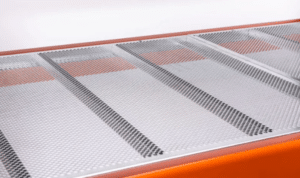
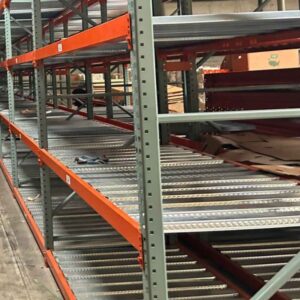
For most warehouse storage applications, standard wire decking remains the preferred solution for pallet rack systems. However, there are situations where a more specialized form of steel rack decking is needed. Standard wire decking is economical, durable, easy to install, and allows water from overhead fire sprinkler systems to penetrate through multiple rack levels.
In fact, standard wire mesh decking solves the storage needs of probably 95 percent of pallet rack users.
Occasionally, however, we receive a call from a customer who simply cannot use the traditional 2-inch by 4-inch wire mesh configuration found on a standard wire deck panel. Their products are too small, require a flatter storage surface, or need more continuous support than wire mesh can provide.
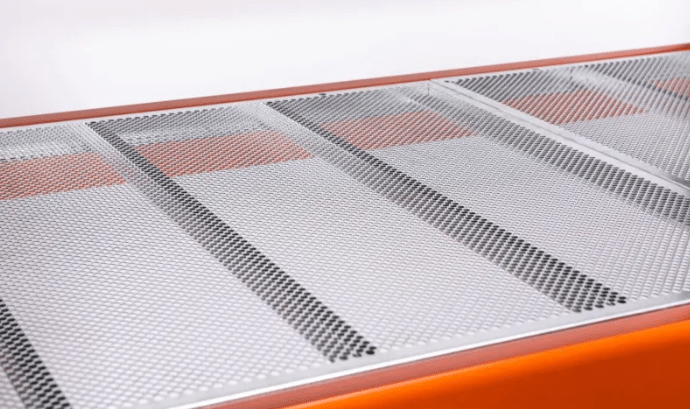
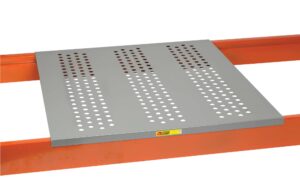
When that happens, perforated steel rack decking may be the perfect solution. This specialized form of steel pallet rack decking provides greater product support than traditional wire decking while still allowing sprinkler penetration.
Why Some Warehouses Need More Than Standard Wire Decking
Standard wire decking works exceptionally well for palletized loads, cartons, and general warehouse storage. It has become the industry standard because it is affordable, durable, and compatible with virtually every type of pallet rack system. However, not every storage application is the same.
Some warehouse products are small enough to settle into the openings of a wire deck. Other products require a smoother storage surface for stability, product protection, or handling purposes. At first glance, a solid steel shelf seems like the obvious answer.
The problem is that most warehouse fire protection systems rely on water from overhead sprinklers reaching lower rack levels. Completely solid shelving can interfere with sprinkler penetration and create concerns with fire protection requirements. This is where perforated steel rack decking fills an important niche.
What Is Steel Rack Decking?
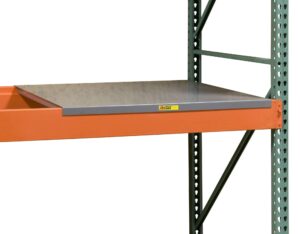
Steel rack decking is a broad category of rack shelving products designed to provide support for stored materials within a pallet rack system. One specialty form of steel rack decking is perforated steel decking, which provides many of the benefits of a solid shelf while still allowing water, air, and light to pass through strategically placed perforations.
Steel rack decking is a broad category that includes wire decking, perforated steel rack decking, corrugated decking, and solid steel pallet decking systems designed for pallet rack storage.
The result is a storage surface that is significantly more continuous than traditional wire decking while maintaining the open area needed for sprinkler effectiveness.
For customers who cannot work with a traditional 2-inch by 4-inch wire mesh pattern, perforated steel decking often provides the best of both worlds.
A Specialized Product for a Specialized Application
Perforated rack decking is not a high-volume warehouse product.
In fact, only a handful of manufacturers in North America currently produce these specialized deck panels.
One of the industry’s leading manufacturers is Nashville Wire Products, widely recognized as one of the largest wire decking manufacturers in the United States.
These decks are specifically designed for warehouse operators who need something between traditional wire mesh decking and solid steel rack shelving.
Unlike standard pallet rack steel decking, perforated decks are typically selected only when a warehouse requires a more continuous storage surface for cartons, small parts, or irregularly shaped products.
Because of the specialized nature of the product, perforated steel decks are typically specified only when standard wire decking, corrugated steel decking, or other shelf options are not suitable.
While perforated steel rack decks represent a very small percentage of the rack decking we sell, they are often the perfect solution when traditional wire decking, corrugated decking, or solid shelving cannot meet a customer’s storage requirements.
Nashville Wire Perforated Deck Specifications
Nashville Wire’s perforated steel rack decks are engineered similarly to traditional wire deck panels.
A standard 42-inch by 46-inch deck includes:
• Three structural support channels
• 18-gauge pre-galvanized steel construction
• Compatibility with standard pallet rack systems
• Designed for 1 5/8-inch step beams
• 1-3/4-inch top of beam dimension
These specialized deck panels are designed to fit standard pallet rack systems utilizing A-style and 5/8-inch step beams commonly found in warehouses throughout Ohio and across the country.
The use of pre-galvanized steel provides additional corrosion resistance and long-term durability, making these decks suitable for demanding warehouse environments.
How Much Weight Can a Perforated Steel Deck Hold?
The Nashville Wire perforated steel deck carries a uniform distributed load capacity of approximately 2,000 pounds per panel.
For many warehouse applications, this capacity is more than adequate.
Other manufacturers, including Little Giant, offer solid steel and perforated steel rack decks with capacities of approximately 3,000 pounds per panel.
While the additional capacity may be beneficial in certain situations, many customers simply do not require that level of loading.
The Nashville Wire design often strikes an excellent balance between strength and cost.
How Much More Do Perforated Steel Rack Decks Cost?
Let’s be honest. Nobody purchases perforated steel rack decks because they are the least expensive option. They are a specialty product designed to solve a specific storage problem.
As a general comparison:
• Standard wire decking serves as the baseline
• Nashville Wire perforated steel decks typically cost about five times (5X) more than a standard wire deck panel
• Solid steel and heavy-duty perforated steel decks from other manufacturers often cost approximately seven times (7X) more than standard wire decking
That means the Nashville Wire perforated deck can be roughly 30 percent less expensive than competing solid steel or perforated steel deck designs.
For customers who need this type of storage surface and dont need the higher capacity, that cost difference can be significant.
What About Corrugated Steel Rack Decking?
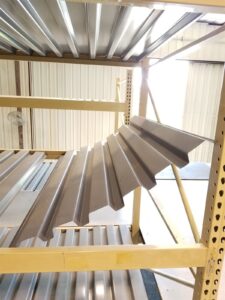
Corrugated steel decking is another option frequently considered when a more solid storage surface is needed. It is generally less expensive than perforated steel rack decking and provides more product support than traditional wire mesh.
Some warehouse managers evaluating solid steel pallet decking also consider corrugated steel decking because it provides a more continuous surface than wire mesh. However, corrugated panels still contain ridges and valleys that may not be suitable for every application.
For some products, those grooves create the very problem the customer is trying to eliminate. When a flatter, more uniform storage surface is required, perforated steel rack decks often become the preferred solution.
Steel Pallet Rack Decking Options
Warehouse operators today have several steel pallet rack decking options available. Traditional wire decking remains the most common solution, while corrugated decking, solid steel pallet decking, and perforated steel rack decking are generally reserved for more specialized storage applications.
Perforated Steel Rack Decks vs. Wire Decking
Feature
Standard Wire Decking
Perforated Steel Rack Decking
Cost
Lowest Cost Option
Approximately 5x Higher
Sprinkler Penetration
Excellent
Excellent
Surface Continuity
2-inch x 4-inch Mesh Openings
Nearly Continuous Surface
Capacity
Varies by Deck
Approximately 2,000 lbs. UDL
Corrosion Resistance
Excellent
Excellent
Best Application
General Warehouse Storage
Small Parts & Specialty Storage
For the vast majority of warehouse operations, wire decking remains the best value. Perforated steel decks are reserved for applications where a more continuous storage surface is required.
Advantages of Perforated Steel Rack Decking
Perforated steel decks offer several unique benefits:
✔ More continuous storage surface than wire decking
✔ Better support for small products and irregular items
✔ Allows water from sprinkler systems to penetrate lower rack levels
✔ Durable galvanized steel construction
✔ Cleaner appearance than corrugated decking
✔ Compatible with standard pallet rack beams
✔ Available in multiple capacities and configurations
For the right application, these advantages can easily justify the additional investment.
Not the Right Choice for Every Warehouse
The vast majority of pallet rack systems will continue to use traditional wire mesh decking because it provides the best combination of performance, safety, and affordability.
However, every warehouse has unique storage requirements. When product size, storage conditions, or operational needs make standard wire decking unsuitable, perforated steel rack decks provide a highly effective alternative.
They are not designed for every warehouse. They are designed for the warehouse manager who has a very specific challenge and needs a very specific solution.
And when that challenge exists, few products perform better.
Need Help Selecting the Right Rack Decking?
Choosing the right decking solution is about more than load capacity. Product size, fire protection requirements, storage methods, and budget all play a role in determining the best option for your warehouse.
Midwest Material Handling supplies steel rack decking solutions throughout Ohio, including standard wire decking, perforated steel rack decking, steel pallet rack decking, and other specialty rack shelving products. Whether you’re installing a complete pallet rack system or upgrading an existing storage area, we can help identify the right solution for your warehouse storage application.
Contact Midwest Material Handling today to discuss your storage requirements and request pricing on perforated steel rack decks, wire decking, or complete pallet rack systems.
Frequently Asked Questions About Perforated Steel Rack Decking
What is perforated steel rack decking?
Perforated steel rack decking is a specialty pallet rack shelf designed with thousands of small openings that allow water, air, and light to pass through while providing a more continuous storage surface than traditional wire decking.
Is perforated steel rack decking stronger than wire decking?
Not necessarily. Load capacity depends on the design, gauge of steel, deck dimensions, and support structure. The Nashville Wire perforated deck discussed in this article carries a uniform distributed load capacity of approximately 2,000 pounds per panel.
Does perforated steel rack decking meet fire code requirements?
Perforated steel rack decking is designed to allow water from overhead sprinkler systems to penetrate through rack levels more effectively than solid steel shelving. However, fire code requirements vary by facility and should always be reviewed with a qualified fire protection professional.
How much does perforated steel rack decking cost?
Perforated steel rack decking typically costs approximately five times more than standard wire decking. Some heavy-duty perforated and solid steel deck systems can cost as much as seven times more than traditional wire mesh decking.
What sizes are available?
Perforated steel rack decks are available in multiple widths and depths to fit common pallet rack configurations. Popular sizes include 42-inch and 48-inch depths with widths designed for standard pallet rack beam lengths.
What is the difference between perforated decking and corrugated steel decking?
Corrugated steel decking uses raised ribs and valleys to increase strength, while perforated decking provides a flatter and more uniform storage surface. Warehouses storing small cartons, parts, or products that require continuous support often prefer perforated decking.
Can perforated steel rack decks be installed on existing pallet rack systems?
Yes. Most perforated steel rack decks are designed to fit standard pallet rack beams. The Nashville Wire design referenced in this article is compatible with 1 5/8-inch step beams.
What is the difference between steel rack decking and wire decking?
Steel rack decking is a broad category that includes wire decking, perforated steel rack decking, corrugated decking, and solid steel pallet decking. Wire decking remains the most common choice for general warehouse storage, while specialty forms of pallet rack steel decking are typically used when additional product support or a more continuous storage surface is required.
When should I choose perforated steel rack decking instead of wire decking?
Perforated steel rack decking is typically chosen when products are too small for traditional wire mesh openings, require a flatter storage surface, or need greater product support. For most palletized storage applications, standard wire decking remains the more economical and practical solution.
Who Says Pallet Rack Is Just for Pallets? A Vinyl Record Storage Story
When most people think of pallet rack, they picture forklifts moving palletized inventory throughout a warehouse. That’s certainly the most common application, but it’s far from the only one.
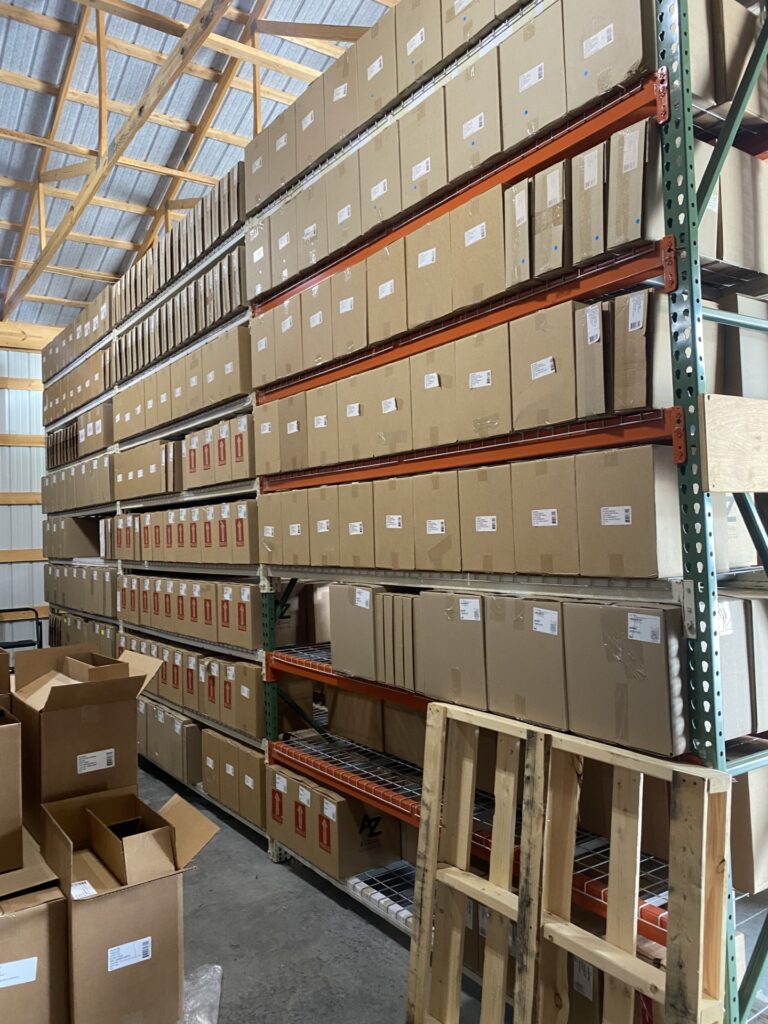
Over the years, we’ve seen pallet rack used to store everything from machine parts and archived documents to retail inventory and collectibles. A recent project for a long-established Cincinnati-area company in Loveland reminded us just how versatile standard teardrop pallet rack can be.
This customer specializes in buying, selling, and distributing vinyl records, including LPs, 45s, and 78s. As their inventory continued to grow, they needed a storage system that would keep thousands of records organized while making the most of their available warehouse space. Rather than investing in a custom storage system, they turned to standard Husky Rack & Wire teardrop pallet rack components.
The result is one of the most efficient uses of vertical storage space we’ve seen in years.
Notice the Lack of Wasted Space
Take a close look at the photo. One of the first things you’ll notice is the minimal amount of space between the top of the cartons and the beam level above them.
Many warehouses waste a surprising amount of vertical storage capacity because beam levels are spaced too far apart. Every inch of unused air between storage levels represents storage capacity that isn’t being utilized.
This installation is the exact opposite.
The beam elevations were carefully configured to closely match the height of the record cartons being stored. As a result, there is virtually no wasted space between storage levels. The customer has done an outstanding job of maximizing the full cube of the building rather than simply filling floor space.
Floor space is expensive, and building additions can be even more costly. Utilizing the vertical space you already own is often the most cost-effective way to increase storage capacity, making this project a textbook example of that philosophy.
Standard Teardrop Pallet Rack, Creative Application
One of the things that makes this project so interesting is its simplicity. The entire storage system was built using standard pallet rack components that we regularly stock for customers throughout Cincinnati and Southwest Ohio.
The installation includes:
10-foot-high Husky Rack & Wire uprights
8-foot teardrop beams
Wire decking
42-inch deep upright frames
24-inch deep upright frames
A combination of new and used pallet rack components
No custom fabrication was required. Instead, the customer used readily available pallet rack components to create a highly organized storage system tailored specifically to their inventory.
While pallet rack is traditionally designed for palletized loads, it can also serve as an excellent heavy-duty shelving system for cartons, records, archives, parts, and specialty inventory.
The Often Overlooked 24-Inch Deep Upright
Another interesting aspect of this installation is the use of 24-inch deep upright frames.
Most pallet rack systems are built around standard 40-inch pallets, which is why 42-inch deep upright frames are the most common size found in warehouses today. Because of that, many people assume 24-inch deep uprights are unusual.
While they aren’t as common as 42-inch frames, they’re probably more common than you might think. For applications involving cartons, records, document storage, parts storage, and other non-palletized inventory, a 24-inch deep frame can be an excellent choice.
The reduced depth allows businesses to conserve floor space while still providing substantial storage capacity.
At Midwest Material Handling, we stock both 24-inch and 42-inch deep teardrop upright frames. We also stock wire decking designed to fit our standard 8-foot beam lengths, making it easy to create shelving-style storage systems using pallet rack components.
A Practical Mix of New and Used Pallet Rack
If you look closely at the rack system, you’ll notice several white beams mixed throughout the installation. Those beams were supplied as used inventory that we had available at the time of the project.
While some customers prefer all-new pallet rack with a consistent appearance, others prioritize function, availability, and value. One of the advantages of teardrop pallet rack is its compatibility. New and used components can often be integrated into the same storage system, allowing businesses to expand storage capacity while managing costs.
In this case, the mix of orange and white beams serves as a reminder that warehouse storage systems don’t have to be showroom perfect to be highly effective. The goal is creating a safe, organized, and efficient storage solution that supports the customer’s operation.
Pallet Rack Isn’t Just for Pallets
Projects like this remind us that pallet rack is one of the most versatile storage systems available.
Years ago, we worked with another customer who used pallet rack to store laser discs. If you’re old enough to remember laser discs, you’re probably smiling right now.
The point is that businesses continue to find creative ways to use pallet rack beyond traditional warehouse applications. Whether you’re storing pallets, cartons, records, archived documents, retail inventory, or specialty products, standard teardrop pallet rack can often provide a practical and economical solution.
Sometimes the best storage system isn’t a custom system at all. Sometimes it’s simply using standard pallet rack components in a creative way.
Need Pallet Rack in Cincinnati?
Midwest Material Handling supplies new and used pallet rack throughout Cincinnati, Southwest Ohio and Northern Kentucky.
We stock Husky Rack & Wire teardrop pallet rack components, including upright frames, beams, wire decking, and accessories. Whether you’re storing palletized inventory, cartons, records, archives, or something completely unique, we can help design a storage system that maximizes your available space.
As this project demonstrates, pallet rack isn’t always about pallets. Sometimes it’s about finding a smarter way to store what matters most to your business.
Frequently Asked Questions
Can pallet rack be used for more than pallet storage?
Absolutely. While pallet rack is designed for palletized inventory, many businesses use it to store cartons, records, archives, parts, retail inventory, and other products. With wire decking installed, pallet rack can function as a heavy-duty shelving system.
Why would someone use 24-inch deep pallet rack?
A 24-inch deep upright frame is often a great choice for storing cartons, documents, records, and other non-palletized inventory. The reduced depth helps conserve floor space while still providing substantial storage capacity.
Is 24-inch deep pallet rack common?
While 42-inch deep frames are the most common size used for standard pallet storage, 24-inch deep uprights are more common than many people realize. They are frequently used in shelving-style applications where full pallet depth isn’t required.
Can new and used pallet rack components be combined?
In many cases, yes. One of the advantages of teardrop pallet rack is its compatibility. New and used beams, uprights, and accessories can often be integrated into the same storage system when properly matched and inspected.
What are the benefits of wire decking?
Wire decking provides support for cartons and other products that are not stored on pallets. It improves visibility, promotes airflow, and creates a safer storage surface compared to placing products directly on pallet rack beams.
How can I maximize vertical warehouse space?
One of the most effective ways is to design rack levels around the actual height of your inventory. Minimizing the unused space between storage levels allows businesses to utilize more of the building’s available cube and increase storage density without expanding their footprint.
Looking for a Better Way to Utilize Your Warehouse Space?
Not every storage challenge requires a custom solution.
As this Cincinnati-area vinyl record storage project demonstrates, standard teardrop pallet rack can be used for much more than palletized inventory. Whether you’re storing cartons, records, archives, parts, retail inventory, or specialty products, pallet rack can often provide a practical and cost-effective way to maximize your available space.
Midwest Material Handling stocks new and used Husky Rack & Wire pallet rack, including upright frames, beams, wire decking, and accessories. Our team can help you design a storage system that makes the most of your building’s vertical space while keeping inventory organized and accessible.
Contact Midwest Material Handling today to discuss your storage project and learn how pallet rack can help you increase storage capacity without expanding your facility.
Relocating One of the More Unique Small Parts Storage Systems We’ve Seen in 30+ Years
Warehouses come in all shapes and sizes, but every so often a project stands out from the thousands we’ve encountered over the years. Recently, our team completed a warehouse storage system relocation for a large German based customer involving one of the most unique small parts storage systems we’ve seen in years.
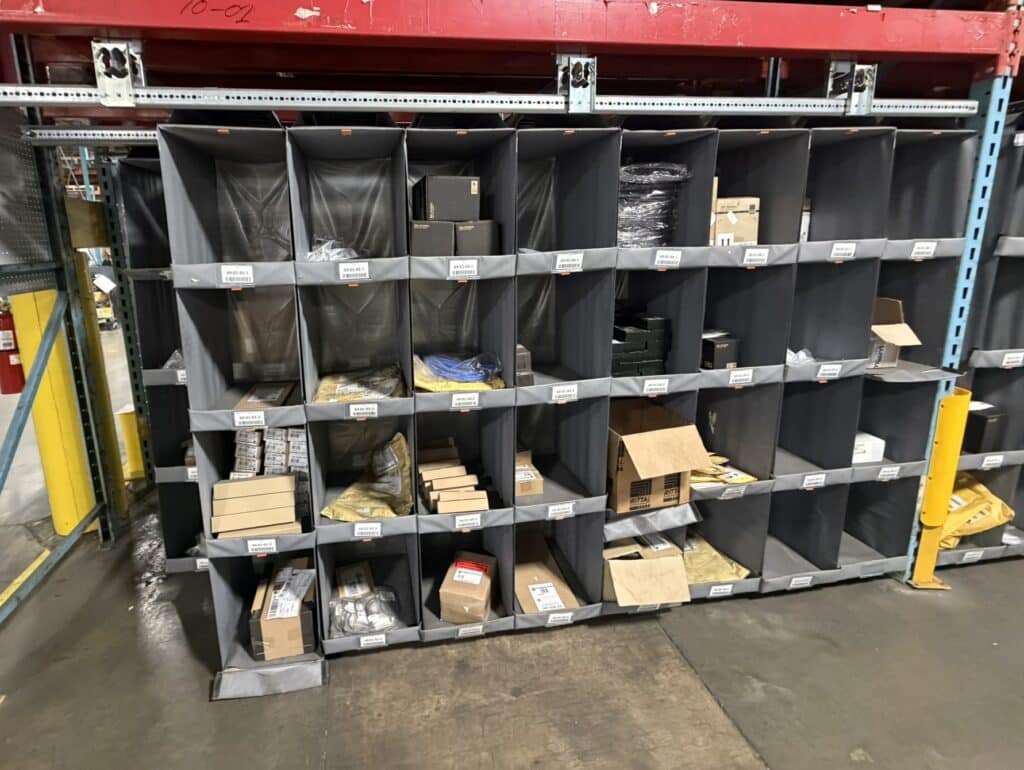
Unlike traditional shelving or static bin storage, this system combined standard pallet racking with a high density hanging bin design that created hundreds of individual storage locations for small parts inventory. The result was an efficient storage solution that maximized warehouse space while providing organized access to a large number of SKUs.
A Unique Approach to Small Parts Storage
This unique storage system, designed and bult in Germany, consisted of large fabric storage modules suspended beneath pallet rack beams using a specialized rail and bracket assembly. Each module was divided into multiple compartments, creating dedicated storage locations for small parts, maintenance supplies, electrical components, hardware and other inventory items.
While the lower levels served as active picking locations, the upper rack levels remained available for reserve inventory storage. This allowed the customer to combine bulk storage and order fulfillment operations within a single racking system.
By utilizing otherwise unused space beneath pallet rack beams, the system delivered exceptional storage density without increasing the facility’s footprint.
Planning the Warehouse Storage System Relocation
Every successful warehouse storage system relocation begins with careful planning. Unlike a standard pallet rack teardown, this project required our team to document and preserve a specialized storage system that relied on custom rail assemblies, adjustable mounting brackets and fabric storage compartments.
The system had been configured around specific inventory locations and picking processes, making organization critical throughout the relocation process.
Our team carefully evaluated:
Existing rack configurations
Rail support systems
Mounting hardware and brackets
Fabric storage modules
Inventory location layouts
Reinstallation requirements
Maintaining organization during disassembly helped ensure a smooth installation process at the new location.
Preserving Inventory Organization
One of the most important aspects of the project was protecting the integrity of the storage layout.
Each compartment within the system represented a designated inventory location. Labels and storage assignments needed to remain organized throughout the move to minimize disruption to warehouse operations.
By documenting storage locations and maintaining component organization during the relocation process, the customer was able to restore inventory functionality more efficiently after installation.
Specialized Rack Mounted Design
What made this project particularly unique was the integration of the storage modules directly into the pallet racking system.
The hanging compartments were supported by rail assemblies mounted beneath the pallet rack beams. Adjustable brackets allowed the rails to be securely attached while supporting the weight of the storage modules and inventory.
This design transformed conventional pallet racking into a highly organized small parts picking system capable of supporting hundreds of individual inventory locations.
For facilities managing large numbers of SKUs, this approach provides a practical alternative to extensive shelving systems while making better use of available warehouse cube.
Benefits of High Density Small Parts Storage
Systems like this continue to gain popularity because they offer several operational advantages.
Increased Storage Density
By utilizing vertical space within existing pallet rack structures, businesses can significantly increase storage capacity without expanding their warehouse footprint.
Improved Inventory Control
Dedicated storage compartments help reduce misplaced inventory and improve location accuracy.
Faster Order Picking
Clearly defined storage locations allow employees to quickly locate and retrieve inventory items.
Efficient Use of Existing Racking
Rather than adding additional shelving rows, facilities can leverage existing pallet rack structures to create hundreds of additional pick locations.
Why Experience Matters
Warehouse relocation projects often involve more than simply moving equipment from one building to another. Specialized systems require careful planning, documentation and installation expertise to ensure they continue performing as intended after the move.
Projects involving pallet racking, storage systems, shelving and inventory management equipment benefit from experienced material handling professionals who understand both the structural and operational requirements of the system.
In this case, preserving the functionality of a highly customized storage solution was just as important as relocating the physical equipment itself.
Final Thoughts…
After more than three decades in the material handling industry, it takes a lot for a storage system to stand out. This project certainly did.
The combination of pallet racking, suspended storage modules and high density inventory organization created one of the most unique small parts storage systems we’ve encountered. Successfully completing the warehouse storage system relocation required careful planning, detailed organization and a thorough understanding of how the system functioned within the customer’s operation.
For warehouses seeking to maximize space utilization and improve small parts inventory management, specialized storage solutions like this demonstrate how creative design can transform conventional racking into a highly efficient storage and picking system.
Need Help With a Warehouse Storage System Relocation?
Whether you’re relocating pallet racking, shelving, storage equipment or a specialized inventory system, Midwest Material Handling can help evaluate, disassemble, relocate and reinstall warehouse storage systems throughout Ohio and the surrounding region.
Our experienced team has worked with everything from standard pallet rack systems to highly customized storage solutions designed for unique inventory requirements.
Contact Midwest Material Handling to discuss your upcoming warehouse relocation project and learn how we can help keep your operation organized, efficient and productive throughout the process.
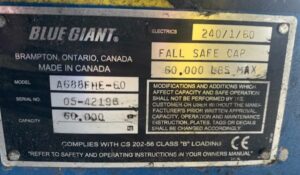
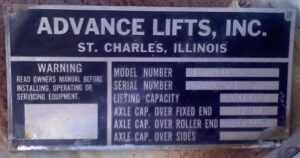
Most companies can identify a dock leveler with a serial number. We can identify them when the serial number is gone.
If you work around older loading docks long enough, you eventually run into the same frustrating situation: a dock leveler breaks down, replacement parts are needed quickly, and the serial plate is either unreadable or completely missing.
More times than not, this is exactly what we see in the field.
At Midwest Material Handling, we help customers identify replacement components through our Wholesale Dock Leveler Parts page every day. While a manufacturer name, model number, capacity, and serial number are always the easiest way to identify dock leveler parts, the reality is that many older dock levelers no longer have usable identification plates.
That is where experience matters.
For more than 30 years, we have worked on and identified old dock levelers throughout warehouses, trucking terminals, manufacturing facilities, and distribution centers across Ohio. After seeing tens of thousands of dock levelers over the years, many older manufacturers, spring configurations, hinge designs, and hydraulic layouts become recognizable even when no serial plate exists.
Identifying dock leveler parts without serial numbers requires experience, not just guessing.
How Do We Do It?
After more than 30 years working around loading dock equipment, many older dock levelers become recognizable even when the serial plate is gone.
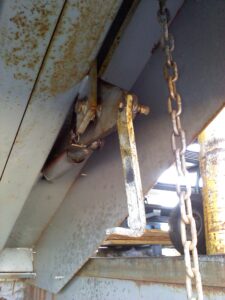
We identify older dock levelers by studying the overall construction and component layout. Certain manufacturers used distinctive hinge designs, spring configurations, hydraulic layouts, linkage systems, and structural patterns that become familiar after seeing thousands of dock levelers over the years.
We also maintain a large library of older dock leveler manuals and parts breakdowns covering many legacy manufacturers and model series dating back decades.
When we combine that documentation with real-world field experience, we can often narrow down the manufacturer and identify the correct replacement parts even when little identifying information still exists on the dock leveler itself.
That is the value experience brings to dock leveler parts identification.
Serial Numbers Are Still the Best Starting Point
When a dock leveler still has a clean and readable serial plate, that is usually the fastest and most accurate way to identify replacement parts. The manufacturer, model number, capacity, and serial number can often narrow things down quickly.
Unfortunately, older dock levelers rarely make things that easy. Over the years, serial plates are commonly rusted beyond recognition, painted over, damaged during repairs, or simply knocked off entirely. Many manufacturers originally attached these plates using small rivets, so after decades of forklift traffic, vibration, maintenance work, and weather exposure, they often disappear completely.
That is when hands-on dock equipment experience becomes extremely valuable.
Before You Can Identify the Part, You Have to Identify the Dock Leveler
One of the biggest misconceptions in the loading dock industry is that replacement parts can simply be matched visually.
In reality, properly identifying dock leveler parts usually starts with identifying the dock leveler itself. That becomes difficult when the manufacturer is unknown, the serial plate is gone, or the dock leveler has been repaired multiple times over the years using non-original parts.
This is where experience makes a major difference.
By studying the overall dock leveler construction, hinge layouts, spring configurations, hydraulic systems, linkage assemblies, and safety components, we can often narrow down the original manufacturer and approximate model series even when no identification plate exists.
Once the dock leveler itself is identified, we can usually identify the correct replacement parts much more accurately.
30+ Years of Experience Identifying Old Dock Levelers
Anyone can identify a dock leveler when the serial plate is perfectly readable. The real challenge is identifying older dock equipment that may be 20 to 50 years old with little or no usable information remaining.
At Midwest Material Handling, we have spent decades working around older loading dock equipment throughout Ohio. Over time, many dock leveler designs become recognizable simply through field experience. Certain manufacturers used very distinctive hinge designs, spring layouts, hydraulic arrangements, and structural patterns that become familiar after seeing thousands of units over the years.
This is one of those industries where old-school experience still matters.
A Large Library of Older Dock Leveler Manuals
One of the biggest advantages of working with an experienced dock equipment company is access to older documentation that many companies no longer have.
Over the years, we have built a large library of older dock leveler manuals, parts breakdowns, and manufacturer documentation covering many legacy dock leveler brands dating back decades. That information becomes extremely valuable when trying to identify older spring assemblies, hold down mechanisms, hydraulic components, lip hinge systems, and structural repair parts.
In many cases, combining older manuals with real-world field experience allows us to identify dock leveler parts even when the original serial plate no longer exists.
Common Dock Leveler Manufacturers We Help Identify
Over the years, we have worked with and identified replacement parts for many older dock leveler manufacturers and legacy loading dock brands. Even when serial plates are missing, certain hinge designs, spring layouts, hydraulic systems, and structural details often help narrow down the original manufacturer.
Some of the most common dock leveler brands we help identify include:
Kelley
Serco
Rite Hite
Blue Giant
McGuire
Nordock
Pentalift
Poweramp
DLM
Advance Lifts
Beacon
Copperloy
Chalfant
Loading Systems
Vestil
Many of these manufacturers produced multiple dock leveler styles and model series over several decades, which is why hands-on experience and older manuals can become extremely valuable when trying to identify the correct replacement parts.
Even if the dock leveler manufacturer is unknown, good underside photos and measurements often help us narrow things down quickly.
Photos Help Us Identify Older Dock Levelers
When serial numbers are missing, good photos become one of the most valuable tools in the identification process.
Clear underside photos often tell us far more than people realize. Certain manufacturers used distinctive frame designs, rear hinges, lip hinges, spring arrangements, and hydraulic layouts that help narrow down the original dock leveler manufacturer and approximate model series.
Even heavily modified dock levelers usually leave enough structural clues behind to point us in the right direction.
Sometimes we can identify a dock leveler almost immediately from a few underside photos simply because we have seen similar units so many times over the years.
Measurements Matter More Than Most People Realize
Measurements often play a major role when identifying older dock leveler parts correctly.
For example, when identifying a mechanical dock leveler main spring, the overall spring length and diameter are important, but the coil count is often one of the biggest factors. Two springs may appear almost identical visually, but a different number of coils can completely change the spring tension and how the dock leveler operates.
The same concept applies to hydraulic cylinders, hold down assemblies, hinge spacing, and linkage components. Small dimensional differences can dramatically affect dock leveler performance and safety.
In some cases, previous owners may have installed incorrect replacement parts years earlier, which creates another layer of complexity when trying to identify the proper components today.
That is why identifying dock leveler parts often requires much more than simply matching components by appearance alone.
Mechanical and Hydraulic Dock Levelers Are Identified Differently
Mechanical dock levelers and hydraulic dock levelers often require completely different identification methods.
Mechanical units are commonly identified through spring configurations, hold down assemblies, linkage systems, and release mechanisms. Hydraulic dock levelers are more commonly identified using cylinder dimensions, hydraulic hose layouts, pump assemblies, and power unit styles.
Because many older dock levelers have been repaired multiple times over the years, identifying the original configuration often requires evaluating the entire dock leveler instead of focusing only on the damaged component.
Replacement Parts Keep Older Dock Levelers Operating
Many older dock levelers were heavily built and designed for long service life.
In many situations, replacing worn springs, cylinders, hold downs, hydraulic hoses, or structural components allows facilities to continue operating existing dock equipment safely for years.
The key is correctly identifying the replacement parts needed, especially when serial numbers or model information no longer exist.
That is where experience and documentation become extremely important.
A Broken Dock Leveler Can Create Major Downtime
Many facilities operate with limited dock positions, so even one broken dock leveler can quickly create shipping delays, receiving bottlenecks, forklift safety concerns, and warehouse inefficiencies.
Correctly identifying replacement parts quickly helps minimize downtime and keeps freight moving safely. Many common dock leveler parts are available with overnight or second day shipping depending on availability.
Why Customers Choose Midwest Material Handling for Dock Leveler Parts
The biggest value we provide is not simply selling dock leveler parts.
The value comes from helping customers identify older dock levelers and locate the correct replacement components when no serial number exists, the manufacturer is unknown, or the dock leveler has been modified repeatedly over decades of service.
That combination of 31+ years of field experience, hands-on dock equipment knowledge, a large library of older dock leveler manuals, and real-world repair experience allows us to solve problems that are often difficult to figure out through catalogs or online searches alone.
This is something we do every day.
Dock Leveler Parts Identification Form
To help streamline the identification process, we also offer a Dock Leveler Parts Identification Form where customers can upload photos and provide measurements for older dock levelers.
Even when the serial number is gone or the identification plate is unreadable, we can often narrow down the correct replacement parts using photos, measurements, manuals, and overall dock construction details.
The more information provided, the faster we can usually help identify the correct components.
Need Help Identifying an Old Dock Leveler?
If your dock leveler serial plate is missing or unreadable, send us a few photos of the dock leveler underside, springs, cylinders, hinges, or damaged components and we can usually help identify the replacement parts needed.
While serial numbers are always helpful, the reality is that many older dock levelers no longer have them. Fortunately, identifying older dock equipment is something we have been doing for decades.
Frequently Asked Questions
Can you identify a dock leveler without a serial number?
Yes. Many older dock levelers can still be identified using underside photos, spring configurations, hinge styles, hydraulic layouts, and structural details.
Why are dock leveler serial plates often missing?
Many serial plates were originally attached with small rivets and were eventually knocked off after decades of forklift traffic, vibration, repairs, weather exposure, and repainting.
What photos help identify dock leveler parts?
Photos of the underside, rear hinges, lip hinges, springs, hydraulic cylinders, damaged parts, and power units are usually the most helpful.
What measurements help identify dock leveler springs?
Spring diameter, overall spring length, and especially the coil count are often important when identifying replacement springs for older mechanical dock levelers.
Can older dock levelers still be repaired safely?
In many cases, yes. Older dock levelers were often heavily built and can continue operating safely for years with the proper replacement parts and repairs.
How fast can dock leveler parts ship?
Many common dock leveler parts are available with overnight or second day delivery depending on stock and location.